By Robert Funk
Associate Professor of Political Science
Universidad de Chile
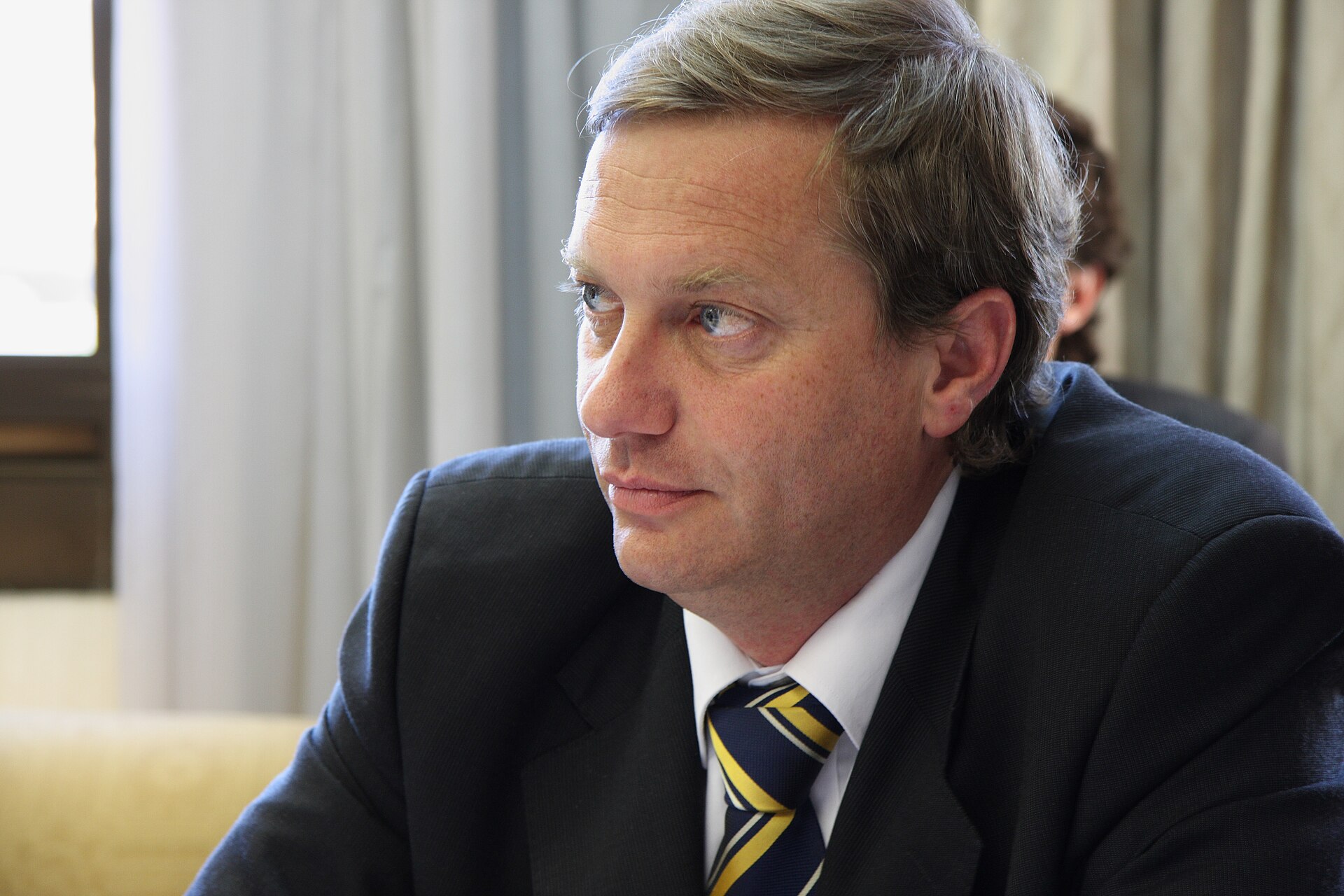
José Antonio Kast always knew that his honeymoon would be short. He did not expect it to last less than a month. As a result, President Kast’s first few weeks in office have turned out to be something of an experiment. Straight out of the starting gate, Chile’s new president has chosen to confront some of the country’s structural problems, even at the expense of burning through some serious political capital.
The most visible example is the sharp rise in fuel prices. Triggered by the conflict in the Middle East, global crude prices have surged, with Chile feeling the impact almost instantly. As a country that imports nearly all of its energy, Chile is highly exposed to such shocks (although fortunately, its liquid natural gas is sourced regionally). Faced with this situation, Kast’s government made a tough choice: it limited the use of the fuel price stabilization mechanism (MEPCO) and allowed prices to adjust more rapidly. Maintaining the full subsidy would have implied costs to the government of up to USD 40 million per week, with projections of up to USD 3 billion if oil prices remain high. The result has been a dramatic increase in domestic fuel prices, with gasoline rising by around 370 pesos (USD 0.40) per liter and diesel by as much as 580 pesos (USD 0.60).
Why Kast and his Finance Minister, Jorge Quiroz, would choose to implement such a politically costly and potentially explosive policy must be understood in the context of Chile’s fiscal reality. The administration inherited a weak fiscal position from its predecessor. The Boric government left Chile with a structural deficit of around 3.6 percent of GDP – not large in global terms, but unusually high for Chile. In addition, spending commitments expanded significantly under Boric. Pensions, social transfers, and permanent expenditures rose while revenues were consistently overestimated. The result was a narrowing fiscal margin that makes large-scale subsidies increasingly difficult to sustain.
From this perspective, Kast’s emphasis on spending restraint is not ideological stubbornness, but fiscal necessity. The government’s decision to implement a 3 percent across-the-board spending cut was designed to restore credibility and avoid a deterioration in sovereign risk. Returning to fiscal discipline is a way of signalling that Chile has not entirely abandoned some of the principles it held when it became one of the most solid economies in Latin America.
The fuel price issue is particularly sensitive because of its universal and immediate effects. Unlike tax reforms or regulatory changes, fuel prices are felt instantly and widely. In Chile’s economy, where close to 90 percent of goods are moved by road, increases in fuel costs will translate quickly into higher prices across the economy. This multiplier effect is likely to affect inflation relatively soon.
Moreover, this is most likely not a temporary shock that can easily be smoothed over. Finance Minister Quiroz has been explicit in admitting that he expects that energy prices will remain elevated for an extended period. The conflict involving Iran could well turn out to be part of a broader geopolitical realignment rather than a short-lived disruption in energy costs. Betting on a rapid normalization of oil prices would have been fiscally reckless.
Quiroz’s insistence on spending cuts follows the same logic. Reducing public spending in the midst of an external shock may seem politically tone-deaf. But a Keynesian approach – maintaining or increasing spending to help smooth over the external shock – makes little sense if the current crisis is not really a shock but a long-term trend. Doing nothing might have required increased borrowing at higher interest rates.
Still, the political cost is undeniable. Cuts to areas such as transport and security are not just budgetary decisions; they are political signals of where priorities lie. Recall that the widespread social unrest of 2019 in Chile began with a far more modest rise in Metro fares.
Security presents a different but equally important challenge. Kast was elected largely on a promise of restoring order and public safety. Any perception that resources are being constrained in this area risks undermining the government’s main source of political legitimacy. Unlike fiscal policy, where trade-offs are less visible, security can be felt in real time by citizens’ lived experience.
What makes these three issues so politically damaging is their combination of scope, immediacy, and symbolic weight. They affect everyone, they are felt instantly, and they resonate with recent historical grievances. Managing any one of them is difficult; confronting all three simultaneously is a high-risk strategy.
And yet, there is a logic behind the government’s choices. Kast is attempting to reset expectations. Rather than cushioning shocks through fiscal expansion, he is signaling that Chile must adapt to a more constrained and uncertain global environment. This is a sharp departure from the policy framework of the previous decade. And if energy prices remain high, as current geopolitical trends suggest, and if fiscal discipline helps to avoid a deeper macroeconomic crisis, the government may ultimately be vindicated.
The risk is that it may not survive politically long enough to claim that vindication. Approval ratings have already declined, protests have emerged, and the government appears on the defensive. Politically painful policies are possible, but only when undertaken with broad support and legitimacy. Kast hasn’t had the time to build his case, and many of his ministers appear to go out of their way to alienate voters. While front-loading the shock might seem wise – Kast must be thinking he will have time to recuperate in the polls later – he runs the risk of losing so much legitimacy that recovery becomes impossible.


