Prospects for Reproductive Rights Dim with End of “Left-Turn”

By Merike Blofield and Christina Ewig*

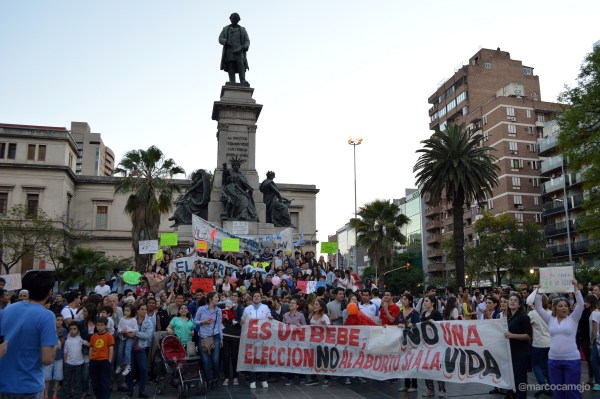
A large group of women and men gather in front of statue in a plaza.

A demonstration against abortion in Córdoba, Argentina, shortly after President Mauricio Macri’s election. / Marco Camejo / Flickr / Creative Commons

The end of Latin America’s “pink tide” suggests the region will make little progress in protecting reproductive rights in coming years and may even face some policy reversals.  With five Latin American governments slated to elect new leaders in 2018, and with recent elections of right-leaning governments in Chile and Argentina, Latin America may well be concluding the left-turn that has characterized the region’s politics since the early 2000s.

  • The past two decades of pink tide governments coincided with a flurry of legislative activity on abortion policy – in sharp contrast to previous decades of policy stasis, when high rates of clandestine abortions coexisted with restrictive laws. Since the turn of the millennium, abortion laws have been revised by Latin American legislatures and courts on 11 separate occasions in eight different countries.  Even in countries where legal reforms did not go through, legislatures debated bills at a prevalence not seen before.
  • Several left governments have carried through liberalization in response to public opinion and social mobilization. Last August, for example, the Chilean Supreme Court upheld its Congress’ liberalization of abortion law – to allow for abortion under three circumstances (threat to life; fatal fetal defect; rape) – overturning the absolute prohibition that had been in effect since the last days of the Pinochet military regime in 1989.  Some left governments went even further:  Uruguay legalized abortion in 2012, and Mexico City did so even earlier, in 2007.

Yet left governments have not been unequivocally liberal; some have actively upheld or enacted conservative laws, even absolute prohibitions.  In 2006, the Sandinista Party in Nicaragua reversed course from allowing therapeutic abortion to supporting absolute prohibition, while Ecuadoran President Rafael Correa in 2013 rejected a provision allowing abortion in the case of rape.  The FMLN in El Salvador has doggedly, even brutally, enforced a total prohibition, to the detriment of many (primarily poor) women’s lives.  In a recent study (published in Social Politics), we show this split in policy roughly follows the “institutionalized” vs. “populist” typology of lefts.

  • Institutionalized parties – like those in Chile and Uruguay – have channels in place for civil society organizations, including feminist ones, to have bottom-up influence. Given their respect for the rules of the game, however, the institutionalized lefts are also likely to face well-organized conservative opposition, which slow down reform, shape final legislation, or even veto it altogether.  In Uruguay and Chile, feminists had a voice, but conservatives were also are able to block, slow down, and water down liberalization.  This is why the Uruguayan reform took so long and why in both cases the final legislation is less liberal than the original proposals.
  • By contrast, populist governments, like those of Nicaragua under Daniel Ortega and Ecuador under Rafael Correa, often see advocates for liberalization as political threats – particularly feminists who also represent more general claims for individual autonomy and pluralism. Moreover, an issue like abortion, where the practical costs of a restrictive stance are born almost exclusively by low-income women, is likely to be used by populist leaders as a pawn in a power struggle with well-organized, influential religious forces.

Although we systematically analyzed only abortion politics, we found that sex education, contraceptive access, and other reproductive health policies more broadly have followed similar dynamics in Ecuador, Nicaragua, Chile, and Uruguay.  For example, the Uruguayan left government expanded sex education after assuming power in 2006, while in Ecuador, leaders appointed in health bureaucracies sought to reduce access to publically provided reproductive health services.  Nicaragua, on the other hand, has the highest rate of teenage pregnancies outside sub-Saharan Africa.

As Latin America’s left shift appears to be coming to a close, reproductive health policies promise to remain contentions – and abortion continues to be a public health crisis across most of Latin America even with the limited liberalizations of the past decade.  The Alan Guttmacher Institute recently estimated that 6.5 million abortions are annually performed in the region.  The vast majority are still done in clandestinity, resulting in high maternal mortality and tens of thousands of annual hospitalizations, which affect low-income women the most.  While it is unlikely that recent changes will be reversed in the more institutionalized settings, the rightward shift that is occurring among especially these countries does not bode well for further liberalization and resolution to the abortion crisis.

 January 18, 2018

 * Merike Blofield is Associate Professor of Political Science at the University of Miami.  Christina Ewig is Professor of Public Affairs and Director of the Center on Women, Gender and Public Policy at the Humphrey School of Public Affairs, University of Minnesota.

Nicaragua: Shirking Obligations on Gender-based Violence

By Pamela Neumann*


15265768473_2316590a31_k

March against violence in Managua, November 2014. Oxfam en Nicaragua / Flickr / Creative Commons

Recent actions by the Nicaraguan government directly conflict with its obligations under accords on gender-based violence, but regional mechanisms, including the OAS, have not been effective at holding Managua to account. The 1994 Inter-American Convention on the Prevention, Punishment, and Eradication of Violence against Women (Belém do Pará), which Nicaragua ratified in 1995, defines violence against women as any act of physical, sexual, or psychological violence occurring in either the public or private sphere (Article I, III) and obligated state signatories to establish fair and effective legal procedures to address crimes against women (Article VII). The Convention also stipulated that States report steps taken to prevent and prohibit gender-based violence (Article X). In 2004, the OAS introduced a Follow-up Mechanism (MESECVI) to provide additional technical assistance and more closely monitor state actions.

Nicaragua has not submitted information to MESECVI since 2008, and its performance has become even more problematic in subsequent years. In 2012, the government passed a comprehensive law on gender-based violence (Law 779), which significantly advanced women’s legal rights and protections. Over the last three years, however, the law has been substantially undermined by legislative reforms and executive decrees. For example, mediation, an informal practice police historically used to resolve cases, was first eliminated and then reinstated. Mediation puts women’s lives at significant risk because there are no legal consequences for violating the non-binding agreements it produces. In addition, beginning in 2014, women seeking to file a legal complaint for gender-based violence were sent to neighborhood councils or the Ministry of the Family for counseling instead. Police units charged with handling domestic violence cases have been closed for over a year.

The OAS has been leaning hard on Nicaragua to address threats to its electoral process – forging an agreement last month allowing the OAS to send a team to observe municipal elections in November – but its performance as arbiter of signatories’ adherence to the Belém do Pará Convention has been less effective. The convention’s enforcement mechanisms are limited; the main recourse that individuals or organizations have is to submit a petition to the Inter-American Commission on Human Rights, which can forward it to the Inter-American Court of Human Rights (IACHR). But action is inhibited by the stipulation that cases are only admissible when “remedies under domestic law have been pursued and exhausted” and because current regional agreements do not allow for any specific OAS-IACHR action to be taken on the basis of legislative action or inaction. The OAS’s existing instruments, moreover, put the burden on individual aggrieved parties to demonstrate the state’s intentional complicity in denying women due process. This requires showing evidence of state officials actively impeding one particular investigation or engaging in violent acts themselves. Numerous studies, including my own research, have shown that such behavior is in fact ubiquitous, but less than 1 percent of cases even make it to trial. Despite good intentions, the legal remedies afforded by the OAS tend to individualize and privatize the problem of gender-based violence – and the Nicaraguan government is not being held accountable for its failure to prevent or punish fundamental violations of women’s human rights.

March 30, 2017

*Pamela Neumann is a Post-Doctoral Fellow at the Stone Center for Latin American Studies, Tulane University.

NiUnaMenos Gains Momentum

By Brenda Werth* and Fulton Armstrong

marcha_ni_una_menos_1

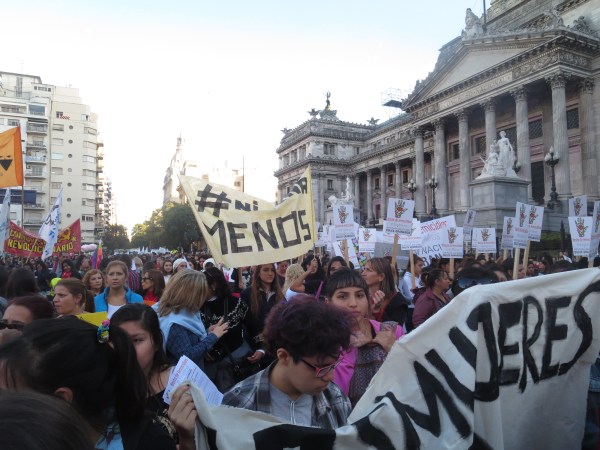
Protesters gather in Buenos Aires, Argentina as part of the NiUnaMenos movement, which has sparked mobilizations across the country and in many other Latin American cities. / Wikimedia / Creative Commons

Protesters have taken to the streets in Argentina and elsewhere in Latin America to raise awareness about violence against women and girls, pushing for an end to machista culture.  News media estimate that a demonstration under the banner of NiUnaMenos – “not one less woman” due to femicide – in Buenos Aires last Wednesday drew tens of thousands of supporters dressed in black, despite freezing rain.  Other banners declared “We want to live” and demanded “No more machista violence.”  The immediate issue driving the protest was the brutal attack earlier this month on a schoolgirl in Mar del Plata – 16-year-old Lucía Pérez – who was drugged, raped, and tortured to the point of suffering cardiac arrest and died from internal injuries.

  • Argentina passed laws between 2008 and 2012 protecting a range of rights relating to human trafficking, violence against women, marriage equality, and gender and sexual identity, creating new space for discussion of the issue. But the Casa del Encuentro, an NGO that helps victims of gender violence, says that data through 2015 indicate that somewhere in Argentina a woman is killed every 30 hours.  The government’s Secretariat of Human Rights says that 19 women and girls were murdered in the first 18 days of October.  Argentine President Macri, challenged since early days of his administration to address the problem, has reiterated pledges to push legislation that would establish a hotline for reporting abuse and create more shelters for abused women as well as better ways of monitoring abusers.

Similar protests were held in Peru, Mexico, Bolivia, Chile, Paraguay, Uruguay, and El Salvador – with thousands of protesters in capital cities demanding an end to the systematic violation of women’s rights.  Chilean President Michelle Bachelet announced last week that she was joining the NiUnaMenos movement.  She condemned the murder of a 10-year-old girl asphyxiated, burned, and buried by her step-father.  Movement organizers cite research showing that violence against women is a serious problem in much of Latin America.  The Mapa da Violencia published by FLACSO Brazil last year shows that seven of the 10 countries with the highest female murder rate are in this region – with El Salvador (8.9 homicides per 100,000 women), Colombia (6.3), Guatemala (6.2), and Brazil (4.8) near the top of the list.

The demonstrations reflect growing global awareness of gender violence as a violation of human rights and that legislation, while helpful, is not enough.  NiUnaMenos and other groups are also rewriting the traditional definition of violence against women as attacks perpetrated by strangers rather than boyfriends, husbands, or family members – just as coverage of femicide in Mexico in the 1990s raised public awareness of gender violence as systematic and deeply structural as opposed to “every-day,” “familial,” and “private.”  NiUnaMenos is challenging “the culture of violence against women” in machista societies and condemning “the men who think that a woman is their property and they have rights over her and can do whatever they want.”  In Argentina, the mainstream media have stimulated much of the backlash, with reporting that exploits private details of victims’ lives and portrays victims in a manner that suggests responsibility for the crimes committed against them.  This recycling of the “algo habrá hecho” logic that circulated freely during the dictatorship coincides with a renewed focus in Argentine society on cases of torture during those years, treating them specifically as acts of sexual violence.  A week or two of protests obviously will not change ingrained culture, but the burgeoning movement highlighted by NiUnaMenos offers hope of continued progress in protecting the fundamental rights of women throughout the hemisphere.

October 24, 2016

* Brenda Werth is Associate Professor of World Languages and Cultures at American University.

The Zika Virus and a New Debate on Reproductive Rights

By Rachel Nadelman*

Zika Women

Photo Credit: Day Donaldson and PresidenciaRD / Flickr / Creative Commons

The call by half a dozen Latin American and Caribbean governments for women to put off pregnancies – as the World Health Organization warns the feared Zika virus is “spreading explosively” – is stimulating a new debate on reproductive rights in the region.  El Salvador’s Health Ministry has urged women to “avoid becoming pregnant this year and next,” and Brazil, Jamaica, Colombia, and others are issuing similar advisories.  A mosquito-borne disease spreading rapidly in the Western Hemisphere for the first time, Zika is blamed for causing devastating neurological birth defects in newborns whose mothers contract the virus during pregnancy.  The U.S. Center on Disease Control has advised pregnant women to avoid travel to the more than 20 Latin American and Caribbean countries now hosting the disease.

Named for the Uganda forest where it was discovered in the late 1940s, Zika is carried and transmitted by the Aedes Aegypti mosquito, best known as the vector for life-threatening viruses like yellow fever and dengue.  Within the Western Hemisphere, the Aedes population has increased drastically in recent years, linked by scientists to changes in climate.  Yet Zika’s arrival in Latin America last year, first documented in Brazil, and subsequent expansion did not attract major attention until the pattern of birth defects emerged.  Zika’s symptoms are sometimes imperceptible or typically mild, including fever, joint aches, and conjunctivitis, so health officials did not consider it a major threat to the general population.  Although definitive clinical proof is still lacking, Zika is now linked to microcephaly, a rare neurological condition that causes children to be born with small heads because of abnormal brain development in the womb or immediately after birth.  The emergence of Zika in Latin America has coincided with a more than 20-fold increase in the incidence of microcephaly.  (Brazil has reported 4,000 cases in the past year, a drastic increase from just 150 in 2014).  The babies suffer from poor brain function and reduced life expectancy.  Doctors are finding traces of the virus in the brains of microcephaly-inflicted babies who were stillborn or died soon after birth.

Warnings and advisories offer no help to the millions of women who live in afflicted countries.  Governments are launching fumigation programs to reduce the Aedes mosquito population and thereby limit disease transmission.  Asking populations to refrain from having children appears a bit facile, if not cynical, in a region with low levels of access to birth control for reasons that range from religious dictates to economic obstacles.  Severely restrictive abortion laws also complicate potential parents’ options.  Five Latin American countries (including Honduras and El Salvador, hard hit by Zika) ban abortion without exception, even to save the mother’s life.  Others criminalize abortion with few allowances.  According to the Guttmacher institute, 95 percent of abortions in Latin America are unsafe, contributing to high maternal mortality rates. It’s not surprising, therefore, that Zika’s link to these devastating birth defects has generated unprecedented public discussion throughout Latin America about women’s and families’ rights and responsibilities for taking control of reproduction.  It is far too early to know if the health advisories will have practical impact on the incidence of microcephaly – or on attitudes toward reproductive rights over the longer term.   

February 1, 2016

* Rachel Nadelman is a PhD candidate in International Relations at the School of International Service.  Her dissertation research focuses on El Salvador’s decision to leave its gold resources unmined.

Gender Violence in Argentina and the Education of Mauricio Macri

By Brenda Werth*

Macri Ni Una Menos

Photo Credit: Mauricio Macri Facebook page. Public Domain.

Argentina’s new President, Mauricio Macri, has an historic opportunity to address the country’s longstanding crisis of gender violence.  In a radio interview in 2014, he notoriously stated that “All women like to be catcalled,” and asserted, “I don’t believe the ones who say they don’t.”  Little did he know at the time that the most intense period of his presidential campaign in 2015 would coincide with a revolution in public awareness of gender violence in Argentina.  #NiUnaMenos – a movement launched in response to a rash of femicides and their graphic coverage by the news media – organized  marches in cities across Argentina, Uruguay, and Chile, drawing an estimated 300,000 protesters in Buenos Aires alone last June.  Journalists, artists, and activists, in collective denunciation of machismo and violence against women, demanded that the government develop a plan of action to implement the Comprehensive Law on the Prevention, Punishment and Elimination of Violence against Women (Law 26.485), approved in 2009.  The law was a significant milestone in addressing violence against women at the national level, yet without government support, its effectiveness has been limited.  Current data indicate that a femicide takes place every 30 hours in Argentina, and statistics suggest that the total number of femicides occurring in 2015 will meet or surpass numbers in 2014.  The NiUnaMenos movement has captured the public’s attention.

The presidential candidates (Macri included) took note of the impact of NiUnaMenos and pledged support to prevent violence against women as outlined in the five major points it published.  Macri posted a picture of himself holding a handmade #NiUnaMenos sign on Facebook and Twitter.  Yet activists remain concerned about Macri’s sincerity, not just because of his 2014 remarks.  As mayor of Buenos Aires (2007-15), he undermined initiatives to prevent violence against women and provide assistance to victims.  Specifically, in 2014 he closed an outreach center for victims of sexual violence that had operated under the Subsecretary of Human Rights in Buenos Aires, and he reduced the budget of the National Agency for Women from 0.1 percent in 2007 to 0.06 percent in 2015.

Macri has his work cut out for him if he wants to be perceived as a leader confronting Argentina’s gender violence.  Although his promises to slash government spending suggest social programs will suffer, there are some promising signs.  Macri’s Minister of Social Development, Carolina Stanley, has offered the post of President of the National Council for Women to Fabiana Tuñez, the founder of the Casa del Encuentro, a leading NGO on gender rights and eliminating sexual violence – and key in the #NiUnaMenos movement.  In a broader human rights framework, Macri’s agenda still remains relatively undefined.  Although his vision will depart significantly from former President Cristina Fernández de Kirchner’s, he has reiterated his commitment to continuing trials against former military accused of human rights abuses during dictatorship, rejecting claims that such efforts reflect “politics of revenge.”  In interviews, moreover, he has emphasized a forward-looking conception of human rights, rooted in the 21st century, focusing on issues related to pubic health, education, and freedom of expression.  While some observers view this as a regression to a “culture of amnesia” associated with the Menemist era, Macri has an opportunity to move the country forward by heeding activists’ demands for leadership addressing gender violence in Argentina. 

January 7, 2016

* Brenda Werth is Associate Professor of World Languages and Cultures at American Unviersity.

Pension Reform: Uneven Progress

By Christina Ewig*

Two Women

Nathan Gibbs / Flickr / Creative Commons

Recent pension reforms in Latin America show promise for greater gender equity across the region, but progress remains uneven in coverage and generosity.  Since 2007, 13 countries have either introduced or expanded some form of non-contributory pension, offered to defined groups as a social right, while others have made reforms to their existing pension systems that specifically compensate for gender inequalities.  These reforms in several instances were conceived with the participation of gender equity advocates.

  • The introduction of non-contributory pensions has equalized pension coverage between women and men in the region, according to a comprehensive study by the Organización Iberoamericana de Seguridad Social.
  • The equalization of men’s and women’s retirement age in the Dominican Republic, Mexico, and Uruguay makes it easier for women to attain the minimum number of working years for eligibility for a minimum pension.
  • The use of gender-neutral mortality tables in Bolivia and a return to the state-run defined-benefit system that treats men and women equally in Argentina, are also improvements.
  • More innovatively, in the 2007 expansion of the non-contributory pension in Bolivia and the 2008 reforms of the traditional pension systems in Chile and Uruguay, women were given credit toward their pensions for children born or adopted, to compensate for time out of the labor market.

The need for such reforms is great globally and in Latin America.  Women face much greater risks than men of poverty in old age due to workplace discrimination and gender imbalances in family carework responsibilities – the “motherhood wage gap” – during their working years.  Women are employed in smaller numbers than men in the formal economy, and they are often concentrated in the lower-paid and less-stable informal sector.  Domestic workers, primarily women, are in a sector notorious for employers’ evasion of pension payments.  Women in Latin America are also more likely than men to be found among the ranks of the unemployed or partially employed.  When employed full time in the formal sector, they face a diminishing but still substantial wage gap, earning 17 percent less on average than similarly educated men, according to the Inter-American Development Bank.  While the original pay-as-you-go pension systems were based on a male-breadwinner model that envisioned women as “dependents,” the 1990s push toward pensions that relied entirely on individual earnings magnified the effects of these discriminatory employment contexts and carework imbalances.  Moreover, in the individual capital account model, practices such as the use of differential mortality tables to determine monthly payments further reduced women’s income in old age, due to their greater expected longevity.

Despite the progress toward greater gender equity in pension policy, the issue deserves wider attention because advances have been uneven.  For example, while most countries in the region have adopted some form of non-contributory pensions, the percentage of the population eligible for these varies dramatically – as does the monthly payment.  Moreover, while the gap in pension coverage between men and women has narrowed, the compensation levels remain dramatically unequal.  Reforms, like those of Bolivia, Uruguay and Chile, that build-in compensation for market and carework inequalities deserve wider replication. 

February 26, 2015

*Dr. Ewig is Associate Professor of Gender and Women’s Studies and Political Science at the University of Wisconsin-Madison.  She is the author of Second-Wave Neoliberalism: Gender, Race and Health Sector Reform in Peru.

Equal Pay Day in Latin America

By Yazmín A. García Trejo*
Embed from Getty Images
For Latin American women, “Equal Pay Day” – observed on April 8 in the United States – would be in mid-May.  The day symbolically marks the time of year that women’s earnings finally catch up to men’s earnings during the previous year.  In the United States women make, on average, 77 cents for every dollar that men do.  Women have made great advances in Latin America, but they still earn 36 percent less than men, according to the International Labor Organization (ILO).  In many countries of the region, the gender gap in education has closed; now women and men have similar levels of education, and the World Bank’s Gender at Work report indicates that women increased labor force participation by 35 percent between 1990 and 2012.  Nonetheless, women have to work an additional four and a half months to catch up with men’s earnings.  According to an AmericasBarometer survey in 2012, this inequality also occurs within families; 54 percent of working women earn less than their partners.

The debate around the pay gap points to individual and institutional factors as the main causes.  For various personal and social reasons, according to “New Century, Old Disparities,” a 2012 co-publication of the Inter-American Development Bank and the World Bank, women tend to gravitate toward occupations with lower pay ascribed to traditional gender roles such as education (teachers) and healthcare (nurses).  Women are also more likely to settle for lower salaries when hired, and work more in part-time jobs due to their dual responsibilities as providers and caretakers of children or elderly parents.  Institutionally, women still experience pay discrimination and have less access to managerial occupations.  Public policies on women in the workplace reinforce the dual role of working women in Latin America.  According to the 2013 Global Gender Gap Report, Latin American and Caribbean women get an average of 14 weeks of maternity leave, but men get paternity leave in only 9 of the 15 countries – and then only for an average of about one week.

The social and political implications of the wage gap are far-reaching.  Women with lower earnings not only are unable to create wealth as men in similar positions can; they cannot secure a retirement plan that provides them and their families security.  Lower wealth, moreover, translates into lower political participation. According to the 2012 AmericasBarometer survey, wealthier people are more likely to vote, are generally more knowledgeable about how government works, feel they understand national politics, tend to participate more on leadership roles at the community level, and are more actively involved in electoral campaigns.  A disadvantage on wealth and longer work hours undermine women’s ability to invest in learning about or participating in politics.  “Equal Pay Day” in Latin America in the next two weeks would mark not just women’s reduced financial clout but an obstacle to their broader contributions to society as well.  With pay inequality, we all lose.

*Yazmín A. García Trejo is a PhD candidate at the University of Connecticut’s Department of Political Science and a Research Fellow at CLALS.

What does the New Year hold for Latin America?

We’ve invited AULABLOG’s contributors to share with us a prediction or two for the new year in their areas of expertise.  Here are their predictions.

Photo credit: titoalfredo / Foter.com / CC BY-NC-SA

Photo credit: titoalfredo / Foter.com / CC BY-NC-SA

U.S.-Latin America relations will deteriorate further as there will be little movement in Washington on immigration reform, the pace of deportations, narcotics policy, weapons flows, or relations with Cuba.  Steady progress toward consolidating the Trans-Pacific Partnership (TPP), however, will catalyze a shared economic agenda with market-oriented governments in Chile, Mexico, Peru and possibly Colombia, depending on how election-year politics affects that country’s trade stance.

– Eric Hershberg

The energy sector will be at the core of the economic and political crises many countries in the Americas will confront in 2014.  Argentina kicked off the New Year with massive blackouts and riots.  Bolivia, the PetroCaribe nations, and potentially even poster child Chile are next.

– Thomas Andrew O’Keefe

Unprecedented success of Mexico’s Peña Nieto passing structural reforms requiring constitutional amendments that eluded three previous administrations spanning 18 years, are encouraging for the country’s prospects of faster growth.  Key for 2014: quality and expediency of secondary implementing legislation and effectiveness in execution of the reforms.

– Manuel Suarez-Mier

Mexico may be leading the way, at least in the short term, with exciting energy sector reforms, which if fully executed, could help bring Mexico’s oil industry into the 21st Century, even if this means discarding, at least partly, some of the rhetorical nationalism which made Mexico’s inefficient and romanticized parastatal oil company – Petróleos Mexicanos (PEMEX) – a symbol of Mexican national pride.  Let’s see if some of the proceeds from the reforms and resulting production boosts can fortify ideals of the Mexican Revolution by generating more social programs to diminish inequality, and getting rid of the bloat and corruption at PEMEX.

– Todd Eisenstadt

Brazil is without a doubt “the country of soccer,” as Brazilians like to say.  If Brazil wins the world cup in June, Dilma will also have an easy win in the presidential elections.  But if it loses, Dilma will have to deal with new protests and accusations of big spending to build soccer fields rather than improving education and health.

– Luciano Melo

Brazilian foreign policy is unlikely to undergo deep changes, although emphasis could shift in some areas.  Brazil will insist on multilateral solutions – accepting, for example, the invitation to participate at a “five-plus-one” meeting on Syria.  The WTO Doha Round will remain a priority.  Foreign policy does not appear likely to be a core issue in the October general elections.  If economic difficulties do not grow, Brazil will continue to upgrade its international role.

– Tullo Vigevani

In U.S.-Cuba relations, expect agreements on Coast Guard search and rescue, direct postal service, oil spill prevention, and – maybe – counternarcotics.  Warming relations could set the stage for releasing Alan Gross (and others?) in exchange for the remaining Cuban Five (soon to be three).  But normalizing relations is not in the cards until Washington exchanges its regime change policy for one of real coexistence.  A handshake does not make for a détente.

– William M. LeoGrande

A decline in the flow of Venezuelan resources to Cuba will impact the island’s economy, but the blow will be cushioned by continued expansion of Brazilian investment and trade and deepened economic ties with countries outside the Americas.

– Eric Hershberg

In a non-election year in Venezuela, President Maduro will begin to incrementally increase the cost of gasoline at the pump, currently the world’s lowest, and devalue the currency – but neither will solve deep economic troubles.  Dialogue with the opposition, a new trend, will endure but experience fits and starts.  The country will not experience a social explosion, and new faces will join Capriles to round out a more diverse opposition leadership.  Barring a crisis requiring cooperation, tensions with the United States will remain high but commerce will be unaffected.

– Michael McCarthy

Colombia’s negotiations with the FARC won’t be resolved by the May 2014 elections, which President Santos will win easily – most likely in the first round.  There will be more interesting things going on in the legislative races.  Former President Uribe will win a seat in the Senate.  Other candidates in his party will win as well – probably not as many as he would like but enough for him to continue being a big headache for the Santos administration.  Colombia’s economy will continue to improve, and the national football team will put up a good fight in the World Cup.

– Elyssa Pachico

Awareness of violence against women will keep increasing.  Unfortunately, the criminalization of abortion or, in other words, forcing pregnancy on women, will still be treated by many policy makers and judges as an issue unrelated to gender violence.

– Macarena Saez

In the North American partnership, NAFTA’s anniversary offers a chance to reflect on the trilateral relationship – leaving behind the campaign rhetoric and looking forward. The leaders will hold a long-delayed summit and offer some small, but positive, measures on education and infrastructure. North America will be at the center of global trade negotiations.

– Tom Long

The debate over immigration reform in Washington will take on the component parts of the Senate’s comprehensive bill. Both parties could pat themselves on the back heading into the mid-term elections by working out a deal, most likely trading enhanced security measures for a more reasonable but still-imposing pathway to citizenship.

– Aaron Bell

The new government in Honduras will try to deepen neoliberal policies, but new political parties, such as LIBRE and PAC, will make the new Congress more deliberative. Low economic growth and deterioration in social conditions will present challenges to governability.

– Hugo Noé Pino

In the northern tier of Central America, despite new incoming presidents in El Salvador and Honduras, impunity and corruption will remain unaddressed.  Guatemala’s timid reform will be the tiny window of hope in the region.  The United States will still appear clueless about the region’s growing governance crisis.

– Héctor Silva

Increased tension will continue in the Dominican Republic in the aftermath of the Constitutional Tribunal’s decision to retroactively strip Dominicans of Haitian descent of citizenship.  The implementation of the ruling in 2014 through repatriation will be met with international pressure for the Dominican government to reverse the ruling.

— Maribel Vásquez

In counternarcotics policy, eyes will turn to Uruguay to see how the experiment with marijuana plays out. Unfortunately, it is too small an experiment to tell us anything. Instead, the focus will become the growing problem of drug consumption in the region.

– Steven Dudley

Eyeing a late-year general election and possible third term, Bolivian President Evo Morales will be in campaign mode throughout 2014.  With no real challengers, Morales will win, but not in a landslide, as he fights with dissenting indigenous groups and trade unionists, a more divisive congress, the U.S., and Brazil.

– Robert Albro

In Ecuador, with stable economic numbers throughout 2014, President Rafael Correa will be on the offensive with his “citizen revolution,” looking to solidify his political movement in local elections, continuing his war on the press, while promoting big new investments in hydroelectric power.

– Robert Albro

Determined to expand Peru’s investment in extractive industries and maintain strong economic growth, President Ollanta Humalla will apply new pressure on opponents of proposed concessions, leading to fits and starts of violent conflict throughout 2014, with the president mostly getting his way.

– Robert Albro