El Niño Pummels Peru and Poses Challenges Elsewhere in Latin America

By Abby Lindsay*

Mangrove

Mangrove against waves, Estuary of Rio Tumbes, Peru. Photo Credit: Bruno Locatelli/CIFOR / Flickr / Creative Commons

Although advanced scientific models can better detect the severity of an upcoming El Niño, preparing for the impact of each episode remains a recurrent challenge for many Latin American countries.  El Niños change rainfall patterns in ways that result in extreme flooding in some regions and droughts in others, affecting food and energy production and other economic activities.  In July 2015, satellite and computer modeling predicted that an “extraordinary” El Niño would likely strike in six months – and although not record-breaking, this episode has wreaked havoc in parts of Latin America.  Citizens below the poverty line tend to be hit hardest, as many live on lands vulnerable to natural disasters, such as landslides and flooding, and rely on subsistence agriculture that cannot withstand weather shocks.  Studies by climate and atmospheric scientists argue that El Niños will become more frequent and severe in future years due to rising levels of greenhouse gas emissions, increasing the urgency that governments build resiliency against the associated flooding and droughts.

  • Peru has been particularly affected by this year’s ongoing El Niño, especially in the northern coastal zone. As warming in the middle of the Pacific Ocean causes less upwelling of nutrient-rich waters, fish stocks have declined, damaging an industry upon which Peru relies for 2 percent of its GDP.  Extensive agricultural losses also result from changes in ocean currents and wind patterns that cause droughts in the southern part of the country and a spike in rainfall in the north.  Severe flooding is already having a detrimental impact; local media report that in the Tumbes area, in northwest Peru, 3,000 people have lost their homes and 30,000 have been affected because overflowing rivers have washed out bridges and devastated houses along river valleys.  Landslides have devastated dwellings constructed on the steep, marginal land on the outskirts of cities or in river valleys.
  • Other parts of Latin America are also affected during El Niño. In Central America, the warm Pacific Ocean temperatures are exacerbating existing droughts, which have reduced agricultural yields, while excessive rainfall on the east coast wipes out bridges and houses.  The Andean and Amazonian regions have seen reduced rainfall, leading to worries about forest fires in the rainforest.  The La Plata River basin is getting abnormally high levels of run-off.

With proper warning, governments can take action to mitigate the damage of El Niños.  Receiving predictions last July, Peruvian President Humala declared 14 regions in a preemptive state of emergency and called for preparations.  It is still too early to tell how much these measures have helped, but there is little debate that some preparation is better than none.  Local officials held planning meetings, and the national government provided funding for citizen programs – such as warning the population to move away from flood and landslide zones, and building infrastructure’s ability to withstand flooding and landslides.  In Piura, for example, they dredged part of the river and built diversions to direct water away from populated areas.  Given the predictions that El Niños will continue and worsen in severity, governments need to start thinking about long-term solutions and preparations.  Rather than last-minute preparations, however, governments could consider proactive measures such as conserving or constructing mangroves, wetlands, and riparian buffers that can naturally mitigate flooding; promoting crop diversity with drought-resistant strains; or harnessing water surges for benefits such as aquifer recharging.  Better planning could help Peru and other countries weather future episodes with less emergency scrambling. 

March 28, 2016

*Abby Lindsay is a PhD candidate in International Relations at the School of International Service.  Her dissertation research focuses on global environmental policy, particularly water governance.

The Zika Virus and a New Debate on Reproductive Rights

By Rachel Nadelman*

Zika Women

Photo Credit: Day Donaldson and PresidenciaRD / Flickr / Creative Commons

The call by half a dozen Latin American and Caribbean governments for women to put off pregnancies – as the World Health Organization warns the feared Zika virus is “spreading explosively” – is stimulating a new debate on reproductive rights in the region.  El Salvador’s Health Ministry has urged women to “avoid becoming pregnant this year and next,” and Brazil, Jamaica, Colombia, and others are issuing similar advisories.  A mosquito-borne disease spreading rapidly in the Western Hemisphere for the first time, Zika is blamed for causing devastating neurological birth defects in newborns whose mothers contract the virus during pregnancy.  The U.S. Center on Disease Control has advised pregnant women to avoid travel to the more than 20 Latin American and Caribbean countries now hosting the disease.

Named for the Uganda forest where it was discovered in the late 1940s, Zika is carried and transmitted by the Aedes Aegypti mosquito, best known as the vector for life-threatening viruses like yellow fever and dengue.  Within the Western Hemisphere, the Aedes population has increased drastically in recent years, linked by scientists to changes in climate.  Yet Zika’s arrival in Latin America last year, first documented in Brazil, and subsequent expansion did not attract major attention until the pattern of birth defects emerged.  Zika’s symptoms are sometimes imperceptible or typically mild, including fever, joint aches, and conjunctivitis, so health officials did not consider it a major threat to the general population.  Although definitive clinical proof is still lacking, Zika is now linked to microcephaly, a rare neurological condition that causes children to be born with small heads because of abnormal brain development in the womb or immediately after birth.  The emergence of Zika in Latin America has coincided with a more than 20-fold increase in the incidence of microcephaly.  (Brazil has reported 4,000 cases in the past year, a drastic increase from just 150 in 2014).  The babies suffer from poor brain function and reduced life expectancy.  Doctors are finding traces of the virus in the brains of microcephaly-inflicted babies who were stillborn or died soon after birth.

Warnings and advisories offer no help to the millions of women who live in afflicted countries.  Governments are launching fumigation programs to reduce the Aedes mosquito population and thereby limit disease transmission.  Asking populations to refrain from having children appears a bit facile, if not cynical, in a region with low levels of access to birth control for reasons that range from religious dictates to economic obstacles.  Severely restrictive abortion laws also complicate potential parents’ options.  Five Latin American countries (including Honduras and El Salvador, hard hit by Zika) ban abortion without exception, even to save the mother’s life.  Others criminalize abortion with few allowances.  According to the Guttmacher institute, 95 percent of abortions in Latin America are unsafe, contributing to high maternal mortality rates. It’s not surprising, therefore, that Zika’s link to these devastating birth defects has generated unprecedented public discussion throughout Latin America about women’s and families’ rights and responsibilities for taking control of reproduction.  It is far too early to know if the health advisories will have practical impact on the incidence of microcephaly – or on attitudes toward reproductive rights over the longer term.   

February 1, 2016

* Rachel Nadelman is a PhD candidate in International Relations at the School of International Service.  Her dissertation research focuses on El Salvador’s decision to leave its gold resources unmined.

From Lima to Paris … and Beyond

By Evan Berry*

16451794648_f54e94c55a_b

Photo Credit: Ron Mader / Flickr / Creative Commons

The “COP 21” Climate Conference beginning in Paris this week appears likely to produce meaningful results yet fall short of policymakers and civil society leaders’ high hopes for an international accord.  Strong action on climate change is of particular significance in Latin America – because of its environmental vulnerability and the key role it plays in helping establish a post-carbon global economy.  The coastal communities of the greater Caribbean Basin, the intensely biodiverse forests of the Amazonian region, and the glaciated peaks of the Andes are acutely threatened by climate change.  Concern about climate change is higher in Latin America than in any other region of the world, according to the Pew Research Center.  Several nations from the region have played key roles in putting the international community on a path toward a substantive agreement at COP 21, especially Peru, host of last year’s UN climate talks.

The negotiations in Paris are designed to develop an architecture for international cooperation on carbon mitigation and climate adaption that, while essentially voluntary, will catalyze bolder action in the future.  In anticipation that COP 21 will conclude an agreement signed by all the negotiating parties, the international community finds itself again trying to strike the right balance between critical pressure for stronger action and acceptance of an imperfect, but necessary, policy apparatus.  Although observers expect that more mitigation will be necessary, Paris will provide several powerful tools for states afflicted by climate change.  Most especially, through the vehicle of the Green Climate Fund (GCF), financing for large-scale adaptation projects is now starting to flow.  Because the mandates of the GCF prioritize low-carbon agriculture, climate-compatible cities, resilience in Small Island Developing States (SIDS), and financing for forests, the fund will have a special impact in Latin America, one of the world’s most urbanized and forested regions and home to more than 20 SIDS.  Indeed, the first round of CGF projects, announced this month, includes two in Latin America – an energy efficiency bond in eastern Mexico and an indigenous people’s forest management project in Peru.

While there is room to be optimistic that these talks will make important progress, many probably will be dissatisfied with the outcome.  According to independent evaluations, several Latin American countries have put forward robust plans to limit carbon emissions, including Costa Rica, Mexico, and Brazil.  But many stakeholders, particularly environmental NGOs and leftist governments like Bolivia and Ecuador, are likely to be skeptical about the outcome of the negotiations.  They will be right to point out that the sum total of emissions reductions being discussed at COP 21 is insufficient to keep warming below the consensus 2°C limit, and that the anticipated deal is almost certain not to be legally binding and may also have weak measures for verification.  The “Road to Paris” may not take interested countries as far as they’d like to go, but in Latin America as elsewhere, critics might be well advised temper their skepticism, embrace the incremental progress, and begin preparing for the next round of climate change politics. 

November 30, 2015

* Evan Berry is Associate Professor of Philosophy and Religion and Co-Director of the Ethics, Peace, and Global Affairs master’s program at American University.

El Salvador: Just Saying No to Gold Mining

By Rachel Nadelman*

El Salvador mining

Photo Credit: laura / Flickr / Creative Commons

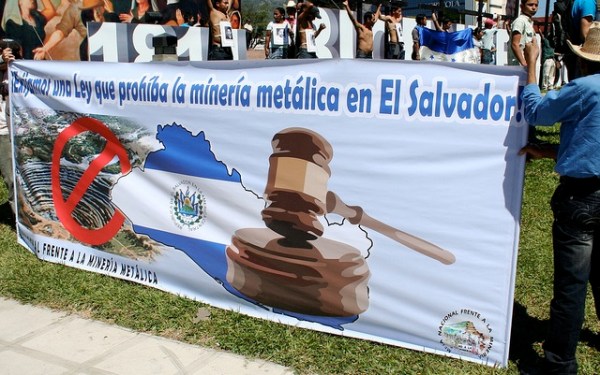
El Salvador’s refusal to allow gold mining within its borders sets it apart from most other Latin American countries, but the mining suspension is far from permanent.  Since 2007, three successive presidents, from both the right-wing ARENA and left-wing FMLN parties, have maintained an administrative metals mining “industry freeze.”  This executive action has created a de-facto moratorium that prevents all mining firms – international and Salvadoran, public and private – from accessing El Salvador’s estimated 1.4 million ounces of gold deposits.  Some in the Salvadoran media trumpet this policy.  When former U.S. President Bill Clinton made a philanthropic visit to El Salvador earlier this month, a number of news stories fixated on one of his travel companions: Canadian mining magnate Frank Guistra.  Some media slammed Guistra as “persona non grata in El Salvador.”  They showcased his billion-dollar global mining investments, labeling him (incorrectly) a major shareholder in Oceana Gold, the Australian company suing El Salvador for $284 million for having denied the firm a license to mine.

The mining freeze represents a drastic break from El Salvador’s past economic strategy.  In the 1990s, after the civil war, El Salvador, encouraged by international donors and creditors, embraced mining as an opportunity for economic growth.  Environmental activists challenged the policy, emphasizing the country’s ecological vulnerability and worsening threats of water scarcity and deforestation.  Consecutive ARENA governments ignored these arguments and implemented legal and regulatory reforms to attract foreign mining firms.  But a community-based social movement changed that.

  • Led by a decade-old Salvadoran coalition “roundtable” (with some international support) against mining, this movement strategically promoted a campaign that is pro-water rather than anti-industry, based on rigorously collected and analyzed scientific evidence.
  • The Salvadoran Catholic Church, citing doctrine as prioritizing water and land over economic gain, has provided the movement a level of non-partisan, moral legitimacy.
  • Individual government officials from across elected, appointed, and civil servant ranks have ensured that El Salvador’s weak but existent administrative mechanisms resist pressure from powerful multinational business to reverse policy.
  • A number of Salvadoran companies relying on water and land resources, such as agrobusiness, ranchers, and producers of juices and soft drinks, have largely stayed out of the debate, eliminating a potentially huge obstacle to the movement’s agenda.

The media’s zeal – strong enough for them to mistakenly connect Frank Guistra to Oceana Gold and the ongoing lawsuit – reflects strong popular support for the administrative freeze on mining.  My field research and earlier studies indicate that most Salvadorans do not see the environmental threat from mining as imagined.  Nonetheless, the suspension is precarious – based only on executive action and not legislation that would permanently prohibit mining.  Many in the anti-mining movement believe that a suspension is inadequate over the long term because a change in government could lead to its reversal.  New mining technology, which purportedly would ward against environmental damage, could give political leaders a pretext for lifting the moratorium.  Yet others who support the freeze under current environmental conditions want to have the option of opening the country to mining available in the future.  For those who advocate that total prohibition is the only solution, the fight to stop mining permanently for El Salvador will be a long one.

November 23, 2015

* Rachel Nadelman is a PhD candidate in International Relations at the School of International Service, whose dissertation research focuses on the unique aspects of El Salvador’s mining policies.

Correction: November 23, 2015

The original photo accompanying this blog was incorrectly labeled as being from a Salvadoran mining town.  The photo was actually taken in a town named El Salvador, Chile, and is unrelated to the content of this post.

The Papal Encyclical: Driving Debate in Latin America

By Evan Berry*

Pope Francis

Photo Credit: Raffaele Esposito / Flickr / Creative Commons

Pope Francis’s encyclical on human ecology, due to be published this week, seems likely to contribute to a range of ongoing debates.  Entitled Laudato Sii, the document has already become a touchstone for debates about the moral dimension of climate politics and triggered heated debate within the global Catholic community about the pontiff’s authority on climate change.  It links care for the poor with environmental stewardship and makes a theological case against the “culture of consumerism.”  A vocal Catholic environmental movement has embraced it, while detractors are raising concerns about the fusion of theology and science, and some Church conservatives fear it will feed into arguments for “population control.”  Non-Catholics, including secular environmental organizations, the progressive media, and leaders from other religious traditions, are also studying it.

Champions of the document claim that it could have broad implications.  They expect it to legitimize civil society organizations committed to the climate and justice; affect the behavior of millions of individual Catholics; influence Catholic political leaders who are skeptical or obstructionist about climate change; and become a factor in ongoing international negotiations.  Perhaps zealously, these claims imply that tectonic changes are underway in the international political landscape, especially in the United States, where Hispanic Catholics are the demographic group most concerned about climate change, and in Latin America, a region both shaped heavily by Catholic tradition and uniquely imperiled by the threat of global warming.

For Latin America, which has been front and center in climate politics in recent years, the implications of the encyclical are potentially deep.  Peru and Brazil have hosted recent international conferences on climate change, and the Amazon, a key global carbon sink, ensures governments’ high interest in the international environmental dialogue.  The region’s vulnerability to glacial melt, storm intensification, drought, and rising sea levels also give the issue salience.  The challenges posed by climate change come at a time that many lower-income countries believe that Latin America can be a source of development models that address income gaps, raise literacy rates, and expand access to health care while protecting the environment.  Francis’s teachings on ecology and consumerism will resonate with and reinforce existing ecological movements – Buen Vivir and other groups link the issues – and his imprimatur could even facilitate rapprochement between leftists and centrists within the Church.  On a political level, the region’s reliance on energy exports, such as in the Pope’s native Argentina, may make it harder for public officials to advocate oil and gas development without seriously addressing the climatic impact.  The situation is similar in Brazil, where Pope Francis’ popularity and ecological orientation are starkly contrasted with the President Rousseff’s abysmal ratings and poor oversight of Petrobras.  But religion, environment, and politics are nowhere more likely to come into confluence than in Peru, where an upcoming election touches on several intensive socio-environmental conflicts, and where public awareness about climate change is well established.  Whether or not the Latin American leader of the region’s historically dominant religion has all the solutions, his encyclical seems likely to play into the moral and political debates the region needs and welcomes.

June 16, 2015

*Evan Berry is Associate Professor in the Department of Philosophy and Religion at American University.

Nicaragua’s “Great Canal” Draws Opposition

By Fulton Armstrong

9036608152_a199acb183_z

Protestors opposing the Chinese-Nicaraguan canal confront police / Jorge Mejía Peralta / Flickr / Creative Commons

Although questions continue to swirl around whether the Chinese-Nicaraguan canal – which its main investor called the “most important [project] in the history of humanity” – will be built or not, its opponents are taking it all very seriously.  A CID-Gallup poll in January showed that 41 percent of Nicaraguans interviewed strongly support the project, while another 21 percent and 17 percent back it somewhat and a little, respectively.  But another poll by the same firm suggested ambivalence:  asked if they supported the National Assembly vote giving the Chinese firm leading the project, HKND, a concession for the 278-km right of way for up to 100 years, some 39 percent of respondents said no.  Some political voices are growing more sharply opposed as well.  The powerful business group COSEP, for example, has gone from agnosticism about the project to a position of open disapproval.

Groups concerned about the project’s impact on the environment and rural residents have already held protests involving up to several thousand participants, and – despite the government’s promise that the canal will bring prosperity throughout the country – organizing efforts appear unlikely to fade.  Skepticism about HKND and the government’s commitment to protecting the environment, fueled by their off-the-cuff dismissal of concerns, is so deep that even a balanced comprehensive impact study by the British Environmental Resources Management, due next month, may fail to calm nerves.  Environmentalists cite studies warning that dredging Lake Nicaragua from its current depth of nine meters to the 27 meters necessary for cargo ships will stir up many layers of toxic materials, with catastrophic consequences for marine life and surrounding agricultural areas.  Other groups are rallying behind the 29,000 residents who are to be evicted from properties along the canal route.  Demonstrations have turned violent, with protestors injured by tear gas and rubber bullets.  Graffiti and banners demanding “fuera chinos” are common.

In the hemisphere’s second poorest country, the promise of growth spurred by the $40-50 billion project is still a powerful card in the government’s hand.  Many skeptics still wonder, however, if the whole scheme is a ruse to fleece the Chinese investors, who’ll bring in a couple billion dollars before realizing that the project will get bogged down in Nicaraguan political quicksand.  But opposition to the canal goes far beyond the usual Managua political game of fighting over corruption dollars and obstructing each other’s priorities.  President Ortega’s endorsement of the canal contradicts his own statements years ago that he wouldn’t compromise the lake’s eco-system “for all the gold in the world.”  According to The Guardian newspaper, the dredging will move enough silt to bury the entire island of Manhattan up to the 21st floor of the Empire State Building – which no one is prepared to deny will have serious environmental implications.  China’s Three Gorges Dam, completed five years ago, displaced 1.2 million inhabitants – proportionally twice as many Nicaraguans displaced by the canal – but Nicaragua’s ability to resettle them, give them jobs, and suppress their dissent is small compared to China’s.  The project may not be the greatest in the history of mankind as HKND claims, but it may provoke a crisis as great as any in Nicaragua.  For starters, if COSEP’s opposition persists, it threatens to unravel the modus vivendi under which Daniel Ortega has stayed in power, and could portend much deeper tensions.

March 5, 2015

Click here to see our previous article about the canal.

The Impact of Falling Oil Prices on the Western Hemisphere

By Thomas Andrew O’Keefe*

L.C. Nøttaasen / Flickr / CC BY-NC 2.0

L.C. Nøttaasen / Flickr / CC BY-NC 2.0

The sharp drop in the benchmark Brent crude price of oil from just under US$115 per barrel in June 2014 to its current perch around US$50 has important ramifications for the Western Hemisphere.  For Venezuela, which earns some 95 percent of its foreign exchange from petroleum exports, it is a potential disaster.  Underlying political tensions will be exacerbated if there is no money to continue funding social welfare programs or heavily subsidizing gasoline.  It probably also spells the end of PetroCaribe’s generous repayment holidays and what are in essence below-market interest loans for Caribbean and Central American nations.  Sharply lower oil prices also put at risk major energy projects such as the development of Brazil’s pre-salt reserves, which require a minimum price of $50 to $55 to be economically viable.  Equally tenuous are Argentine efforts to regain energy self-sufficiency by exploiting its vast shale oil and gas reserves and Mexican plans to attract foreign investors to participate in deep-water oil exploration and drilling.  The minimum price for a barrel of oil below which new investment projects in Canada’s oil sands are no longer attractive is around $65.  Shale oil producers in the United States are also being squeezed by low petroleum prices.

On the other hand, net energy importers such as Chile, Paraguay and Uruguay benefit from sharply lower oil prices.  Although being weaned off  PetroCaribe will be painful for the Caribbean and Central America in the short term, they will be able to seek oil at the lower prices elsewhere.  The pressure on the Obama administration to lift the ban on U.S. crude oil exports, in response to a glut of domestic shale oil production, could also redound in favor of the Caribbean and Central America by lowering international oil prices further through increased global supply.  Already, 2015 began with U.S. companies authorized to export an ultralight crude called condensate.

In hopes of rallying OPEC to stabilize oil prices, Venezuelan President Maduro last weekend rushed off to lobby Saudi Arabia, which just two months ago refused to decrease production in order to raise prices, but oil industry sources say there’s little chance of a policy change.  Meanwhile, the environment may turn out to be among the biggest beneficiaries of lower oil prices.  Less investment in shale oil production reduces the risk of leaks of methane, a potent greenhouse gas, as well as decreases flaring.  Similarly, slowing down oil sands production in Alberta and Saskatchewan means that the very high levels of greenhouse gas emissions associated with extracting crude oil from bitumen (not to mention the negative impact on water resources) is diminished.  Although lower fossil fuel prices traditionally have undermined incentives to move to greater reliance on renewable and non-traditional energy resources, this may no longer be true.  For one thing many governments around the world are now embarked on ambitious efforts to reduce carbon emissions by, among other things, raising the costs associated with petroleum usage through cap and trade regimes that force companies to buy government-issued pollution permits.  Still others have enacted outright carbon taxes on utilities and large factories per metric ton of carbon dioxide emissions.  In addition, the heavy initial capital investment that was previously associated with things like wind, solar and geothermal power are falling.  For example, a combination of technological advances and Chinese overproduction have resulted in much lower prices for solar panels so that the cost of generation from a large photovoltaic solar plant is now almost 80 percent less than five years ago.  Geothermal energy may be the renewable that most benefits as drilling rigs idled by lower oil prices are now available at a lower cost for geothermal projects.  

*Thomas Andrew O’Keefe is President of San Francisco-based Mercosur Consulting Group, Ltd. and teaches at the Villanova University School of Law.

January 13, 2015

The Amazon Basin: Rainforests, Oil, Politics, and the U.N. Climate Negotiations

By Todd A. Eisenstadt and Karleen Jones West

Photo by Caroline Bennett / Rainforest Action Network / Flickr / CC BY-NC 2.0

Caroline Bennett / Rainforest Action Network / Flickr / CC BY-NC 2.0

Research that we have undertaken with National Science Foundation support indicates that rural, indigenous, and impoverished citizens in Latin America mobilize on environmental issues out of simple self-interest.  In daily testimonials at last week’s meeting in Lima of the United Nations Framework Conference on Climate Change (UNFCC), activists reaffirmed that they have been mobilizing all across Latin America to protect their land and water.  The conventional argument in the political science scholarly literature is that environmental issues are a post-materialist concern that influence only the relatively affluent populations of advanced democracies, but our research shows that the self-interest of vulnerable populations in developing countries is a powerful motivation for environmental consciousness.

Original data from a national survey we conducted in Ecuador this year point to three interest-driven hypotheses as explaining attitudes towards the environment.  First, similar to literature developing in geography, vulnerability to environmental changes that impact on people’s livelihood greatly enhances interest in environmental issues.  Second, political competition affects individuals’ environmental concerns because politics determine the extent to which citizens will benefit from extraction as a development policy.  Third, we claim – particularly for respondents in the Amazon region subsample – that a respondent’s location on the “extractive frontier” (i.e. whether they live in an area where extraction is under consideration) will affect their level of environmental concern.  Using original survey data from Ecuador, we find that populations threatened by environmental change and who are on extractive frontiers (where mining and oil concessions are being considered) are more likely to express concern over the environment, but that these factors are conditional upon how much citizens trust that the government will use profits from extraction to invest in their communities.

The meetings in Lima and implementation of its results are testing the findings of our research.  The social impact of the 2009 Baguazo – the slaying of some 33 protestors against mining in Peru’s Bagua Province – is still a recent memory to many and is a constant reminder that the “extractive frontier” is long, dynamic, and fraught with social conflict.  For Ecuador, Peru, and the other Amazon Basin nations on the front lines of climate change, our findings imply that in this part of the developing world at least, vulnerability to environmental change has a great impact on public opinion.  Competing political interests and debate over whether to accept mineral or petroleum extraction is also intense because of the trade-offs they entail between environmental conservation and economic growth.  This is not a new debate, but one which is acquiring more precise definition by academics in studies such as ours (click here for full paper) as well as the policymakers who last week pushed the debate onward to Paris in 2015, where a new climate change framework is expected from the UN.

December 16, 2014

Preparing the West Indies for the Demise of PetroCaribe

By Thomas Andrew O’Keefe*

ariwriter / Flickr / Creative Commons Attribution-NonCommercial-ShareAlike 2.0 Generic (CC BY-NC-SA 2.0)

ariwriter / Flickr / Creative Commons Attribution-NonCommercial-ShareAlike 2.0 Generic (CC BY-NC-SA 2.0)

The English-speaking Caribbean nations – whose heavy dependence on imported diesel and fuel oil to generate electricity has placed them among the most heavily indebted countries in the world (on a per capita basis) – will face massive headaches if PetroCaribe collapses.  They eagerly signed up for the Venezuelan initiative, which sells them petroleum with one- or two-year grace periods and long repayment schedules ranging from 15 to 25 years at 1 or 2 percent interest.  Participating countries can even pay with products or services in lieu of hard currency.  In the case of Guyana, Haiti, Jamaica, and the Eastern Caribbean mini-states, PetroCaribe’s financing scheme represents an estimated 4 to 7 percent of their annual GDP.  The worsening economic turmoil in Venezuela, however, raises serious concerns about PetroCaribe’s future.  According to recent media reports, PdVSA, the Venezuelan national petroleum company, is shortening repayment periods and increasing interest rates.

No doubt this is one reason why the Obama administration launched the Caribbean Energy Security Initiative (CESI) in June.  CESI seeks to diversify the Caribbean’s energy matrix away from its current heavy reliance on fossil fuels by using Overseas Private Investment Corporation (OPIC) loans and credit guarantees to encourage private sector investment in renewable energy.  It is premised upon the Caribbean’s huge potential to generate energy from the sun, wind, geothermal sources, and maritime currents.  In the past, the principal bottlenecks to harnessing these abundant resources have been hefty startup costs and small populations that make it difficult, if not impossible, for the private sector to recover profits within a reasonable period of time.  Although the initial capital investment for solar- and wind-based technology has dropped considerably in the last few years, it is unrealistic to expect Caribbean nations to make a full switch to renewable energy resources anytime soon.  A more realistic, short- to medium-term alternative is to make greater use of natural gas.  Although still a fossil fuel, gas is more efficient – and therefore the generated electricity is less costly – than fuel oil and diesel.  Moreover, electricity generated from natural gas emits 70 percent as much carbon dioxide as oil, per unit of energy output.

The shale gas boom in the United States generated by innovations in hydraulic fracturing has led to calls to lift restrictions on U.S. natural gas exports to those countries with which it does not have a free trade agreement.  The Caribbean is potentially a major target market of this natural gas in liquefied form (LNG), but this would be a big mistake.  Lifting restrictions on exports will inevitably raise natural gas prices in the U.S., thereby hurting consumers and putting the nascent revival of domestic manufacturing at risk.  It would also require building expensive LNG offloading and regassification facilities in the West Indies, which would run up against the same economies of scale limitations (except in Jamaica and Hispañola) that have undermined a mass transition to renewable energy.  A more realistic alternative is to revive plans to build a natural gas pipeline from Trinidad and Tobago to Barbados, and then up through the Eastern Caribbean.  Proposed back in the early 2000s, it was scuttled with the appearance of PetroCaribe in 2005.  Trinidad and Tobago has ample reserves of natural gas; at one point before the shale gas revolution it was the largest source of imported LNG in the United States.  The pipeline would link islands with populations of under 100,000, where LNG is economically unviable, with the more densely populated French dominions of Guadalupe and Martinique.  It would also help revive the floundering Caribbean Common Market and Community (CARICOM).

* Thomas Andrew O’Keefe is President of San Francisco-based Mercosur Consulting Group, Ltd.

Climate Change: Creating Spaces for Action

Pacchanta women with Ausangate Glacier in the background.  Photo credit: Oxfam International / Foter / Creative Commons Attribution-NonCommercial-NoDerivs 2.0 Generic (CC BY-NC-ND 2.0)

Pacchanta women with Ausangate Glacier in the background. Photo credit: Oxfam International / Foter / Creative Commons Attribution-NonCommercial-NoDerivs 2.0 Generic (CC BY-NC-ND 2.0)


The Organization of American States (OAS) has resolved to strengthen its role in addressing climate change, but it has yet to demonstrate that it can convene Latin American countries around this urgent issue.  Participants at a recent OAS roundtable agreed that Latin American leaders have moved beyond debating the existence of climate change and are now focused on mitigating its immediate and future effects.  Of primary concern are the potentially devastating economic consequences of climate change for the region, which the Inter-American Development Bank estimates will reach $100 billion per year by 2050 – severely jeopardizing national economies that are currently growing at a healthy rate.  Based on recent climate change reports and initiatives, the potential of a looming transnational cataclysm is driving a sense of urgency for action within an effective regional framework.

Within the consensus for action, there will be competing priorities.  Climate change presents different challenges to different parts of Latin America and the Caribbean.  In Peru, for example, a major concern is glacier melt in the Andes, which affects fresh water resources, agricultural irrigation, and sustainable urban development.  This has created a need not only for new dams and reservoirs to redirect water, but also for managing internal social conflicts generated by an increasing scarcity of basic resources.  In the Caribbean, where tourism revenue represents the greatest proportion of the regional economy (14 percent of GDP), the top priority is managing the triple threat of rising sea levels, the loss of coastal livelihoods, and intensifying weather conditions.  And in Brazil, as Evan Berry highlighted here recently, deforestation, carbon markets and land use, among other concerns, need to be addressed.

The OAS would appear to be the logical forum to address these issues and provide a negotiating framework regarding climate change.  On recent non-environmental issues, however, the OAS has struggled to coordinate actions and lost prestige among many in Latin America.  The OAS response toward Honduras following the 2009 presidential coup was divisive and ultimately was end-run when the United States cut a deal with the coup regime.  The 2012 OAS assembly in Bolivia was plagued by persistent absenteeism of member states.  Washington has repeatedly pressed the OAS toward a more political agenda, especially pressing for condemnation of Venezuelan Presidents Chávez and Maduro, and has even threatened to suspend its contributions to the organization’s budget.  Insofar as the OAS is perceived as a U.S. proxy, its effectiveness on difficult issues with a north-south spin, like climate change, is undermined.  At the same time, the OAS is competing with other regional bodies, such as UNASUR and CELAC, and the region has raised its profile in international venues such as the 2010 alternative climate summit held in Bolivia after UN negotiations in Copenhagen failed.  With the UN’s 20th Conference of Parties (COP20) taking place in Lima in December 2014, Latin America will again be center stage during conversations on ways to strengthen and replace the 1997 Kyoto Protocol.  Should the OAS overcome its problems of effectiveness and image, and participate successfully in the current dialogue around climate change, this issue could redefine its existing agenda and give it relevance for years to come.