Cuba: Dealing with the Global Pandemic

By Ricardo Torres*

Cuban nurses carrying the Cuban flag

COVID-19 Response: Over 100 Cuban Nurses Arrive Barbados / Flickr / Public Domain

Cuba faces a “perfect storm” – a global health crisis – that poses the latest in a long list of challenges to its government, but a systematic destabilization of the country is highly unlikely, if not remote, for now. The COVID‑19 pandemic has caused an unprecedented disruption to the world economy, the devastating effects of which no country has escaped. The Cuban economy is critically dependent on tourism and remittances, two areas that have been deeply affected. Those countries from which visitors and cash flow to Cuba are greatest – the United States, Canada, Western Europe, and China – have been hit hard.

  • The shock is compounded by a drop in Cuba’s average annual growth from 2.7 percent in 2010‑15 to 1.4 percent in 2016‑19. The causes of that decline include the economic crisis in Venezuela; the cancellation of medical services agreements in Bolivia, Brazil, and Ecuador; the end of the international tourism bonanza; and the effect of new U.S. sanctions. Washington’s actions have complicated trade, foreign investment, and travel. The measures have limited remittances, reduced Cuba’s ability to import fuel, and clamped down on foreign firms operating in Cuba, such as through the first application of Title III of the “Helms-Burton Act.”
  • Another factor has been the disappointing results of Cuba’s internal economic reform, which has been wrapped up in political contradictions and a lack of clarity of its objectives. One costly flaw in these circumstances has been the government’s inability to stimulate industries that provide essential products, particularly food. Combined with the international challenges, including fresh, tough sanctions by the United States, this problem has contributed to a situation in which the Cuban people face growing shortages of all kinds of products, including food, medicines, and fuel.

The government’s response to COVID‑19 has evolved from caution to the gradual imposition of increasingly radical measures.

  • In mounting a medical response, the centralization and verticality of the Cuban model allows authorities to adapt plans and resources in the face of new priorities. The Cuban health system, for example, is known for its national coverage and access to resources (including 848 doctors and 5.5 beds per 100,000 inhabitants), and it has experience dealing with epidemics. Decisions have been taken around the concept of epidemiological vigilance, including closing the borders on April 2 and bolstering research, although the inability to carry out massive testing has been a weakness. The government has also guaranteed workers’ income and employment, except for parts of the private sector and informal economy, and expanded food-rationing to a broader list of products.

The economic impact in the medium term should not be underestimated. GDP growth will enter negative territory. Financial problems will surely deepen. Shortages of an array of basic necessities are going to worsen. Restructuring of foreign debt is necessary.

  • Internally, Cuban policymakers are going to have to take into consideration the new socioeconomic structure of the country and the need to focus support where it’s needed most. The crisis provides a good opportunity to give substance to longstanding rhetoric about improving agricultural production. Greater flexibility in regulating private businesses is also an obvious policy option. Accelerating and broadening digital access throughout society should also be a priority under the wisdom of “not putting off till tomorrow what can be done today.”

The Cuban Government is not presiding over a terminal crisis, however. Even considering the system’s weaknesses before the pandemic, this perfect storm is not its responsibility. For the medical challenge, Cuba is prepared and probably will overcome some of the criticisms made abroad about its medical missions, as brigades of Cuban doctors deploy to 19 countries. The country’s biotechnology industry also stands to make advances. It’s too early to say whether Cuba will be able to profit from these opportunities, but Havana may benefit from its willingness and ability to be a responsible international partner.

  • Washington’s policies also put it in sharp contrast with China, which continues to provide help during these difficult times. If the pandemic has made anything clear in Cubans’ minds, it’s that the United States is disqualifying itself as a positive force for change on the island.

April 17, 2020

*Ricardo Torres is a professor at the Centro de Estudios de la Economía Cubana at the University of Havana and a former CLALS Research Fellow.


Latin America: The Massive Challenge of COVID-19

By Carlos Malamud and Rogelio Núñez*

Bolsonaro & AMLO

Presidents Bolsonaro of Brazil and López Obrador of Mexico have been criticized for downplaying coronavirus concerns// Left: Palacio del Planalto/ Flickr/ Creative Commons (modified)// Right: PresidenciaMX/ Wikimedia Commons (modified)

Latin America has had several advantages as the COVID-19 virus has moved in – including the chance to learn the lessons of Asia and Europe – but it faces it with fundamentally weaker tools: under-resourced health infrastructures, slowing economies dependent on declining commodity prices, comparatively little ability to increase public spending, and politically weakened governments. The WHO numbers are rising and will grow steadily owing both to accelerating infection rates and more widespread testing.

Most governments have taken strong actions, including closing borders, imposing quarantines, and closing schools, but leaders face huge challenges. In many countries, their inability for years to respond to the growing social demands of the emerging middle classes, especially regarding health care, education, and other social services, have already led to major social unrest and incumbent weakness.

  • They’re going to confront the virus with grave institutional problems, including corruption and lack of financing, and a lack of popular goodwill. The worst are Venezuela, Nicaragua, and Haiti (a failed state), but Brazil and Mexico will be most deeply affected. Brazil already has a high infection rate, and Mexico’s will grow as well.
  • In Latin America’s presidential systems, most presidents have put their personal imprint on national policies. Their measures to slow the spread of the virus have faced little backlash. Brazilian President Jair Bolsonaro and Mexican President Andrés Manuel López Obrador have gone out of their way to appear oblivious to the scientific indicators that their countries could face catastrophe. Especially for politically vulnerable presidents – Chilean President Sebastian Piñera has a 10 percent approval rating – the virus entails great personal political risk.
  • Making things worse, regional organizations such as the South America Defense Council (part of UNASUR), the Pan-American Health Organization (PAHO), and the OAS have not yet provided effective international coordination. PAHO is sending “support teams” with unspecified mandates and no new resources. The Central American presidents have met digitally to coordinate strategies.

Failure of the early control measures could have dire health consequences. Health services are vulnerable and easily overwhelmed. The delayed arrival of the virus has given health officials time to prepare, and the best hospitals are in urban centers with greatest need. But the region has several Achilles’ heels, especially the shortage of facilities and resources.

  • “Universal coverage” is actually only “partial” in all but Costa Rica and Uruguay, according to a London School of Economics study. Some countries improved their preparedness in the wake of outbreaks of chikungunya, zika, dengue, and other contagious diseases, but most still lack the laboratories and field facilities to slow a virus of COVID-19’s scope.
  • Most seriously, many of the health systems lack the infrastructure to identify, treat, and isolate patients enough to slow the spread of such a highly contagious disease. The lack of efficient isolation facilities, coupled with shortages of trained personnel and essential supplies and equipment, leave the region – despite its short-term preparations – vulnerable to an outbreak much larger than in Asia, Europe and the United States.

Market crashes and likely recession in Asia, Europe, and the United States are causing collapse of the prices of Latin American exports and a series of profound pressures on economic growth in the region. Our colleague Federico Steinberg notes that the difference between a “soft-impact” scenario and a catastrophic one will depend on whether the virus is brought under control in the second quarter of the year.

  • Many observers believe the impact will be less severe in Latin America than Asia, but that assumes reasonable success keeping the crisis relatively short. Some decline is inevitable, however, because China, Europe, and the United States’ recovery will take time. Among the sobering predictions is that of the EU’s Director for Economic and Financial Affairs, who on March 13 said the EU and Eurozone will enter a recession this year with growth “considerably below zero,” but his reference to a good chance of a “normal” bounce back next year may be optimistic.
  • Experts expect food exports to suffer more and longer than energy and mineral exports, although the drop in oil prices to 1980s levels will squeeze Venezuela, Ecuador, Mexico, Colombia, Brazil and Argentina hard. New oil exploration in Brazil and fracking in Argentina has halted.

Most Latin American leaders are not oblivious to the trials ahead. On March 15, Colombian President Iván Duque said the virus will be “especially difficult for the Latin American countries” and “can overwhelm us.” The crisis requires the region to bring its principal comparative advantages – time and the ability to analyze the successful (and failed) tactics in Asia, Europe, and the U.S. – to bear to compensate for its structural weaknesses.

  • Latin America does not have the resources or mobilizational capacity that South Korea does to carry out a massive campaign to test and treat the population, but the region can avoid total catastrophe if it expands and maintains its drastic measures, adheres to the scientific evidence, and learns from other countries’ efforts to manage the outbreak.

March 26, 2020

* Carlos Malamud is a Senior Analyst for Latin America at the Elcano Royal Institute and Professor of Latin American History at the Universidad Nacional de Educación a Distancia (UNED), Madrid. Rogelio Núñez is a Senior Fellow at the Elcano Royal Institute and Professor at El Instituto Universitario de Investigación en Estudios Latinoamericanos (IELAT), Universidad de Alcalá de Henares. This article is adapted from their recent analysis published here on the Elcano Institute website.

This post has been updated to correctly identify the President of Chile.

USMCA: Devil’s in the Details on Automotive Content

By Frank L. DuBois*

Automated manufacturing of cars

Automated car manufacturing/ Steve Jurvetson/ Flickr/ Creative Commons License

The automotive trade regime in the recently completed U.S.-Mexico-Canada Trade Agreement (USMCA) – “NAFTA 2.0” – will create headaches for many manufacturers but appears unlikely to deliver the big boost in jobs it promises. Much of the focus of the negotiations was on changing the automotive rules of origin (ROOs) to encourage more auto manufacturing in the United States and Canada and make it difficult for automakers to shift production from high-wage locations to low-wage factories in Mexico. Under the new rules, some manufacturers will see significant changes in operational strategies while others will be less impacted.

According to the agreement, a 2.5 percent tariff will be applied to the import value of cars (25 percent for light trucks) if the vehicles don’t meet the new ROOs:

  • 70 percent Regional Value Content (RVC) rather than 62.5 percent under the old rules.
  • 40 percent of the Labor Value Content (LVC) of vehicles (45 percent in the case of light trucks) must be made in plants that employ workers making at least $16 per hour.
  • 70 percent of the value of steel and aluminum used in the vehicle must be of regional origin.

The Kogod Made in America Auto Index (KMIAA), which I’ve been compiling for seven years, challenges assumptions used when calculating the U.S. content of a car, including some used as marketing strategies to portray products as being more “American” than what a buyer might think.

  • KMIAA results and rankings differ significantly from those indices that evaluate domestic content solely based on where a car is assembled, without taking into account the country of ownership of the brand. (Japanese, Korean and German car manufacturers are treated the same as U.S. manufacturers despite non-US R&D and profits that are repatriated back to the home country). Location of manufacture of engines and transmissions, which account for approximately 21 percent of vehicle value, may also not be addressed in other indices. Likewise, assembly labor accounts for around 6 percent of vehicle value.
  • The index reveals the complicated nature of content calculations. Toyota assembles only one vehicle at its plant in Tijuana – the Tacoma light truck with an engine of either U.S. or Japanese origin (depending on displacement) and a transmission of either U.S. or Thailand origin. Toyota has made the same truck in San Antonio, Texas, but recently announced that all of Tacoma production will be moving to the Mexican factory. Toyota is likely to reduce its non-North American sourcing (fewer engines and transmissions from Asia), and restructure supply chains to place a premium on U.S. parts and power train sourcing. Other manufacturers face greater shifts. The Audi Q5, for example, currently has 79 percent Mexican parts content and only 3 percent U.S. parts.

Producers’ operational responses are likely to run the gamut from full compliance to limited changes. Some automakers may simply pay the WTO tariff of 2.5 percent for access to the U.S. market. A separate requirement that at least 40 percent of the value of cars be made in plants with $16 per hour labor will be problematic given that wages in Mexican auto plants average $3 to $4 per hour. Producers will have to decide whether to raise wages in Mexican plants, shift sourcing to U.S. and Canadian plants, or attempt to develop ways to game the system by shifting some high-wage expenses into the labor value category. While the new rules may boost some manufacturing jobs in the U.S. and Canada, they will raise costs leading to lower auto sales, and have nowhere near the impact that their boosters have promised. Again, the devil is in the details.

March 5, 2020

* Frank L. DuBois is an Associate Professor of Information Technology and Analytics at American University’s Kogod School of Business. Data for the KMIAA comes from data automakers provide under the American Automotive Labeling Act (AALA) and from field visits to car lots in the DC metropolitan area.

Guyana’s “New Decade” Begins in March

By Wazim Mowla*

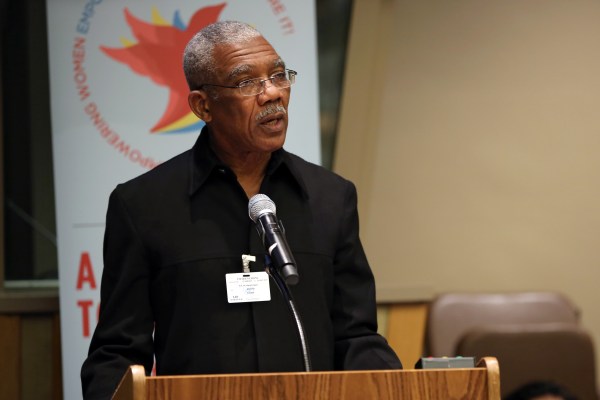
President David Granger speaking at a UN Women's Meeting

Guyana President David Granger Speaking at a Global Leaders’ Meeting on Gender Equality and Women’s Empowerment in 2015 / Flickr / Creative Commons License

Guyana’s national and regional elections on March 2 will be its most consequential in 30 years as a huge increase in oil revenues and international interest puts the country in a brighter spotlight, but the country’s new leadership – while having greater resources and opportunities – will still face vexing challenges that oil dollars won’t solve. Guyana continues to discover more oil and has produced its first commercial crude shipment in December 2019. ExxonMobil anticipates that the country will reach a capacity of 120,000 barrels per day this year, and the International Monetary Fund (IMF) estimates an 86 percent increase in GDP. This growth has energized the election campaigns.

  • Eleven political parties are campaigning, with the A Partnership for National Unity + Alliance for Change (APNU+AFC) coalition and the People’s Progressive Party/Civic (PPP/C) at the clear head of the pack. Reliable poll data is scarce, but incumbent President David A. Granger (APNU+AFC) appears confident in his reelection. He is proposing a new “contract with the people” under which he will use oil revenues to increase conditional cash transfers for food, housing, and transportation to residents in the populous coastal areas as well as invest in projects benefiting the 10 percent of Guyanese who live inland .
  • Representing the PPP/C is presidential candidate Dr. Irfan Ali, whose party narrative is that it helped build Guyana without oil and gas and will continue this progress by expanding social programs with the additional revenue. Specifically, Ali wants to reopen sugar estates that Granger closed, sparking protests by the Guyana Agricultural Workers Union (GAWU). To demonstrate its intention to tackle crime, the party has selected Brigadier (retired) Mark Phillips as its Prime Ministerial candidate.

Within the context of Guyana’s highly publicized racial divisions, both political parties are calling for national unity. APNU+AFC has traditionally drawn most of its support from the Afro-Guyanese population (about 30 percent of the population), while the PPP/C leans on the support of Indo-Guyanese citizens (about 40 percent) – while the mixed races (20 percent) and indigenous (10 percent) usually the swing voters who determine the election. The historic racial divisions within the domestic political elite have remained unnaturally suppressed during this election season – perhaps because, for the time being at least, oil is dominating the national dialogue. All political parties understand that Guyanese citizens care more about benefits than the party in power.

While projecting an optimistic vision of Guyana’s future, both major political parties certainly know that oil revenues will not resolve all of country’s problems when it enter what Granger has called its “Decade of Development.” Ethnopolitical divisions are certain to reemerge after the election, and managing suspicions about the use of oil revenues will pose a significant challenge to the victors, especially because the country’s current institutions do not afford the transparency and checks and balances necessary for calming anxieties. The new government is going to have to devise difficult policies on dealing with climate change, the damage to Guyana’s human capital, and the security risks threatening the country’s development.

  • Guyana’s sea level is rising faster than the global average. Large parts of the population live in areas 20 to 40 inches below sea level where groundwater extraction and wetland drainage worsen flooding. Inconsistent weather patterns are disrupting agricultural production, and the country’s sea walls do little to prevent the devastation of crops.
  • Guyana has one of the highest suicide rates in the world – an average of 44 per 100,000 people each year – and gender-based violence is also an increasingly serious problem. A recent survey by the Guyana Bureau of Statistics found that about half of all Guyanese women has experienced or will experience intimate-partner violence.
  • The country also needs to find solutions to threats from outside. The crises in Venezuela and Haiti have already triggered a costly refugee flow, and officials fear the country will become a hotspot for drug and human trafficking and organized crime. Experts expect the oil industry to attract illegal immigration from other Caribbean countries, Venezuela, and South America in search of job opportunities. Once the elections are over, political leaders will have to turn their attention to these troubling realities.

February 21, 2020

* Wazim Mowla is a graduate student at American University, specializing in Caribbean Studies.

Guatemala: Fiscal Challenges Await New President

By ICEFI and CLALS*

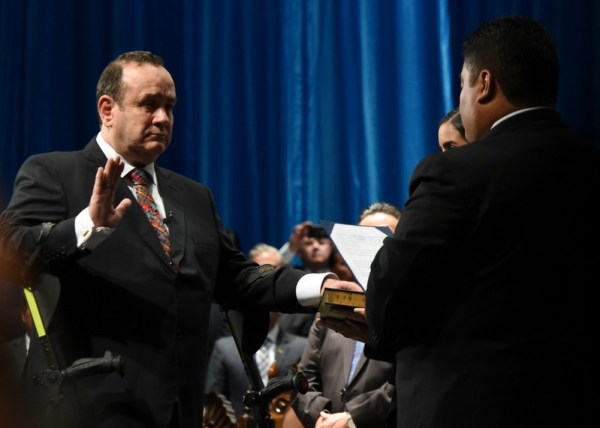
Guatemalan President Alejandro Giammattei is sworn in, January 14, 2020

Guatemalan President Alejandro Giammattei is sworn in, January 14, 2020/ US Embassy Guatemala/ Flickr/ Creative Commons/ https://bit.ly/2GeHS0U

Guatemalan President Alejandro Giammattei, inaugurated on January 14, faces a deeper public finance crisis than previously estimated, putting even greater pressure on him to undertake fiscal reforms and start the slow and difficult process of fiscal stabilization and recovery.

  • The Giammattei administration has inherited a fiscal mess from former President Jimmy Morales, during whose four-year administration public spending on principal social needs didn’t surpass 8 percent of GDP (7.9 percent in 2019). Despite slow, slight growth in the education budget in 2015-2019 and a growing population, the number of students enrolled at the elementary and high school level actually contracted. Spending on health – in a country with half of its children suffering from chronic malnutrition, one of the lowest health service levels, and one of the highest infant and maternal mortality rates in the world – remained around 1 percent of GDP. The military budget under Morales, however, expanded considerably, allowing the Armed Forces to purchase weapons and a ship and to at least try repeatedly to buy military aircraft.

The fiscal situation is worsened by the persistent inability of the national tax authority (SAT) to achieve its collection goals for almost a decade, as well as by the array of amnesties and fiscal privileges approved by the National Congress in 2015-19. As a result, the Morales administration ran up fiscal deficits from 1.1 percent of GDP in 2016 to 2.5 percent in 2019 – accelerating the increase in the stock of public debt from 24.7 percent of GDP in 2017 to 27.0 percent in 2019 – Guatemala’s highest in recent history.

  • Making things worse, the debt was principally handled through issuance of Treasury Bonds sold on the national and international markets at terms – higher rates and shorter maturity periods – less favorable to the Guatemalan government. Last September Congress passed a law, supposedly to formalize cattle growers and ranchers (a sector well known for not paying taxes), that many observers say is so badly written that it opens the door to more tax fraud and even money laundering by powerful drug cartels. ICEFI and even some members of Congress note this has the potential to cause even greater revenue losses in 2020.

Budgetary pressures seem very likely to continue rising this year, further complicating the new president’s challenges. The Constitutional Court in late November ruled that the Executive Branch must correct the way it calculates the transfers that the Constitution requires the Central Government make to the municipalities, the Judiciary, the San Carlos University (Guatemala’s only public university), and the federated and non-federated sports institutions. If this ruling is confirmed, it will generate a huge increase in those organizations’ budgets, seriously exceeding the government’s current fiscal capacity by more than US$1 billion (1.2 percent of GDP).

  • ICEFI’s analysis shows that the only way for the new government to overcome the public finance crisis is to undertake far-reaching fiscal reform – revitalization of tax administration, a credible fight against corruption and tax evasion, and correcting budget priorities. For a government more inclined to pro-business and liberal economic thinking, such reforms may represent a considerable political challenge.
  • President Giammattei also inherited a difficult political situation from his predecessor, whose conflict with the UN-supported International Commission against Impunity in Guatemala (CICIG) and whose alliance with persons widely believed to be involved in corruption further undermined popular confidence in the government. The new president will be judged harshly if he fails to demonstrate early on a commitment to fight corruption, increase transparency, and make government more accountable. Accusations that he himself has been involved in corruption are already arising. He faces these tough economic and political challenges – with diminished resources, fiscal chaos, and with the previous administration’s allies considerably strengthened – at a time that Guatemala can ill afford to continue to stumble from crisis to crisis.

January 23, 2020

* The Instituto Centroamericano de Estudios Fiscales conducts in-depth research and analysis on the region’s economies. Data and charts supporting this article can be found by clicking here. This is the fourth in a series of summaries of its analyses on Central American countries. The others are here, here and here.

Cuba: Facing a Tough New Year

By Eric Hershberg, William M. LeoGrande, and Max Paul Friedman*

Intensified U.S. sanctions and the crisis in Venezuela are forcing renewed belt-tightening in Cuba and hindering the government’s ability to undertake even its modest economic reform agenda, but the country is not entering a new “special period” and significant instability does not appear likely in 2020 despite some increased social tensions. The big losers from U.S. sanctions are the small private-sector businesses — B&Bs, restaurants, and entrepreneurs — providing services to U.S. visitors, an estimated 638,000 a year before the Trump Administration clamped down over the course of 2019. But the government has also been forced to make major cutbacks.

  • To cope with fuel shortages caused by U.S. sanctions against oil companies shipping Venezuelan oil to Cuba, the government reduced production in many factories to maintain energy supplies to consumers and avoid overly straining the power grid. Public transportation also faced drastic cuts, largely because of a lack of diesel fuel needed to distribute gasoline. Only some of the affected bus routes have since been restored.
  • Shortages of an array of necessities — from bread, coffee, meat, and many basic medicines to all energy products — have been severe and show no sign of abating as the economy sputters. Domestic demand for products that Cuba can produce, including electric bicycles and appliances, is strong, but financing is too tight. The government is phasing out the convertible peso (CUC) that it artificially pegged to the dollar and is establishing new hard-currency stores to capture dollars now flowing abroad as Cubans buy both consumer goods and inputs for domestic private enterprises in Panama and elsewhere at the rate of $25 million per month — hard currency the government desperately needs. Those dollars the government captures will supposedly be made available for domestic producers to import essential inputs. Cubans expect the CUC to become worthless paper sooner as some vendors now accept only foreign currency, and the street value of a dollar is now more than 1.15 CUC (compared to the official rate of 0.87 CUC).

One leading economist deemed 2019 to have been the worst year since 1993 — with growth essentially flat — and said the forecast for 2020 looks no better. State-owned enterprises are failing to perform efficiently despite years of rhetoric about rationalization and improvements. Foreign purchases, long hindered by a lack of hard currency, have been made even harder by the U.S. sanctions, as suppliers increasingly fear Washington’s scrutiny. The government has not responded to growing pressures by accelerating the sorts of meaningful reforms that have long been needed to increase production and efficiency.

  • Its strategy focuses on import substitution, according to a senior economic official, to reduce the need for hard currency by producing more consumer goods and inputs domestically. The tourism sector has boomed over the past decade, but more than half the hard currency revenue it generates goes to imported inputs. Cuba spends some $2 billion importing food while more than half its arable land lies fallow.
  • Financing investment needed to make import substitution a viable strategy is difficult. Cuban government officials speak of doubling domestic investment, now only 11-12 percent of GDP, but without increasing indebtedness — a huge task for such an inefficient economy. In addition to encouraging tourism enterprises to substitute local for imported inputs, the government hopes to improve conditions during 2020 by implementing a decades-old proposal to establish a closed dollar-based system in which companies retain a portion of revenues to finance investment and imports.
  • Foreign direct investment is the other potential but a largely elusive source for capital. Government fact sheets continue to emphasize the importance of the Mariel Special Export Zone, which has some 50 promised users, $2.5 billion in promised activity, and 7,000 promised jobs. Actual activity in the Zone, however, falls far short of that. The Trump administration’s activation of Title III of the Cuban Liberty and Democratic Solidarity Act (“Helms-Burton”), which allows the previous owners of property expropriated after the 1959 revolution to sue anyone benefiting from it, has made new investors hesitant.

While the economic outlook looks difficult indeed, there are few signs that the government is anxious about social frustrations and tensions becoming a serious challenge, much less an existential threat. The government continues to resist obvious (and relatively easy) reforms, such as allowing cuentapropistas licenses for multiple lines of business. Allowing the CUC to disappear gradually may be a precursor to addressing the years-old distortions caused by the country’s multiple currencies and exchange rates, but there’s still no sign that the government is ready to implement a unified peso. Havana apparently calculates that the country is hardly the pressure-cooker that U.S. policy aims to create by, as U.S. Secretary of State Pompeo reportedly told EU diplomats recently, “starving” the population so as to bring about a regime collapse.

  • Young independent journalists say that public organizing via social media is at times successfully pressing the government, which they deem largely ignorant of popular concerns, to revoke unpopular measures. Yet growing access to the internet may also serve to distract youth from more threatening forms of organizing. Giving people a sense of input on issues like the arts, animal rights, and sexual identity that do not threaten core government policies and processes is probably taking an edge off discontent.
  • The new year is likely to be difficult, particularly as the Venezuela crisis drags on, but, as observers say, “Cuba does ‘bad’ pretty well.” Hope is never a plan, but virtually everyone in Havana expresses hope that U.S. elections in November might bring back a pro-engagement U.S. policy that helps grow Cuba’s private sector and relieving pressure on sources of financing for Cuba to move ahead with its modest reform strategy.

January 7, 2020

*AU Professors Hershberg, LeoGrande, and Friedman traveled to Cuba in December.

Argentina: End of the “Right Turn”?

By Santiago Anria and Gabriel Vommaro*

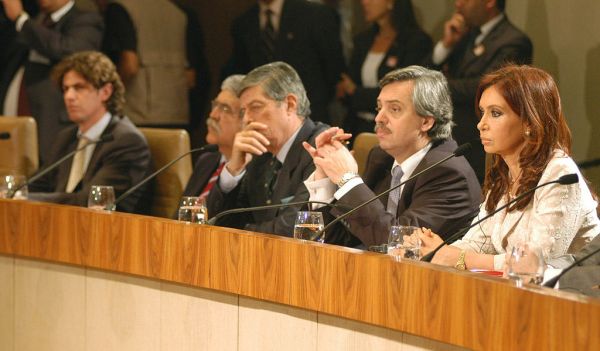
From right to left, Cristina Fernandez de Kirchner and Alberto Fernandez, and other ministers

From right to left, Cristina Fernández de Kirchner, Alberto Fernández, and other ministers / Wikipedia / Creative Commons / https://es.wikipedia.org/wiki/Archivo:Ministros_de_Cristina.jpg

The inauguration of Argentine President Alberto Fernández and Vice President Cristina Fernández de Kirchner last week confirms that the pronouncements of the death of Latin America’s “left turn” were premature — and that, rather than turning in any clear direction, political winds in the region appear to be blowing in all sorts of directions, with the only discernible underlying pattern being anti-incumbent votes following periods of economic crisis or economic downturns.

  • Obituaries for the “left turn,” which started in 1998 with the election of Hugo Chávez in Venezuela, have been appearing for years, particularly since the election of former President Mauricio Macri in 2015 and other right-leaning politicians in the region. Macri was widely seen as a bellwether of a broader “right turn” in the region — a turn that spread to Brazil, Chile, and elsewhere. For the very first time since the country’s democratic transition, a right-wing political party, in alliance with other parties, gained national power via democratic elections. To avoid the fate of other non-Peronist presidents, none of whom were able to finish their terms of office, Macri built a national coalition with broad societal bases of support.
  • The victory of left-Peronism in October, however, was formidable. The team of Fernández and Fernández obtained 48.1 percent of the votes, well above the 40.3 percent of the incumbent Macri. With two antagonistic camps capturing almost 90 percent of the vote, the elections were probably the most polarized since Argentina entered its democratic transition in 1983.

Rather than represent systemic shifts to either the right or left, the Fernández-Fernández victory is further evidence that Latin American electoral politics follow a routine alternation-of-power explained by retrospective, anti-incumbency voting driven by broad societal discontent — a sharp repudiation of incumbents that couldn’t deliver growth, adequate social services, and security. The left-right axis in Argentina is marked by high levels of polarization, with two major rival coalitions — Peronists and non-Peronists — structuring the electoral supply and disputing the center.

  • The defeat of Macri and his Cambiemos coalition revealed the center-right’s failure to carry out its desired free-market reforms aimed at dismantling the statist economic model based on the domestic market, wide social protections, and state intervention in the economy. Macri’s coalition lacked the unity to achieve pension reform and other difficult measures. Instead, Macri resorted to a “gradualism” that did not work in policy terms or politically. Similarly, his conciliatory approach to foreign creditors did not result in the expected capital inflows and economic growth. That fiscal gradualism was financed with a high rate of external indebtedness that made the Argentine economy even more fragile and ended in a massive financial crisis, after which the Macri government changed its approach towards greater economic orthodoxy.
  • The legacies of the previous Kirchnerist governments, including constraints on the government’s ability to cut spending, were also severe obstacles. Trade unions and social movements retained a high mobilization capacity and blocked attempts to remove state protections, effectively blocking labor reform and other Macri priorities. Once the government lost access to international credit and asked the IMF for a bailout — the largest in IMF history — it began to lose the support of social sectors that had been important to its rise, including business and large segments of the middle-class.

Center-left Peronism may also be unable to escape the left-right alternation. Widely discredited a few years ago and seen as a retreating force, especially due to corruption allegations and mismanagement, it kept strong connections with its societal core not only through the memory of the good old days of redistributive policies associated with the commodity boom, but also because there was no major shift in the political orientation of its main leader, Cristina Fernández. She broke with the conventional wisdom of Peronism that would have anticipated more leadership pragmatism and ideological eclecticism. As in the past, it has made promises that may eventually undermine its popular support.

  • The Fernández-Fernández formula will look and govern differently than it did during the Kirchnerist governments. It will be a broader center-left coalition formed by the Peronists and backed by a wide array of progressive parties and movements. But in addition to facing a hostile regional and global environment, Fernández will face many domestic challenges in a society that accumulated so many pressing demands during the ongoing Argentine economic crisis. Fernández inherits extraordinarily high levels of debt, soaring inflation, and rapidly rising unemployment and poverty levels. The “honeymoon” period, as some of his allies openly say, will be short, and Macri’s Cambiemos is likely going to provide strong opposition. The new government will unlikely escape the routine alternation-of-power dynamics explained by anti-incumbency voting in contexts of deep economic crises after the end of the “commodity boom,” strong inflationary pressures, and broad societal discontent. Polarization and mood swings are likely to remain persistent features of Argentine politics.

 December 17, 2019

*Santiago Anria is Assistant Professor of Political Science and Latin American Studies at Dickinson College. He is the author of When Movements Become Parties: The Bolivian MAS in Comparative Perspective (Cambridge University Press, 2018). Gabriel Vommaro is Full Professor of Political Sociology at the National University of San Martín and Researcher at CONICET. His most recent book is La Larga Marcha de Cambiemos (Siglo XXI Editores, 2017).

Honduras: Facing the Budget Challenges?

By ICEFI and CLALS*

Honduran Lempiras

Honduran Lempiras/ Alex Steffler/ Flickr/ Creative Commons

Honduras’ proposed budget for 2020 reduces support to the country’s most needy – while protecting the military and security agencies – and, particularly if the debate on priorities is not made more inclusive, risks exacerbating already high political tensions and chronic economic mismanagement. On the revenue side, the draft budget shows a drop in tax revenues from 18 percent of GDP in 2019 to 16.5 percent – which, ICEFI has found, is not justified by technical analysis of the circumstances. Government spending – excluding payment on the national debt but including transfers to funds and trusts – equaled 19.7 percent of GDP, compared to 21.5 percent in 2019. (ICEFI estimates that the average government spending in Central America in 2019 will be 18.5 percent.) This drop will affect most public entities, particularly in social spending.

  • Education faces deep cuts. The budget of the Secretariat of Education, for example, will drop from 4.85 percent of GDP in 2019 to 4.49 in 2020. Transfers to public universities are slated to be reduced 23.1 percent from 2019 levels, and scholarships are also on the chopping block – cut 27.5 percent for national and 37.5 percent for international scholarships.
  • Health spending in Honduras – the country with the highest poverty rates in Central America – will decline from 2.39 percent to 2.37 percent at a time that inflation is more than 4 percent. The budget for Infrastructure and Public Services will be hit hardest – cut from 0.82 percent of GDP to 0.40 percent. Capital expenditures or investment will decline 33.5 percent year on year, including 38.5 percent from machinery and equipment and 34.6 percent for construction.
  • One of the only government sectors seeing increases is in the military and security, according to ICEFI. The 2020 budget proposes a 39.6 percent increase from 2019 on military and security equipment.

At first glance, the budget would appear to produce a surplus in 2020 of about 0.4 percent of GDP, which is double that ICEFI estimates for 2019. But factoring in the transfer of resources to the funds and trusts – a more reliable way of tracking fiscal behavior – the deficit will actually be 1.5 percent of GDP. That’s lower than ICEFI’s estimate of the deficit this year (1.9 percent), but it is achieved at the expense of the wellbeing of a majority of the Honduran population.

If approved and implemented as proposed, the budget will set back several strategic goals that the Honduran government itself has set. The budget confirms the government’s desire to reduce the public deficit principally through cuts to social spending and some capital expenditures – even though the approach contravenes commitments made under the UN Convention of the Rights of the Child and General Comment No. 19 (2016) on public budgeting for the promotion of children’s rights, which establishes that states should not deliberately adopt regressive measures that undermine child’s rights.

  • Although some provisions of the budget in principle could expand production of goods and services, they do not clearly point to either social inclusion, especially in terms of gender, age, and ethnicity. Budget allocations dedicated to attention to women are very low, equaling barely 0.19 percent of all spending. Neither does the budget focus on achieving any particular Sustainable Development Goals (SDGs).

The transparency and inclusiveness of the budget debate in the Honduran Congress will be crucial to determining the longer-term impact of this budget on human rights and the provision of public goods and services to the most vulnerable Hondurans, including children, adolescents, and women. Executive and Congressional decisions on the budget will shift the country’s path toward prosperity and governance – or continue down a path of instability and tension. More breaks for those capable of paying taxes, while cutting essential services to those who cannot, will be a step in the wrong direction. At a minimum, Honduran leaders should demonstrate the benefits of such moves will outweigh the costs. The legitimacy and effectiveness of the Honduran budget will depend on a broad, inclusive, and honest debate.

November 26, 2019

* The Instituto Centroamericano de Estudios Fiscales conducts in-depth research and analysis on the region’s economies. This is the second in a series of summaries of its analyses on Central American countries.

Latin America: Total Chaos?

By Carlos Malamud*

47389747662_9be46749b5_z

South American Presidents waving to the cameras in Santiago, Chile / Flickr / Creative Commons

Democracy and democratic values are in crisis throughout South and Central America, but the causes – and solutions – vary across the region, with rays of hope that at least some countries will find their way forward. The Bolivian elections, plagued by suspicions of fraud, reflect some of the problems that affect all of Latin America. The previously unbeaten President Evo Morales, in government since 2006, has now shown his limits and, even if his election is confirmed, will govern without the parliamentary majorities he enjoyed in the past.

  • Latin America witnessed violent protests almost simultaneously in Ecuador and Chile; Mexico blinked during a confrontation with the son of narcotics kingpin Chapo Guzmán; the Congress was dissolved in Peru; an ex-President in the Dominican Republic denounced as fraudulent the primary election he lost and joined another party to be its candidate; and a massive exodus continued pouring out of Venezuela, whose crisis is terminal but without an expiration date.
  • The Argentine and Uruguayan elections on October 27 marked the end of a three-year cycle of elections during which 14 countries voted to elect or re-elect their presidents. Speculation was originally that a swing to the right would counteract the Bolivarianism of the previous swing to the left. That shift never happened. In its place, a more heterogeneous and divided Latin America emerged, reflected in the outcome of the Argentine and Uruguayan elections, and in the not-insignificant fact that Mexico is governed by Andrés Manuel López Obrador while Brazil, the other regional power, has Jair Bolsonaro.

The causes of this wave of divisiveness are the subject of different theories. Many observers speak of a Castro-Chavista conspiracy, orchestrated by Venezuelan President Nicolás Maduro and the leftist São Paulo Forum. Others think it’s a popular reaction to the drastic adjustment programs of the IMF. Yet others argue about a contagion factor and the impact of social networks, which enable real-time communication and the transfer of vivid images of events. Nonetheless, any theory that tries to harness all of these theories will be flawed because each national reality is responding to different logic and dynamics.

  • All of the countries of the region are experiencing inequality, poverty, corruption, violence and narco-trafficking, unhappiness with democracy and its institutions, rejection of politicians, and the impact of the “new politics” of social media and fake news. But they are not present to the same proportions.
  • Neoliberal, Bolivarian, and populist governments are all suffering from rebellions. The Chilean protests over transportation fees under neoliberal President Piñera were preceded by protests in Brazil in 2013 under progressive President Dilma Rousseff. If Piñera resorts to military force to stop the protests, Nicaraguan President Daniel Ortega did something similar in 2018, killing more than 300. The IMF might have been behind the reduction of fuel subsidies in Ecuador, but it had no role in Chile. While elections went as normal in Argentina and Uruguay, in Bolivia, like in Venezuela, the allegations of fraud have been constant.

The solutions to each country’s challenges will have to be as different as their causes. While one country needs deeper economic adjustment, another needs to fix its political institutions. Each is going to have to find its way through the crises. Latin America will find little solace, moreover, in the fact that this high level of conflict is not exclusive to its region. From Hong Kong to Cataluña, or in Libya and Lebanon, similar challenges are disrupting national life.

  • Amid the many indications that representative or liberal democracy is under direct attack – that we may be facing the end of an era with potentially dire implications – some positive notes are visible in Latin America. In addition to the orderly contests in Argentina and Uruguay, the local and regional elections in Colombia in late October were an effective exercise in democracy – won by the center and lost by the extremes. Uribismo on the right and Gustavo Petro on the left were the big losers. The emerging symbol was Claudia López, the first woman elected mayor of Bogotá, who is also a lesbian, environmentalist, and leader against corruption. The path ahead is certainly not going to be easy for Latin America, but there is evidence that, with a big dose of tolerance and respect for each other’s reality, Latin Americans can do a lot better.

November 5, 2019

* Carlos Malamud is Senior Analyst for Latin America at the Elcano Royal Institute and Professor of Latin American History at the Universidad Nacional de Educación a Distancia (UNED), Madrid. A version of this article originally was published as Turbulencias latinoamericanas in El Clarín of Buenos Aires.

Chile: Can Piñera Contain Popular Rage Against Liberal Capitalism?

By Irina Domurath and Stefano Palestini Céspedes*

Protesters in Chile

Protesters in Chile/ Photo by the Authors

Chilean President Piñera’s declaration of a state of emergency and public statements last weekend suggest he is prepared to suppress demonstrations rather than deal with social and political demands. On Saturday, the center-right president also delegated control of public order to Army Commander General Iturriaga and declared nighttime curfews. What started as citizen disobedience – groups of students entering the subway without paying – quickly developed into a massive, albeit uncoordinated, mobilization. Protesters destroyed several subway stations, forcing closure of the transport system that 2.8 million people rely on daily. Despite the government controls, protests spread to other Chilean cities on Sunday, reaching a scale unseen since the end of the military regime.

While the immediate trigger of the protests was an increase in subway prices, underlying the unrest is a deep social discontent over the results of decades of neoliberal policies. Most of them were implemented during the Pinochet era and largely preserved by successor democratic governments. While they were successful in reducing extreme poverty, they have also led to high levels of socioeconomic inequality.

  • The private pension system has yielded huge market revenues instead of dignified pensions; the health sector is split into an underfunded public system and a privatized system that discriminates against women and the elderly; the public education system fails to deliver social mobility; and the public transport system has not helped to overcome extreme socio-geographic segregation in the capital and beyond. Consumer markets are rigged by anti-competitive practices and collusion. The oligarchic political elite sees social policy not as a matter of citizen rights, but as a matter of charity. Parliamentarians refuse to discuss their salaries, which amount to 33 times the minimum wage. Trust in the police and the military has plummeted due to scandals of corruption and abuse of power.

Although some of the protesters targeted symbols of neoliberalism, the government’s response has reflected a lack of awareness of these underlying issues – or, worse, is trying to lay blame on individual vandals. In a televised address from Army headquarters on Sunday night, Piñera sounded a dark note: “We are at war against a powerful enemy, who is willing to use violence without any limits.” Suggesting he does not distinguish between social protesters and groups of vandals, he said, “We are ready to do everything to not fall into populism.” Piñera had previously shown a tin ear on Friday night, when shortly after eating at a high-class restaurant, he admonished citizens for evading subway fares. His remarks fueled social discontent coming just days after two businessmen were sentenced to take ethics classes as “punishment” for involvement in tax-evasion schemes and irregular payments to political allies of Piñera’s coalition.

The Piñera government is addressing the crisis as it has done it before with the student movement and the Mapuche conflict over indigenous lands in the south: treating what are indeed political issues and social discontent as a security threat. The president is playing deaf to the legitimate social and political demands of Chilean citizens, undermining the government’s credibility as a political interlocutor while also fueling an escalation of violence.

  • Chile now joins Argentina, Ecuador, Peru, and others in facing serious pressure to deal with an array of problems that incumbent governments have failed to address – reminiscent of the social mobilizations in Brazil in 2013 that culminated in impeachment and the rise of a reactionary president, Jair Bolsonaro, whose commitment to democracy is seen by many as questionable at the very least. In this context, the Chilean political elite has a huge responsibility to avoid a breakdown of democracy and the rule of law. The government cannot ignore popular desires for a plan to overhaul the neoliberal Chilean model – and it would be wise not to cast opposing views as a security threat.

* Irina Domurath is a legal researcher at the School of Governance, Catholic University of Chile and external fellow at the University of Amsterdam, and Stefano Palestini Céspedes is an assistant professor at the Institute of Political Science, Catholic University of Chile.