Guatemala’s Crisis is Not Over

By Eric Hershberg*

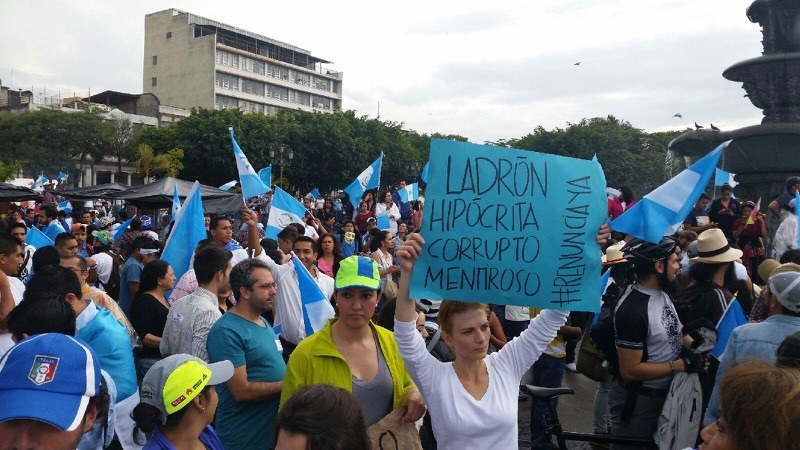
Guatemala City, August 2015. Photo Courtesy of Eric Hershberg.

Guatemala City, August 2015. Photo Courtesy of Eric Hershberg.

With President Otto Pérez Molina’s resignation early this morning, Guatemala lurches into a new phase in its long-running political crisis, with little prospect that this weekend’s elections will resolve much.  The investigations into the Pérez Molina administration’s corruption, the national assembly’s unanimous vote to suspend his immunity, and the peaceful surge in popular protests demanding that he step down all suggest progress in the country’s efforts to build a functioning democracy.  The UN-sponsored Comisión Internacional Contra la Impunidad en Guatemala (CICIG) fulfilled its mandate, and its example and training were arguably important factors in the ability of judicial officials in Pérez Molina’s own government to support the processes that led to his downfall.  (Click here for an AULABLOG assessment of CICIG in May.)  The Congressional vote to strip him of immunity was unanimous, including even his most loyal supporters, who until then had rejected popular clamoring for the president’s ouster.  By the end of last week societal disgust with the political elite had reached the point that even the most recalcitrant of incumbents realized that their own survival required ditching the president.  The comptroller’s office called on him to resign “to avoid greater social unrest that could have unpredictable consequences” – a sentiment echoed by powerful business groups and the Catholic Bishops Council.

The Guatemalan Constitution and laws lay out the next steps.  The Congress has accepted the resignation, clearing the way for Vice President Alejandro Maldonado – who replaced Vice President Roxana Baldetti after she was jailed in connection with the same corruption scandal – to take office.  The first round of Presidential elections, with 15 candidates in the running, will proceed as scheduled this Sunday, despite calls from some civil society organizations to delay the balloting on grounds that the campaign regulations reflect the influence and interests of criminal elements.  In all likelihood, a runoff round will be necessary six weeks later (October 25).  The convulsions of recent months and deep distrust in government suggest that tensions will be high between now and then, but there’s no indication yet that civil unrest could threaten the electoral process, and military intervention appears to be a thing of the past.  There is every reason to expect that a new President will be inaugurated on January 14.

The elections are unlikely, however, to lead Guatemala into an era of less corruption and greater accountability, or to install leadership willing or able to spearhead economic and social policies to enable the majority of the population to live with dignity.  The slogans on the banners of the tens of thousands of protestors in Guatemala City’s central square lacked any message beyond a rejection of the status quo.  “Throw them all out” and “I have no president”are potent rallying cries but do not address the core challenges of a country where the elite pay no taxes, half of all children are malnourished and tens of thousands of young people desperately seek better lives anywhere other than Guatemala.  

The reputations of the leading candidates and their failure to articulate coherent governing platforms give little room for optimism.  Leading in the polls is a wealthy businessman, Manuel Baldizón, whose running mate is already being investigated for corruption and whose own closet is widely understood to contain plenty of skeletons.  Protestors have already singled out Baldizón as unacceptable, taunting him with chants of “it’s your turn next.”  In second place is a comedian named Jimmy Morales, who enjoys the support of the economic elites and media but has advanced no policy platform whatsoever.  Former first lady Sandra Torres appears to be running third.  She divorced President Álvaro Colom in 2011 to circumvent a court ruling that, as First Lady, she couldn’t run for office.  (The Constitutional Court put a final stop to her campaign a month before elections that year.) 

Electoral victory by any of these candidates would leave Guatemala with weak leadership at a time that most government institutions desperately need revitalization.  Corruption is too deep-rooted for CICIG and its few allies in government to face down alone, and these candidates won’t use the presidency to carry out the needed purge.  The organized criminal groups that traffic drugs and persons through the country and permeate governing institutions stand to grow only stronger, and the misery that plagues a population deprived of education, health care and jobs will continue unabated.  U.S. Vice President Joe Biden’s billion-dollar aid package for Guatemala, Honduras and El Salvador, already in trouble in Washington, may have nowhere good to go.

September 3, 2015

*Eric Hershberg, director of the Center for Latin American & Latino Studies at American University, witnessed the protests in Guatemala City last week.

Journalism in Cuba: Unstoppable Change

By John Dinges*

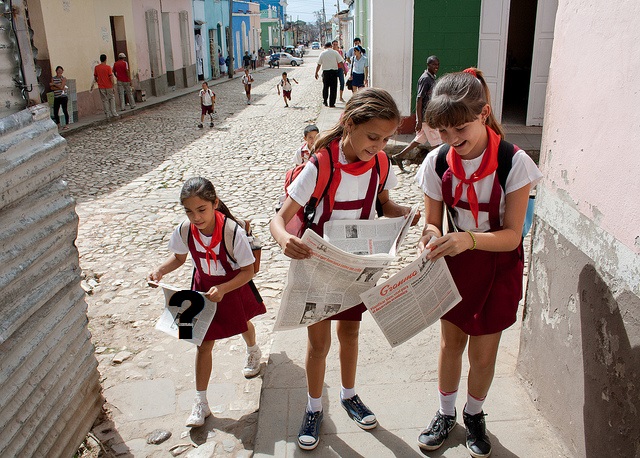
Jaume Escofet / Flickr / Creative Commons

Photo Credit: Jaume Escofet / Flickr / Creative Commons (modified)

Cuban journalism is changing rapidly – both in and outside the official media.  Developments in media reflect the dynamic changes taking place in Cuba and are likely to drive even deeper change in the future.  Journalists outside the system have long been seen as eager to create alternatives to the centrally controlled media that have dominated for decades.  Now, although many inside the government-run media still generally seek continuity of the Cuban revolution, a timid but slowly growing number of them are showing signs of openness to shifting away from their traditional role as a propaganda machine for a one-party state.  Together, the non-official and official journalists are part of a process of change that is robust, unstoppable, and healthy from the perspective of journalistic values.  Among the indicators:

  • The official Communist Party daily, Granma, now dedicates a page each Friday to letters from readers with a host of complaints about daily life – inefficiency of government offices, long lines at stores, and delays in government benefits. In Cubadebate and other official blogs, there are been numerous analytical articles that could be called “loyal criticism.”
  • Yoani Sánchez – a star among the non-governmental bloggers – and others are sharp critics of the lack of political freedoms and proponents of radical but peaceful change. Their audience in Cuba is small, because of low connectivity on the island, but their voices occupy an important part of the spectrum of the country’s new journalism.
  • A new kind of media – individuals who identify as journalists and not as political dissidents – appears likely to have an even greater impact. The most successful of these, OnCuba, is a glossy bimonthly magazine distributed on the daily Miami-Havana charter flights.  It runs commercial covers – one recently featured a woman smoking a Cohiba – but also carries articles on sensitive political and economic issues.

OnCuba is an extraordinary experiment launched three years ago by Cuban-American businessman Hugo Cancio and employing 12 full-time Cuban journalists in a well-appointed Havana office – all with the necessary Cuban government approvals.  The editors say the publication’s only objective (other than paying its bills) is to serve as an intellectual bridge between Cubans in Cuba and Miami, casting a critical eye to both.

OnCuba and its nascent genre probably judge that walking the line between the two extremes – rejecting both “officialist” and “dissident” labels – increases their chances of landing on their feet if and when deeper change occurs in Cuba.  A recent episode involving leaked government documents, however, underscored the complexity of their balancing act.  An independent blog called La Chiringa de Cuba published a PDF of a sensitive Ministry of Communications plan to massively expand broadband access in Cuba by the year 2020, and OnCuba prepared a long article describing and analyzing its importance.  Despite the importance of broadband for the nation, the official media have so far neither reported on the leak nor – importantly – have they condemned it.  While the course of all these changes is uncertain, one thing beyond doubt is that, when it comes to journalism in Cuba, it’s now “Game on.”

June 19, 2015

*John Dinges teaches journalism at Columbia University and is the author, among other titles, of “The Condor Years: How Pinochet and his Allies Brought Terrorism to Three Continents” (The New Press 2004).

Civics Lessons from Guatemala

By Robert Brenneman*

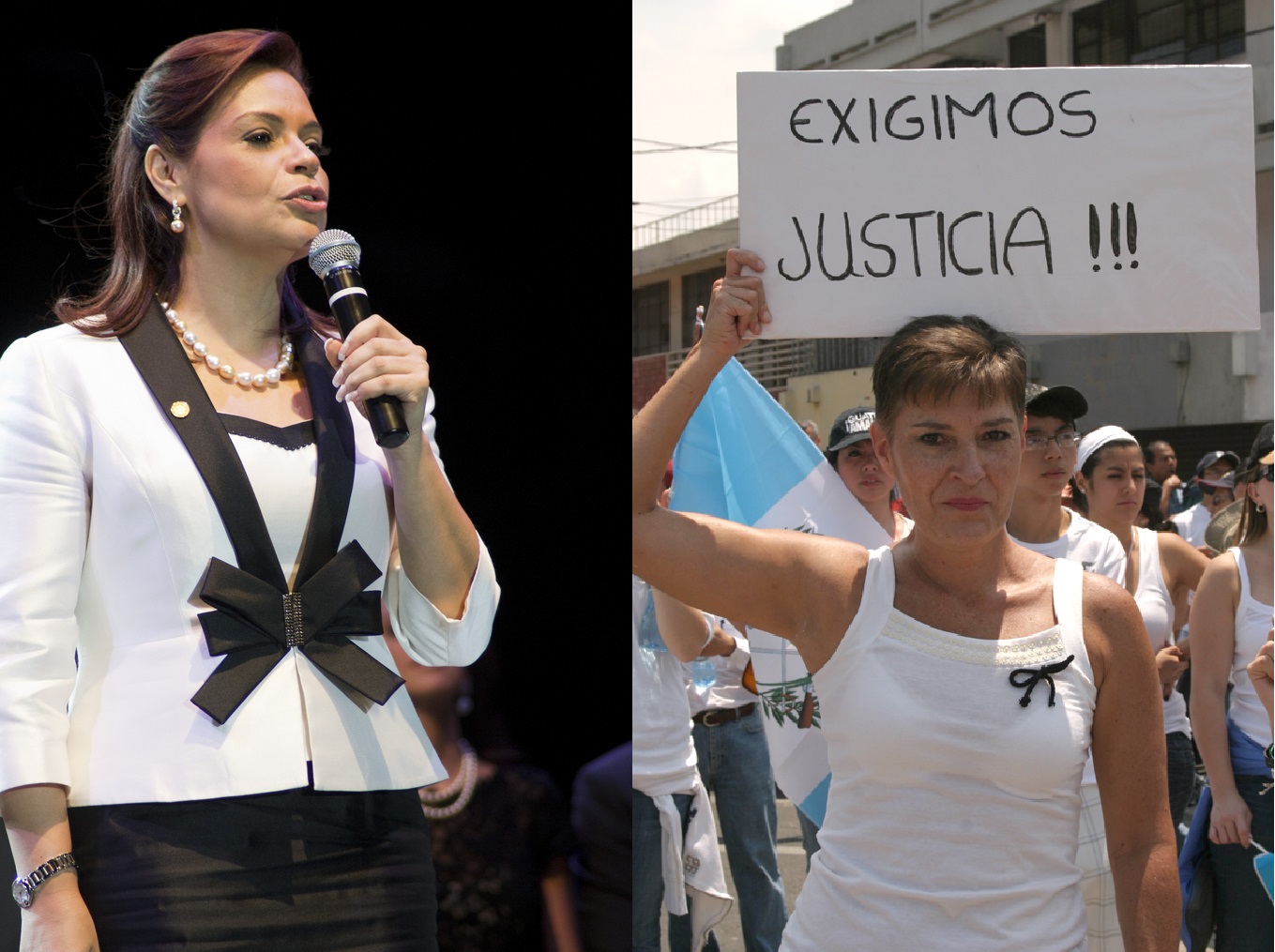
Former Vice President of Guatemala Roxana Baldetti (l) and a protestor with sign "We demand justice" Photo Credits: Surizar / Flickr / Creative Commons

Former Vice President of Guatemala Roxana Baldetti (l) and a protestor holding sign that proclaims “We demand justice.” Photo Credits: Surizar / Flickr / Creative Commons

Guatemala’s popular movement for justice and transparency is suddenly and happily discovering that nothing breeds success like success.  Many Guatemalans have grumbled for years about rampant corruption among the political class, but in recent weeks a surging popular movement has finally emerged giving voice and energy to years of that frustration with impunity and graft.  The movement picked up steam after a public exposé of a shadowy tax fraud and contraband network called “La Línea,” orchestrated out of Vice President Roxana Baldetti’s office by her private secretary.  The report was produced by the International Commission against Impunity in Guatemala (CICIG).  (Click here for analysis of the Commission’s renewal.)  President Pérez Molina not only renewed CICIG’s term until 2017; on May 7 he also accepted the resignation of Baldetti and her secretary, who had served as the key money-raising dealmakers for his administration.  The U.S. Embassy suspended the visas of many of the officials named in the report, including the luckless former vice president herself.

These actions have not been enough to appease the appetite for justice and transparency sought by the growing crowds of flag-waving nonviolent protestors converging each Sunday afternoon in front of the Guatemala City’s Municipal Palace.  An estimated 57,000 gathered under thunder and pouring rain on May 17.  Empowered by the relatively swift impact of their movement, and outraged by the mounting evidence pointing to the president’s personal connections to the corruption network, the crowds of protestors  led principally by students of the public university  have shifted to demanding that the president himself step down.  Pérez Molina, sensing that the wheels are coming off his administration, has requested the resignations of his closest advisors and top officials, including his Interior Minister and his Chief of Strategic Intelligence.  He has revoked or rescinded several of the most lucrative (and obviously corrupt) government contracts that he had vociferously defended only a few weeks ago.

President Pérez Molina’s political future remains up in the air.  Many Guatemalan political analysts believe he should step down.  José Rubén Zamora, founder of Guatemala’s influential daily El Periódico, argues that resigning is “the only way out of an impossible labyrinth” of the president’s own making.  But many others view the president’s fate as less important than whether the country takes advantage of the opportunity to use public pressure to pass sorely needed structural reforms.  For years Congress has ignored several bills that would tighten campaign finance rules and bring transparency to government contracting.  Since pay-to-play politics is not unique to this administration, fixing the problem will require legal and structural changes, not merely changing the nameplate on the presidential suite.  One hopeful sign is that Manuel Baldizón, leader of the opposition Renewed Democratic Liberty Party (LIDER), has not managed to coopt the popular outrage to kickstart his own election campaign.  A popular banner at the protests warns him “¡No te toca!” (“It’s not your turn!”).  The leaders of the movement recognize that Baldizón – who has many skeletons in his own closet and heads another investment-financed party – is hardly the answer.  The protesters’ focus on reform rather than politics suggests that the most certain – and long-lasting – outcome of all is the strengthened civic sphere that appears to have emerged as the protests grow and the newspapers report daily arrests and resignations.  In this civics lesson, the Guatemalan public is both pupil and teacher.

May 26, 2015

*Dr. Brenneman teaches sociology at St. Michael’s College and is author of Homies and Hermanos: God and Gangs in Central America (Oxford University Press 2012).

Ecuador: Stacking the Deck Against Democracy

Enlace Cuidadano

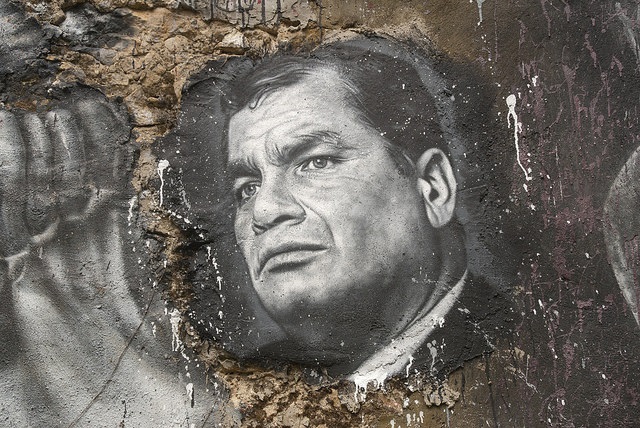
Ecuadorian President Rafael Correa during one of his weekly broadcasts Enlace Ciudadano / Mauricio Muñoz / Flickr / Creative Commons

By Catherine M. Conaghan*

Taking a page from Hugo Chávez’s playbook, Ecuadorian President Rafael Correa is intimidating and steadily increasing controls on his opponents.  He regularly uses his Saturday morning broadcasts to name and shame them.  Actors from all walks of Ecuador’s civil society – journalists, lawyers, activists, academics, bloggers, union and social movement leaders – have been the target of his insults and thinly veiled threats on the weekly program, Enlace Ciudadano.  In February, Correa’s show was skewered by HBO comedian John Oliver – and, to Oliver’s delight, Correa fired back by tweeting insults (click here and here).  Journalists and civil society leaders applauded Oliver for drawing attention to the continuing deterioration of civil liberties in Ecuador.  Correa’s virulent rhetoric and intimidating use of media is part of a larger matrix of policies endangering freedom of expression and association in Ecuador.  Over the last two years, the Correa administration has worked methodically to mount a legal framework allowing for greater government control over the media and civil society organizations.

  • The 2013 Law of Communication and a new oversight agency, the Superintendence of Information and Communication, are intended to ensure that all print and broadcast media provide “truthful information” that is “verified, contrasted, precise, and contextualized.”  Superintendent Carlos Ochoa was selected from a short-list of nominees provided by Correa.  Among alleged violations recently singled out for sanctions are items in the leading newspaper El Universo and its accomplished political cartoonist, Xavier ‘Bonil’ Bonilla.
  • Issued in 2013, Executive Decree 16 also has civil society – from neighborhood associations to think tanks, business chambers, unions, and advocacy groups – under pressure. In addition to elaborate regulations for the legal registration of organizations, the decree stipulates conditions allowing the government to “dissolve” them.  These include group involvement in “partisan activity” and “interfering in public policies.”  To date, only one organization – the Fundación Pachamama involved in environmental activism – has been dissolved, but civic leaders fear that the decree will induce ”self-censorship” and stifle participation.

The new laws amount to a project – unprecedented for Ecuador – of surveillance and regulation.  They provide the government with a tempting arsenal of weapons to use, if necessary, in upcoming battles on other important legal matters, especially on the issue of presidential re-election.  After years of pledging that he would not seek a third term in office, Correa reversed course and has tasked his legislative super-majority with finding a swift route to amending the constitution.  Most public opinion polls show, however, that a majority of Ecuadorians would prefer a referendum to decide whether or not yet another consecutive re-election should be allowed.  The road to re-election may be more difficult than Correa and his advisors imagine, but they enter the fray with the weight of the law on their side.  With powers to control the media and limit the activity of civil society, the Correa administration enjoys the upper hand as 2017 approaches.

March 12, 2015

*Catherine Conaghan is the Sir Edward Peacock Professor of Latin American Politics at Queen’s University in Kingston, Ontario.  She specializes in Andean politics.  She is the author of an article, “Surveil and Sanction: The Return of the State and Societal Regulation in Ecuador,” in the April issue of the European Review of Latin American and Caribbean Studies.

Nicaragua’s “Great Canal” Draws Opposition

By Fulton Armstrong

9036608152_a199acb183_z

Protestors opposing the Chinese-Nicaraguan canal confront police / Jorge Mejía Peralta / Flickr / Creative Commons

Although questions continue to swirl around whether the Chinese-Nicaraguan canal – which its main investor called the “most important [project] in the history of humanity” – will be built or not, its opponents are taking it all very seriously.  A CID-Gallup poll in January showed that 41 percent of Nicaraguans interviewed strongly support the project, while another 21 percent and 17 percent back it somewhat and a little, respectively.  But another poll by the same firm suggested ambivalence:  asked if they supported the National Assembly vote giving the Chinese firm leading the project, HKND, a concession for the 278-km right of way for up to 100 years, some 39 percent of respondents said no.  Some political voices are growing more sharply opposed as well.  The powerful business group COSEP, for example, has gone from agnosticism about the project to a position of open disapproval.

Groups concerned about the project’s impact on the environment and rural residents have already held protests involving up to several thousand participants, and – despite the government’s promise that the canal will bring prosperity throughout the country – organizing efforts appear unlikely to fade.  Skepticism about HKND and the government’s commitment to protecting the environment, fueled by their off-the-cuff dismissal of concerns, is so deep that even a balanced comprehensive impact study by the British Environmental Resources Management, due next month, may fail to calm nerves.  Environmentalists cite studies warning that dredging Lake Nicaragua from its current depth of nine meters to the 27 meters necessary for cargo ships will stir up many layers of toxic materials, with catastrophic consequences for marine life and surrounding agricultural areas.  Other groups are rallying behind the 29,000 residents who are to be evicted from properties along the canal route.  Demonstrations have turned violent, with protestors injured by tear gas and rubber bullets.  Graffiti and banners demanding “fuera chinos” are common.

In the hemisphere’s second poorest country, the promise of growth spurred by the $40-50 billion project is still a powerful card in the government’s hand.  Many skeptics still wonder, however, if the whole scheme is a ruse to fleece the Chinese investors, who’ll bring in a couple billion dollars before realizing that the project will get bogged down in Nicaraguan political quicksand.  But opposition to the canal goes far beyond the usual Managua political game of fighting over corruption dollars and obstructing each other’s priorities.  President Ortega’s endorsement of the canal contradicts his own statements years ago that he wouldn’t compromise the lake’s eco-system “for all the gold in the world.”  According to The Guardian newspaper, the dredging will move enough silt to bury the entire island of Manhattan up to the 21st floor of the Empire State Building – which no one is prepared to deny will have serious environmental implications.  China’s Three Gorges Dam, completed five years ago, displaced 1.2 million inhabitants – proportionally twice as many Nicaraguans displaced by the canal – but Nicaragua’s ability to resettle them, give them jobs, and suppress their dissent is small compared to China’s.  The project may not be the greatest in the history of mankind as HKND claims, but it may provoke a crisis as great as any in Nicaragua.  For starters, if COSEP’s opposition persists, it threatens to unravel the modus vivendi under which Daniel Ortega has stayed in power, and could portend much deeper tensions.

March 5, 2015

Click here to see our previous article about the canal.

The Open Veins of Latin America: Disowned?

By Núria Vilanova

tintincai / Flickr / CC BY-NC 2.0

tintincai / Flickr / CC BY-NC 2.0

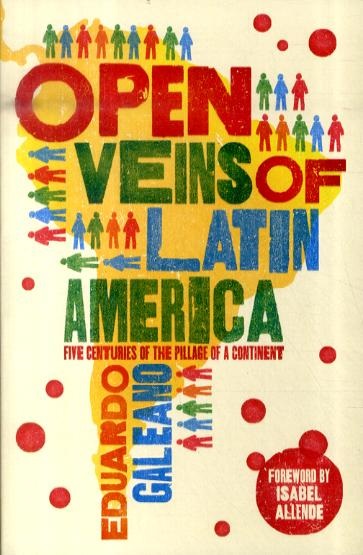
Forty-three years after its publication, the emblematic and widely read Latin American anti-colonialist bestseller The Open Veins of Latin America has been disowned by its creator, 74-year-old Eduardo Galeano – but its literary message remains vital.  Interviewed last May about the book often called the “Bible of the Latin American Left,” Galeano said, “I don’t regret having written it, but it belongs to a time that to me has been overcome.”  His words left a sense of abandonment and deceit among many, who asked:  What had happened to the bleeding veins of Latin America drained by European and U.S. colonial powers?  Hadn’t the region been sacrificed since Columbus to profit diabolic foreign interests?  When Venezuelan President Hugo Chávez gave President Obama a copy of the book in 2009, was he clinging to an interpretation of Latin American history no longer embraced by the region’s leading thinkers?  Others asked, however well-deserved a denunciation of the exploitation and oppression laid out in the book was, were they to be blamed for all of the damage inflicted in the region?

Galeano’s interview signaled a refocussing of his analysis rather than wholesale rejection of it.  He said Open Veins was too boring and written in a tedious style and with the doctrinal tone of the traditional left.  He added that in those early days of his career he did not know enough politics and economics to write a book of such reach.  What Galeano has demonstrated by this unassuming recognition is that he has evolved through the years and, like many others, realizes that the dependentista paradigm, with its rejection of western capitalism, that fueled his book had important shortcomings, and overlooked other key problems.  He underestimated the impact of weak institutions – anticipated by Bolívar in the early 19th Century – and internal political and economic issues such as government corruption and the unwillingness of the ruling classes to contribute to the development of more democratic and egalitarian societies, as Marx himself would argue when writing about Southern countries.

The real – and not insignificant – value of Open Veins today lies in its literary character.  Its capacity to capture the spirit, the hope and the rage of those turbulent times in the region lives on.  Filled with metaphors and symbolism, it is an essay, whose literary dimension makes it current and ageless.  Stemming from a deep Latin American tradition, the book crosses the blurred borders between literature and history, sociology, politics and other disciplines alike.  Like José Martí, Ricardo Palma and Octavio Paz, Galeano attempted to transgress the boundaries between literature – subjectivity, imagination and hyperbole – and disciplines based on empiricism and factuality.  This practice can lead to challenges over facts, but the messages remain compelling.  Elizabeth Burgos’s testimonial account of Mayan activist Rigoberta Menchú in I Rigoberta Menchú (1984) was criticized for alleged inaccuracies, yet it is difficult for anyone to deny that the suffering of the Mayan Quiché community in the 70s and 80s was at least as cruel as Rigoberta depicted in the book.  Carlos Fuentes once said that reality will always overpower fiction, no matter how hard writers tried.  The intellectual evolution that Galeano has displayed is welcome, and it is also an inspiration to reread Open Veins and Latin America with much-needed fresh eyes.

December 2, 2014

Argentina’s Stolen Children and National Narratives of Recovery

By Brenda Werth

Bruno Piatti / Flickr / CC BY-NC 2.0

Bruno Piatti / Flickr / CC BY-NC 2.0

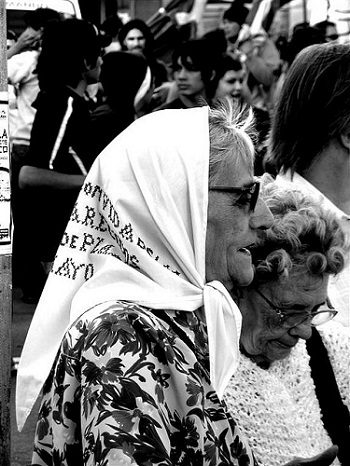
Argentina’s National Day of the Right to Identity (October 22) had special meaning this year because of the recovery in August of Guido Montoya Carlotto, the 114th grandchild to be found, but hundreds of cases remain unsolved.  The day honors the tireless efforts of the Grandmothers of the Plaza de Mayo to recover the identity of the approximately 500 grandchildren who were stolen as babies during the dictatorship and raised in most cases by collaborators of the military regime.  Guido is the grandson of the group’s longstanding president, Estela de Carlotto.  In June, 36-year-old Guido, who grew up in the province of Buenos Aires as Ignacio Hurban, voluntarily submitted a blood sample for DNA testing that confirmed that he is the son of Laura Estela Carlotto and Walmir Oscar Montoya, Montonero militants who were kidnapped and disappeared during Argentina’s last military dictatorship (1976-1983).  Guido subsequently learned he had been born in captivity on June 26, 1978.  He was allowed to stay with his mother for only five hours before being handed over to the couple (whose involvement in his kidnapping is still unclear) who would raise him.  His mother was executed two months later.

The heavy media coverage of the recovery of Guido – who prefers to be called Ignacio Guido – has revived discussions in Argentina about identity narratives  surrounding the stolen children in the wake of dictatorship.  The most prominent human rights organizations to emerge since the mid-1970s are structured along familial lines:  the Mothers of Plaza de Mayo, the Grandmothers of Plaza de Mayo, and the H.I.J.O.S.  (Children for Identity and Justice, Against Forgetting and Silence).  As a result, the recovery of each and every grandchild is inextricably and symbolically linked to national recovery.  Moreover, due to a leak to the press, Ignacio Guido’s reunification with his biological family did not take place in an intimate, private setting but instead unfolded publicly in the national spotlight through a series of highly publicized press conferences and interviews, culminating in a meeting with President Cristina Fernández de Kirchner.  His recovery has generated an outpouring of support and an unprecedented sense of national unity among Argentines.  Politicians, celebrities, and sports figures alike have hailed his identity restitution as both a personal and national triumph.  Due to Estela de Carlotto’s stature as a world-renowned human rights activist and her close ties to the Kirchner government, this case, perhaps more than any other, illustrates how the personal, familial story of recovery can acquire a public dimension and give a push to the national commitment to resolve remaining cases of the stolen children.

Yet it is often during these moments of perceived national consensus when underlying tensions reassert themselves as well, and these tensions have manifested themselves institutionally, specifically in the areas of science, the law, and the Catholic Church.  At the height of the media storm surrounding Guido’s recovery, representatives of the National Genetic Data Bank held a press conference to restate their disapproval of the official decision to transfer the laboratory, including over 20,000 DNA samples, to the Ministry of Science and Technology.  Another tension emerged in the judicial sphere after the judge presiding over the case, María Servini de Cubría, was accused of leaking Ignacio Guido’s identity to the press before he could be reunited with his biological family – creating a rift with the Grandmothers.  In a meeting with Pope Francis on November 5, Carlotto and her grandson presented him with the iconic white handkerchief, which is a symbol of the Grandmothers’ mission, and a sculpture representing the fight for truth, justice, and memory.  Carlotto also took the opportunity to acknowledge that she had committed an error in linking him to the dictatorship in public statements soon after he became Pope in March 2013.  Their gifts were intended to enlist the Church’s support for full disclosure of evidence relating to the stolen children’s identity.  It was also a gesture of reconciliation between human rights organizations in Argentina and the Church, which failed to defend human rights during the dictatorship.  The meeting also strengthened the tight allegiances that President Kirchner has cultivated between her government, human rights organizations, and the charismatic figure of the Pope.  However halting, such moves could ultimately help resolve the cases of the hundreds of stolen children.

November 17, 2014

Mexico: Is Peña Nieto Missing the Point?

By Fulton Armstrong

Rodrigo Barquera / Flickr / CC BY

Rodrigo Barquera / Flickr / CC BY

The disappearance and apparent massacre of 43 students from a city in Mexico’s Guerrero state is a rude reminder to President Peña Nieto that economic reform and increased foreign investment aren’t enough to help the country overcome the scourge of narcotics-fueled violence.  Federal and State prosecutors agree that the police in Iguala – who, along with the city’s mayor, have strong ties to the Guerreros Unidos cartel – handed the students over to the narcos after a confrontation during a student protest turned violent, already leaving six students dead.  Residents on a nearby ridge noted an increase in police and truck traffic soon after the showdown, but the dozens of bodies uncovered by searchers at mass graves in the area so far have not been the students’.  The mayor and police chief are in hiding, but Federal authorities say three dozen police and accomplices have been arrested and many have confessed.  None apparently has identified where the bodies were dumped.

As the scope of the crime, which occurred three weeks ago, has become clearer, the President’s rhetoric has been increasingly forceful, committing to investigate and bring the perpetrators to justice.  The Federal police have been directed to take control of security in the area and nearby municipalities.  The government announced last Friday, that the “supreme leader” of the Guerreros Unidos has been arrested, while another committed suicide after a standoff with police.  But critics point out the federal authorities’ own problems with corruption, and criticism of Peña Nieto’s efforts to stem the violence has been growing, especially in the wake of his administration’s many self-congratulatory statements about progress in the security area.  A new 5,000-strong national civilian gendarmerie he rolled out in August was ridiculed as too little, too late.  His continuation of his predecessor’s emphasis on arresting drug kingpins – resulting this year in the spectacular arrests of Joaquín “El Chapo” Guzmán Loera (of the Sinaloa cartel), Héctor Beltrán-Leyva (of the Beltrán-Leyva Organization), Fernando Sánchez Arellano (of the Arellano Félix cartel), and others – has failed to eliminate the underlying systems of the drug trade.

During the presidential campaign in 2012, Peña Nieto promised to reduce violence, and his decision not to obsess over the problem – as his predecessor, President Calderón, had – may have given him a respite.  But his administration apparently ignored clear signals of trouble – such as indications that in Guerrero state and elsewhere the cartels’ were expanding and consolidating their influence over government – and the problem seems to be roaring back with a vengeance.  The President’s focus on reforming the economy and attracting foreign investment makes strategic sense, but its long timeline doesn’t help him fight the fires of violence that envelop parts of the country.  There’s also merit in creating something like the gendarmerie and other institutional tools, but that approach seems to ignore that the rot of corruption has deep roots at all levels – federal, state, and local – that must be dealt with and that an elite unit tied to a federal capital hundreds of kilometers away can do little in places like Guerrero.  Calderón had shown the challenge wouldn’t be easy, but Peña Nieto has not yet shown that he – and Mexican society – are up to it either.

October 21, 2014

Venezuela: More of the Same Tragedy

By Michael McCarthy*

Embed from Getty Images

The gruesome murder of a pro-government Socialist Party deputy and the decision by the opposition coalition’s Mesa de Unidad Democrática (MUD) to suspend a rally in light of the tragedy foretold an opportunity to restart a national dialogue.  But unlike in January 2014, when the murder of beauty queen Monica Spears and her family created momentum for talks on security between the government and opposition, an unfortunate and familiar downward spiral has begun.  High-level government officials’ provocative accusations that the murder of Robert Serra, one of the Venezuelan Parliament’s youngest members, was the work of right-wing actors have deepened yet again the political polarization in Venezuela.  UNASUR’s new Secretary General, former Colombian President Ernesto Samper, surprisingly weighed in, strongly implying that Colombian paramilitaries were involved in Serra’s murder.  The government has long attempted to link members of Venezuela’s opposition with paramilitary groups, and Samper’s impartiality will forever be questioned by the opposition if the allegation is not proven. At Serra’s funeral, President Maduro described the MUD’s new Executive Secretary, Jesús “Chuo” Torrealba, as a piece of “garbage.”  Maduro’s name-calling is another example of the government using polarization as a tool to encourage supporters to close ranks.

Before the stabbing deaths of Serra and his female companion by unidentified assailants, the government was attempting to build momentum to resume the UNASUR-sponsored talks that had been frozen since May 3.  Samper had informed the MUD and opposition members of his intention to restart talks, and had described Maduro as “a man of dialogue, a man of peace,” adding that there were good prospects for “working a lot of things for the good of the region.”  But at this point any good will among the parties seems to have evaporated.  Moreover, for MUD secretary Torrealba, who originally said his goal was to change the MUD’s profile to mobilize a wider base of support, the primary task remains building MUD unity at a moment when different factions of the opposition are promoting widely varying initiatives.  Torrealba has little negotiating experience and does not enjoy the same access to elite sectors as his predecessor did.  His precarious position calls into question whether the MUD could negotiate as a coalition even if talks restarted.

Once again, centrifugal forces seem to be prevailing in Venezuela.  This trend raises the question of whether Venezuelan society is not only “wounded and resentful,” as Jesuit Political Scientist Arturo Sosa says, but on the verge of an estallido social – social explosion.  Mechanisms for mediating conflict through political discussion remain in place and appear unlikely to disappear completely, but confrontations are likely to continue flaring up regularly.

*Michael McCarthy is a CLALS Research Fellow.

October 7, 2014

Latin America United Against Violence in Gaza

By Aaron T. Bell

Sergio / Flickr / Creative Commons Attribution-NonCommercial-ShareAlike 2.0 Generic (CC BY-NC-SA 2.0)

Sergio / Flickr / Creative Commons Attribution-NonCommercial-ShareAlike 2.0 Generic (CC BY-NC-SA 2.0)

Israel’s assault on Gaza this summer provoked sharp criticism from Latin American governments.  Condemnation came not only from Cuba, a long-time critic of Israel, and from Bolivia, Venezuela, and Nicaragua, which have been without diplomatic ties to Israel since cutting them after previous conflicts in Gaza in 2009 and 2010.  This summer’s UN-estimated 1,500 civilian deaths also provoked outrage from center-left governments, as Brazil, Chile, Ecuador, El Salvador, and Peru all withdrew their ambassadors.  At the Mercosur summit at the end of July, Brazil, Venezuela, Uruguay, and Argentina issued a joint statement in which they criticized Israel’s “disproportionate use of force…which has almost exclusively affected civilians.”  And one of the largest popular demonstrations worldwide against the Israeli action took place in Chile, home to hundreds of thousands of Palestinian descendants.

Latin American interest in Israeli-Palestinian affairs is deeply rooted in the past.  Waves of immigration beginning a century ago have made the region home to the largest Palestinian diaspora outside the Arab world.  Latin American governments provided crucial support for the 1947 UN Partition Plan for Palestine that led to the creation of the state of Israel, but they roundly condemned the occupation of the Gaza Strip 20 years later.  In the Cold War era, Israel provided military hardware to rightwing military regimes in the region while the Palestine Liberation Organization, more leftist than Islamic in its revolutionary views, lent political and economic support to the Sandinista government in Nicaragua.  Contemporary Latin American governments have taken a balanced approach in their relations with Israel and the Palestinians.  All but Colombia, Mexico, and Panama have recognized a Palestinian state based on national borders prior to the 1967 Arab-Israeli war, and trade with Israel has flourished.  Brazil is the top destination for Israeli exports, totaling over $1 billion per year.  In addition, Israel signed free trade agreements with Mercosur in 2007 and 2010; became an official observer to the Pacific Alliance (Chile, Colombia, Mexico, and Peru) in 2013; and in May 2014 approved a four-year, $14 million plan to boost trade with the PA nations and Costa Rica.  Israel’s recent efforts to further trade in Latin America ironically developed out of a desire to shrug off some of its dependency on Europe, where criticism of Israeli policy has become widespread and boycotts of Israeli goods are being organized by advocates of the Palestinian cause.

This summer’s fighting in Gaza chilled diplomatic relations between Latin American governments and Israel.  The Israeli Foreign Ministry described the withdrawal of Latin America ambassadors as a “hasty” decision that would only encourage Hamas radicalism, and it struck a nerve in Brazil when dismissing its “moral relativism” as an example of “why Brazil, an economic and cultural giant, remains a diplomatic dwarf.”  But both Israel and Latin America stand to gain from stronger economic ties, and with the exception of Chile’s suspension of trade talks, there are no pending signs that economic relations will suffer further now that this round of fighting in Gaza has come to an end.  The significance of this summer’s events lies instead in the autonomous decision by Latin American governments of all political stripes to act in favor of peaceful conflict resolution and the protection of civilians enveloped by the violence of war.  The Assad regime’s massacre of its own citizens in Syria in recent years provoked a more reticent condemnation from Latin America’s center-left governments and regional blocs, which backed a negotiated solution to the conflict while strongly opposing the possibility of foreign military intervention.  Without the specter of a wider conflict looming over this summer’s Gaza crisis, Latin American governments seized the opportunity to stake out a firmer position.  The region’s reaction to future atrocities – which may come sooner rather than later as the US prepares to battle the “Islamic State” in Syria and Iraq – will show how durable this new approach will be.