Venezuela: Stalemate in a War of Attrition?

By Michael McCarthy*

33792960765_7a1d866299_h

Members of Venezuela’s opposition march against President Maduro at a demonstration in April 2017. / A. Davey / Flickr / Creative Commons

The pace of provocation and counter-provocation in Venezuela has reached a new high, and there does not seem to be a stabilizing force that can induce a de-escalation.  It’s unclear if the country’s power struggle is experiencing a new cycle in its multi-year confrontation, or if two months of protests mark the start of a downward spiral that will plunge the country into even deeper crisis.  Neither the government nor opposition appears near the point of exhaustion that would make efforts at a meaningful negotiated settlement fruitful.  An examination of their agendas, moreover, paints a picture of an intractable conflict.

  • President Nicolás Maduro is in raw survival mode – perhaps driven by fear of disgrace as the man who lost the Chávez legacy entrusted to him – and is forcing a rewrite of the Constitution as he lurches toward outright dictatorship. He deeply resents that the opposition never acknowledged the legitimacy of his election, and he was shaken when jeered and egged at a public rally recently.  He has condoned violence by his party’s vigilantes and the Guardia Nacional, but almost certainly grasps its political cost, including within the government and military.  Faced with the certain prospect of persecution by an opposition-dominated government, he probably sees no incentive to negotiate his denouement.
  • The opposition remains heterogeneous and is united almost exclusively in the fervent belief that Maduro – through evil and incompetence – is destroying the country. Government repression and their own self-inflicted wounds have precluded development of a sophisticated strategic planning capacity.  Although opponents’ preferred option is to remove Maduro at the ballot box, some also apparently believe that ratcheting up the violence will force the military – reluctant to intervene – to lean on Maduro to depart.
  • The senior ranks of the military, compromised by corruption and narco-trafficking during the Chávez-Maduro era, show no signs of wavering, but discontent among field-grade officers at the Regional Commands – who will have to serve under a successor government – may become palpable during the military promotion season that formally concludes July 5. As the Guardia Nacional soils its reputation, the military wants to stay off the streets as long as possible.  There’s no evidence of sympathy with the opposition; their primary concern is avoiding being part of the bloodshed.  How the military would orchestrate a post-Maduro era is unknowable.
  • The country’s economic and financial crises have devastated oil production, making it impossible for Maduro to pump his way out of the crisis and increasing his reliance on foreign capital. Indebting itself further at an extremely high cost, the government bought some time by selling $2.8 billion in bonds to Goldman Sachs – through a counterparty – for $865 million in cash.
  • The sectores populares are highly agitated but lack leadership. The working class has largely fallen into poverty, now estimated at 80 percent nationally, and neighborhoods previously home to chavismo’s base have shown tolerance for the opposition and outright disdain for the ruling coalition, including knocking down statues of Hugo Chávez.

Neither the government nor opposition has yet shown concern that its resources and energy are nearing exhaustion – and the military, so far, is not prepared to tell one or the other to give up the struggle.  As long as both sides think that they can break the other, moreover, the prospects for either regime collapse or a mediated settlement seem unlikely, and it is hard to imagine the emergence of a stabilizing force that can mitigate conflict.  External forces may try to facilitate a resolution but are unlikely to succeed.  Brazil’s corruption scandals have removed it as a player; UNASUR’s failures have rendered it irrelevant; and Maduro preempted any final OAS censuring by announcing withdrawal from the organization (though his foreign minister will attend its General Assembly this month).  Washington continues to rely on sanctions – most recently freezing the assets of eight members of Venezuela’s Supreme Court – but seems reluctant to get more deeply involved, and given the turmoil that characterizes the Trump administration, it may in any event be incapable of doing so.  Absent the emergence of a viable formula within Venezuela to overcome the costly stalemate, the war of attrition between regime and opposition will likely continue without meaningful involvement of external actors.

June 5, 2017

* Michael McCarthy is a Research Fellow with the Center for Latin American & Latino Studies.  He is International Associate for Venebarómetro polling and publishes Caracas Wire, a newsletter on Venezuela and South America.

MACCIH: An Early Progress Report

By Chuck Call*

31246077021_af5b37fcce_k

Juan Jiménez Mayor, Spokesman of the MACCIH Mission in Honduras, presented an update about MACCIH at the OAS in December 2016. / Juan Manuel Herrera, OAS / Flickr / Creative Commons

The OAS “Mission to Support the Fight against Corruption and Impunity in Honduras” (MACCIH) approaches its first anniversary in April with some gains and many challenges.  Launched after months of negotiations with the government of President Juan Orlando Hernández, MACCIH was created partly in response to widespread street protests by the Indignados (the “Outraged”), angered that the president’s campaign had benefitted from $300 million embezzled by officials of the Social Security Institute (IHSS).  Hernández was widely believed to accept the mission only because his tenure in office – and a possible second term – were in danger.

  • MACCIH was inspired by Guatemala’s CICIG, the UN-backed commission supporting that country’s judicial institutions, but Hernández insisted on major differences. He consented only to a mission of the OAS, generally seen as weaker than the United Nations.  MACCIH is weaker than CICIG in that it cannot initiate its own case investigations and must channel all its investigative and prosecutorial work through Honduran authorities.  (CICIG enjoys full investigative police powers and can initiate its own wiretaps and surveillance.)  MACCIH is headed in-country by a “spokesman” for the OAS Secretary-General, who nominally leads the mission from Washington, and its $2 million first-year budget has been only about one-sixth that of CICIG’s annual budget.

As a result, MACCIH opened to skepticism that its slow start hasn’t dispelled.  Its investigations have produced virtually no corruption-related arrests or prosecutions.  Setting up the office took much of 2016.  The head of criminal investigations only arrived in the summer, and the public security office only opened this month.  In contrast, a Honduran Police Reform Commission has sacked over 3,000 police officers.  Civil society organizations complain of MACCIH’s lack of impact, and a novel “observatory” comprising academic institutions and civil society groups remains ill-defined.  MACCIH’s decision not take up the investigation of the high-profile murder of environmental rights activist Berta Cáceres has seemed to sideline the mission from a case that emblemizes impunity, even if it seems not to involve far-reaching corruption.

  • However, MACCIH has scored some wins. It has embarked on a handful of complex corruption cases, including the IHSS case that sparked its creation.  The mission helped Honduran prosecutors prepare charges of arms possession against Mario Zelaya, the highest-profile suspect in the IHSS case, which kept him in jail long enough for more serious charges to be brought.  It helped secure two laws – to regulate campaign financing and to create a nationwide anti-corruption jurisdiction with its own selected judges and prosecutors.  MACCIH’s in-country leader, former Peruvian Prime Minister Juan Jiménez Mayor, has been forward-leaning in acting on his mandate.
  • MACCIH gained support in an early test late last year. In November, its concerns about several Hernández nominees to the Tribunal Superior de Cuentas, an audit court with special powers over corruption investigations, earned the ire of Honduran senior officials who complained to Secretary General Almagro.  The appointments were not altered, laying bare the mission’s limitations.  But Almagro stood by his organization’s analysis and role, with Jiménez Mayor emerging stronger as his special representative, not just his spokesman.
  • That same month, the board chair of Transparency International, José Ugaz, visited Honduras and urged civil society organizations to help ensure MACCIH’s success. Since then, they have showed a more positive attitude toward MACCIH, and more witnesses are now cooperating with the mission.

Comparisons between MACCIH with CICIG may arguably be unfair just one year out.  Observers recall that CICIG had difficulty showing impact in its initial investigations and was criticized as ineffectual.  Delivering on its ambitious mission to help curb corruption and impunity – in a country notorious for both – will be even harder.  However, the mission has accomplished as much as CICIG did in its first year in case investigations and legal reform.  Despite its limitations and slow start, MACCIH’s performance does not preclude obtaining far-reaching corruption convictions and strengthening the Honduran judicial system in coming years.  As civil society groups seem to be getting past their disappointment that their country did not get a CICIG, their collaboration will be crucial to the mission’s success.

March 13, 2017

* Chuck Call teaches International Peace and Conflict Resolution at American University.

Chile: Between Stability and Uncertainty

By Eduardo Silva and Kenneth Roberts*

26995535235_cd01e86d60_k

Students protest in Santiago, May 2016. A highly-mobilized Chilean civil society has beset Michelle Bachelet’s second term as president. / Francisco Osorio / Flickr / Creative Commons

With national elections looming at the end of 2017, President Michelle Bachelet’s startling reversal of fortune raises the question of whether the traditional parties’ failure to win broad popular support could give rise to an anti-establishment populist leader.  At the end of her first government in 2010, Bachelet was the most popular president in post-democratic transition Chile.  This go-around, high-profile corruption scandals involving party financing and real estate deals implicating her family (along with both governing and opposition parties) have cut into her support.  Irregularities in the electoral registry before the 2016 municipal elections, an ineffective response to devastating forest fires, concessions over major reforms, and a slowing economy have also hurt her approval ratings, which are hovering near 20 percent, the lowest of any president since 1990.  Her administration has been beset by protests over education reform, labor relations reform, and the private pension system that the military government established in the 1980s.  Tensions and violence flare up continuously over land rights in the south between Mapuche communities and extractive industries.  All of this is occurring in a context of marked secular decline in voter participation and political party identification.

The trend of volatile approval ratings and a mobilized civil society now spans three administrations – Bachelet, Sebastián Piñera (2010-2014), and Bachelet again – from 2006 to 2017.  Unlike in Brazil and Argentina, where “middle class” revolts demanding clean, efficient government and economic growth signified a rightward turn after prolonged center-left rule, most of the protests in Chile come from the left flank, rather than the right.  Moreover, the mainstream parties appear seriously detached from the most active groups in civil society and, as seen in declining levels of party identification, from the citizenry at large.  This raises questions about the future of Chile’s party system, whether its center-left and center-right coalitions can hold together, and the chances for outsider populists.

All things considered, Chile has been a case of exceptional partisan and electoral stability in Latin America since 1990.  The dominant parties and coalitions have won all the elections, without the rise of a major “outsider” populist or a major new “movement party.”  But the next elections may provide a sort of “in between” outcome.  Ex-President Piñera, who has independent tendencies on the right, and a center-left alternative, Alejandro Guillier, are the current frontrunners in presidential primaries scheduled for July.  Guillier is a type of insider, nominated by a small party in a large coalition, with outsider credentials who does not really belong to Chile’s traditional casta política.  At this early point, if Piñera and Guillier win their respective primaries, both would appear to have a shot at winning in November or in December’s runoff – with neither outcome representing a breakdown of the system, nor a widespread electoral protest against mainstream parties.  This suggests, for now, the continuation of a system that is on the surface highly stable in institutional terms, but in reality highly detached from society at large and in particular from youth and the more active, mobilized sectors of civil society.  Neither political coalition shows many signs of significant internal renovation, although Guillier represents at least some change in leadership of the Nueva Mayoría.  However, political systems have been known to limp along under these conditions in the absence of major economic meltdowns, and that may be the most likely outcome of the next electoral cycle in Chile.

February 13, 2017

*Eduardo Silva is Professor of Political Science at Tulane University, and Kenneth Roberts is Professor of Government at Cornell University.

Local Ownership in Peacebuilding, Colombian style

By Angelika Rettberg*

30182229095_5b894a1d05_k

“Colombian peace is our American peace.” / urban_lenny / Flickr / Creative Commons

Amid the increased political juggling in Colombia as the government’s peace deal with the Fuerzas Armadas Revolucionarias de Colombia (FARC) has advanced, one key lesson is that the nature of “local ownership” will have an impact on its success or failure. After the razor-thin victory of the agreement’s opponents in the referendum on October 2 propelled the country into uncertainty, its proponents – buttressed by the informal deadline created by the Nobel Peace Prize being awarded to President Juan Manuel Santos on December 10 – tried a different track. Instead of calling for a new referendum, as many expected, the government appears to have learned its lesson about the perils of direct democracy and sent the new agreement to Congress, where it was approved by an undisputed majority in both houses. A Constitutional Court ruling on December 13 gave Congress fast-track authority to approve required changes in the law, paving the way for implementation. Meanwhile, FARC fighters have begun moving toward the more than 20 camps in which complete disarmament is expected to conclude by June 2017.

The country’s shifting approach to the accord has been caused by uneven local ownership. As scholars and practitioners alike underscore, broad participation in transitional countries must be involved in order to achieve sustainable peace. To avoid difficulties such as those experienced by Guatemala, where many felt the agreement was imposed by international actors, societies need to feel that agreements and the resulting commitments have been developed bottom-up, or at least with domestic actors. The Colombian process was touted as one “by Colombians for Colombians.” International participation was intentionally kept to a low profile and key players in the negotiations were all Colombians. But when the results of the October referendum temporarily pushed the country back to square one – “Nada está acordado” – it became clear that local ownership in this case had a broader meaning: Paradoxically, submitting the agreement to the popular will did not cause collective responsibility behind it to surge but rather gave a boost to people’s sense that they had the democratic right to reject the deal altogether. Similarly, despite the actions of Congress and the Constitutional Court, debate on how the agreement will be translated into action is taking place within and among the domestic institutions, including the Presidency, Congress, the courts, and several control organisms.

Colombia’s peace deal has powerfully posed the question not of whether to include popular opinion in peace deals, but how to do so in the most constructive way. The result will be very much a reflection of the Colombian people’s and their institutions’ capabilities to negotiate and establish priorities and to design policy accordingly. After all, peace is a public policy. The Colombian case thus holds many lessons for peacebuilding in general, and for the potential tensions and dilemmas needed to balance peace, majoritarian democracy, public opinion, and justice. The agreement itself may turn into a moving target as different sectors on all sides of the debate seek to steer implementation toward their interests. Regardless of what happens, the quality of “local ownership” will be central to determining the shapes and contents – and the durability – of Colombian peace.

December 22, 2016

* Angelika Rettberg is a Professor of Political Science at La Universidad de los Andes in Bogotá.

Success of the Implementation of the Peace Accord Depends on Real Participation

By Christian Wlaschütz*

30457706561_c969365b8c_k

A march for peace in Colombia after the failure of the October 2016 plebiscite. / Leon Hernandez / Flickr / Creative Commons

The same thing that caused the Colombian government to fail to win the plebiscite on its peace agreement with the FARC in October – a deficient understanding of participation – could complicate implementation of the version of the agreement approved by the Congress last week.  Congressional approval on November 30 is occasion for joy and expectation, but it is also a moment for reflection.  That failure was caused not only by disagreements about political participation and justice issues, but also by the government’s consistently deficient understanding of the meaning of participation in its broader sense, beyond politics, and an over-reliance on the desirability of “peace” in the absence of tangible benefits.  Since negotiations began in 2012, several partial accords on issues such as land reform, political participation, and victims were achieved and publicized.  Unlike the negotiations between the government of former President Uribe and the paramilitary groups a decade ago, there was clarity about the process, the results of the specific negotiations, and the way forward.  President Santos’s decision to submit the final accord to a plebiscite, however, changed the public dynamic significantly and revealed several shortcomings in the government’s strategy regarding communication and participation.

  • Participation has been inadequately understood as a space for the public to be informed and to listen – rather than for the government to listen. Massive public events gave the political elite the opportunity to speak about the process, with only a few moments for the listeners to ask questions.  While many written proposals were submitted to the negotiation process, no comment or feedback was ever given.  This one-way communication did not help the public balance the benefits and costs of the peace process, and there was an enormous gap between the informed, mostly urban circles of academics, organized civil society, and other political and economic actors and the people in the urban and rural peripheries of the country.
  • The distance between elites who negotiated “peace” and the very poor living conditions of many people on the ground transformed peace into an abstract term void of tangible significance. Talk of peace dividends lacked a real connection to people’s everyday experience of corruption, deficient state services, and increasing insecurity.  The high abstention rate in the plebiscite – 63 percent –is clear evidence of the disconnect.
  • Indeed, “peace” has remained a distant objective claimed by many generations of Colombians. Since almost nobody has real experience with what peace is like, how it feels and changes life, the motivation to make deals on things such as justice in exchange was limited.  In contrast, terms such as impunity or privileges for criminals have an authentic meaning based on experience, helping the NO campaign discredit the peace accord.

Despite the Congressional approval, enthusiasm for the peace process has waned in comparison to two months ago, when the first version was solemnly signed in Cartagena.  Even though no plebiscite was legally required on either version, the lack of a second plebiscite has left a bitter taste behind – as if the accord were pushed through despite popular rejection.  Also troubling is a wave of assassinations and threats against civil society leaders.  According to the Jesuit Research Center CINEP, 31 leaders have been killed in the last three months; the UN High Commissioner for Human Rights counts 57 assassinations in the course of this year.

The legitimacy and success of implementation of the accord will depend on more authentic participatory methods to plan and implement the politically controversial issues of reintegration, land reform, justice, and the creation of a political party by the FARC.  Real participation – with space for exchange, debate, and the certainty of having a stake in the process – would foster shared responsibility for the successful implementation of the accords.  It would also help the people to grasp the benefits of peace and, therefore, the need to make compromises.  The contents of the accord are sufficiently comprehensive to end the armed conflict; whether or not it also helps to transform a structurally unequal society will depend to a great extent on the way participation is defined.  Only with broad participation will the communities protect and support the peace process.

December 6, 2016

Christian Wlaschütz is an independent mediator and international consultant who has lived and worked in Colombia, in particular in conflict zones in the fields of disarmament; demobilization and reintegration; and reconciliation and communitarian peace-building.

NiUnaMenos Gains Momentum

By Brenda Werth* and Fulton Armstrong

marcha_ni_una_menos_1

Protesters gather in Buenos Aires, Argentina as part of the NiUnaMenos movement, which has sparked mobilizations across the country and in many other Latin American cities. / Wikimedia / Creative Commons

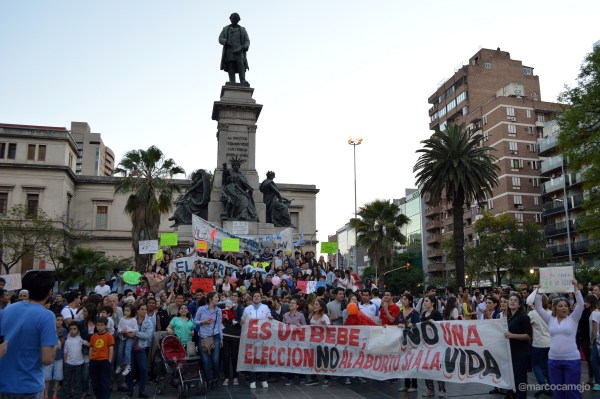
Protesters have taken to the streets in Argentina and elsewhere in Latin America to raise awareness about violence against women and girls, pushing for an end to machista culture.  News media estimate that a demonstration under the banner of NiUnaMenos – “not one less woman” due to femicide – in Buenos Aires last Wednesday drew tens of thousands of supporters dressed in black, despite freezing rain.  Other banners declared “We want to live” and demanded “No more machista violence.”  The immediate issue driving the protest was the brutal attack earlier this month on a schoolgirl in Mar del Plata – 16-year-old Lucía Pérez – who was drugged, raped, and tortured to the point of suffering cardiac arrest and died from internal injuries.

  • Argentina passed laws between 2008 and 2012 protecting a range of rights relating to human trafficking, violence against women, marriage equality, and gender and sexual identity, creating new space for discussion of the issue. But the Casa del Encuentro, an NGO that helps victims of gender violence, says that data through 2015 indicate that somewhere in Argentina a woman is killed every 30 hours.  The government’s Secretariat of Human Rights says that 19 women and girls were murdered in the first 18 days of October.  Argentine President Macri, challenged since early days of his administration to address the problem, has reiterated pledges to push legislation that would establish a hotline for reporting abuse and create more shelters for abused women as well as better ways of monitoring abusers.

Similar protests were held in Peru, Mexico, Bolivia, Chile, Paraguay, Uruguay, and El Salvador – with thousands of protesters in capital cities demanding an end to the systematic violation of women’s rights.  Chilean President Michelle Bachelet announced last week that she was joining the NiUnaMenos movement.  She condemned the murder of a 10-year-old girl asphyxiated, burned, and buried by her step-father.  Movement organizers cite research showing that violence against women is a serious problem in much of Latin America.  The Mapa da Violencia published by FLACSO Brazil last year shows that seven of the 10 countries with the highest female murder rate are in this region – with El Salvador (8.9 homicides per 100,000 women), Colombia (6.3), Guatemala (6.2), and Brazil (4.8) near the top of the list.

The demonstrations reflect growing global awareness of gender violence as a violation of human rights and that legislation, while helpful, is not enough.  NiUnaMenos and other groups are also rewriting the traditional definition of violence against women as attacks perpetrated by strangers rather than boyfriends, husbands, or family members – just as coverage of femicide in Mexico in the 1990s raised public awareness of gender violence as systematic and deeply structural as opposed to “every-day,” “familial,” and “private.”  NiUnaMenos is challenging “the culture of violence against women” in machista societies and condemning “the men who think that a woman is their property and they have rights over her and can do whatever they want.”  In Argentina, the mainstream media have stimulated much of the backlash, with reporting that exploits private details of victims’ lives and portrays victims in a manner that suggests responsibility for the crimes committed against them.  This recycling of the “algo habrá hecho” logic that circulated freely during the dictatorship coincides with a renewed focus in Argentine society on cases of torture during those years, treating them specifically as acts of sexual violence.  A week or two of protests obviously will not change ingrained culture, but the burgeoning movement highlighted by NiUnaMenos offers hope of continued progress in protecting the fundamental rights of women throughout the hemisphere.

October 24, 2016

* Brenda Werth is Associate Professor of World Languages and Cultures at American University.

Colombia: University Professors Appeal for Post-Referendum Solution

By Eric Hershberg and Fulton Armstrong

27352274634_50095d1bc9_o

At a march for peace in Bogotá, Colombia, a woman holds a sign that states, “We are the generation of peace.” / Agencia Prensa Rural / Flickr / Creative Commons

A group of Colombian university professors have organized an appeal to their colleagues in and outside the country to sign a petition “requesting an effective solution without delay” to overcome the impasse created by rejection of the peace accord on October 2.  The text of the petition, which currently has more than 1,700 cosigners, is as follows:

[We] university professors, from different disciplines, universities, and regions, join our voices with those underscoring the urgent need to reach, as soon as possible, a final Accord to end the conflict with the FARC.  Delay poses enormous risks.  It is essential to set, with all urgency, an agenda for talks limited to points requiring discussion, with concrete and viable proposals for modifying the existing text.  Reflecting the extremely close results in the October 2 plebiscite, the agenda should address the concerns of the No voters, who won the vote, while respecting the voice of the equally numerous Yes voters, who supported a text that cannot be wholly reevaluated, as well as those who did not speak at the polls.

The result of the plebiscite on Sunday [2 October] provides the unique opportunity to adjust the existing Accord in a way that draws a majority of society.  Capitalizing on that opportunity is the responsibility of all sides:  the FARC, the representatives of No, and those of Yes.  The plebiscite leaves no doubt – and the mobilizations in the streets and social media confirm – that society demands that all be flexible in their positions.  That’s what the youth demand as they convoke marches and other actions to push a quick Agreement, and which we support without hesitation.

The professors are an important voice of society and, as the statement explicitly states, of young people throughout the country who aspire to have a peaceful future.  The statement dodges specifics on what needs to be changed in the accord, but its assumption that sufficient pressure can be brought on all parties, including those who opposed the accord, to find common ground is credible.  Appeals such as this – unprecedented in the sheer number as well as in the wide range of institutions, disciplines, and regions that are represented – will be a good test of the capacity of Colombian civil society, such as the Academy, to push compromise, and for others, such as the economic elites, to achieve compromise.  Agreement may emerge, for example, to move discussion of certain social issues, such as those that riled some religious groups, into another venue so they aren’t an obstacle to agreement on war-and-peace issues.  The professors have their finger on the pulse of the nation and grasp the underlying political, economic, and social drivers of peace – and their optimism that neither side will come to a new negotiating table with dealbreakers is probably more warranted than anyone else’s.

Click here to see the original Spanish version of the petition.

October 14, 2016

Venezuela: Running Out the Clock in 2016

By Michael McCarthy*

venezuela-military

A military exercise in Caracas, Venezuela. The Venezuelan military remains tolerant, if not actively supportive, of President Nicolás Maduro’s government. / Cancilleria del Ecuador / Flickr / Creative Commons

Despite continuing high tensions in Venezuela, neither President Nicolás Maduro nor the opposition appears likely to gain an upper hand in their years-long confrontation over the next couple months.  Venebarómetro polls buttress press reports and observers’ impressions that the opposition is slowly making gains, but support for the government – while extremely low – has stabilized.  A plan to reschedule 2017 debt owed by the national oil company will probably give the administration some breathing room, especially if oil prices continue to recover – a more likely scenario thanks to OPEC’s announced production cut agreement.
  • The very high turnout for the opposition’s Toma de Caracas demonstration on September 1, which mobilized hundreds of thousands of people, showed the depth of support for the anti-Maduro platform. The Electoral Tribunal’s announcement last week of onerous requirements on the opposition to schedule a referendum to recall Maduro (requiring, for example, the signatures of 20 percent of residents of all states, rather than nationally) rekindled opposition anger and unity.  A Venebarómetro poll earlier this month showed that 90 percent of Venezuelans view their overall situation negatively, and 71 percent support Maduro’s immediate resignation, but that only roughly 50 percent identify with the opposition.  The Mesa de Unidad opposition coalition is under great pressure to satisfy different constituencies – promoting street mobilization and pursuing dialogue at the same time – even when these initiatives seem at counter purposes.  Hamstrung by coalitional politics, anti-Maduro forces have not shown the cunning needed to force a course reversal from the Electoral Tribunal.
  • While Maduro’s popular support remains extremely low (22 percent), an internal party revolt against him appears unlikely. The government’s big push for a deal under which PDVSA creditors would swap debt coming due in 2017 for generous new 2020 bonds is making headway, according to the press.  Enhanced short-term liquidity may result in increased imports, a development which cannot come soon enough for a government that faces a restive population that has seen quality of life deteriorate dramatically during the crisis.

The common wisdom that the military is at least tolerant, if not actively supportive, of Maduro still stands.  Armed Forces chief Vladimir Padrino López showed an independent streak during last December’s Parliamentary election but this has not translated into a public rivalry with Maduro.  He moved into the spotlight when Maduro tasked the military with taking charge of food distribution, but he has since kept a lower profile.  Other senior commanders’ political leanings are even more difficult to discern.  Appealing to the military is a key element of the opposition’s current strategy, but there are still no signs of an increase in the institution’s willingness to press Maduro to step down or even change policies.

Maduro’s time-buying strategy looks likely to prevail for now.  His repressive tactics toward the opposition – keeping pressure on while occasionally offering negotiations, prisoner releases, and other gestures – are gaining the government time but failing to address any of the underlying causes of the ongoing crisis.  The debt swap is also a palliative that only delays the implementation of major reforms.  Popular unrest, political instability, and even violence are the factors that might conceivably persuade the military that its support and patience are misplaced.  However, with the world watching, most of the opposition leadership wants to play by constitutional rules.  Those who consider the chances of success justify the human price of further ramping up protests may see their hand strengthened if government obstructionism kills the referendum this year.  Few Venezuelans, moreover, view possible talks with the Vatican and the United States as likely to produce a breakthrough.  Even if the government alleviates the pain a bit to generate some Christmas cheer, the country will wake up with a terrible national hangover in 2017.

September 30, 2016

* Michael McCarthy is a Research Fellow with the Center for Latin American and Latino Studies.  He is international associate for Venebarómetro polling and publishes Caracas Wire, a newsletter on Venezuela and South America.

El Salvador: Dealing with the New Reality of Violence

By Eric Hershberg

morazan-el-salvador

A farm in Morazán, El Salvador, a department that has maintained some sense of normalcy through its strong social organizations. / Cacaopera de Cerca / Flickr / Creative Commons

A surge in violence in El Salvador over the past five-plus years demands a more comprehensive and inclusive strategy than the ongoing Plan El Salvador Seguro.  A rigorous and highly readable study released last month by the Instituto Centroamericano de Investigaciones para el Desarrollo y el Cambio Social (INCIDE) employs quantitative and qualitative data to demonstrate that the pattern of violence in El Salvador has worsened.  Murders increased 66 percent in the 2010-2015 period; the murder rate of 102.9 per 100,000 inhabitants in 2015 made it the most violent year in decades.  Multiple-victim murders increased 126 percent in the same period, and murders of women skyrocketed 750 percent – from 40 in 2012 to 340 in 2015.  Gang-on-gang violence has produced a 72 percent increase in deaths, while armed confrontations between gangs and state personnel are growing more frequent.  Kidnappings and disappearance have surged.  For the first time since the end of the civil war in 1992, El Salvador has experienced forced displacements, both within the country and to other countries, most notably an unprecedented flow of rural Salvadorans into Nicaragua.

The 2012-2013 truce among the gangs and the government of then-President Mauricio Funes reduced violence somewhat, but INCIDE notes that it also allowed gangs to consolidate their control over territory while government planners failed to address the deeper causes of the violence.  While documenting that Salvador Seguro has had some positive results and won support, the study posits that the current strategy of frontal attack on gangs has also eroded the social and community fabric that represents an essential intangible asset for durable success in reducing violence.  Many communities live in fear of violence from all sides.  The INCIDE report emphasizes that the causes of spiraling violence are complex, deeply rooted, and require integrated responses tailored to specific conditions in different territories.  What is needed, says INCIDE, would be a strategy that:

  • Shuns one-size-fits-all national solutions. The government has failed for years to understand that the drivers of violence and stability are different across territories throughout the country.  INCIDE advocates the creation of a “territorial map” detailing each community’s security situation, the resources it can bring to bear against violence, and what it needs from national-level programs in order to strengthen local communities.
  • Empowers those local communities. A comparison between two locales – in Morazán and Jiquilisco – revealed that the former, which has fewer police and army personnel than the latter, has been able to maintain a more normal way of life because it has strong social organizations and a social commitment to preventing violence through informal vigilance, youth programs, and cooperation with authorities.  Jiquilisco lacks these assets and lives essentially in lock-down mode.

More research and better-targeted territorial strategies are certainly essential, but even INCIDE’s Director, Alexander Segovia (who was a senior aide to President Funes and principal author of the INCIDE study), wouldn’t say they will guarantee success.  In an extensive interview with the on-line magazine Revista Factum, he blamed the failure to stem the violence on the “negligence of the economic, political, and intellectual elites” of the country.  He asserted that El Salvador must “change perspectives – to examine how it’s been dealing with the topic of violence and insecurity, from the design of public policies to the participation of the different actors who make up society.”  Prevailing approaches emphasizing sectoral solutions – strengthening agriculture, industry or tourism in affected areas – have been too piecemeal to bring results.  INCIDE’s research underscores the need for a more inclusive, comprehensive approach tailored to specific local conditions.  Mobilizing and fostering cohesion in communities victimized by the violence may be a lot more difficult, but it is also potentially the most successful means to a solution.

Click here for the full text of INCIDE’s report and here for Director Alexander Segovia’s interview with Revista Factum.

September 26, 2016

Mexico: Repressing Organized Dissent

By Marcie Neil*

Mexico teacher protest

A photo from the protest on June 19. Credit: LibreRed / Google / Creative Commons

The Mexican government’s latest reaction to the country’s largest teachers union’s challenge to education reform is triggering accusations of gross human rights violations at a time that President Enrique Peña Nieto is already under severe pressure over the case of the missing 43 students from Ayotzinapa, even if the union’s reputation – and the government’s historical demonization of it – may undercut the teachers’ cause.  Protesters associated with the Coordinadora Nacional de Trabajadores de la Educación (CNTE) clashed with state and federal police in Nochixtlán, Oaxaca, on June 19, leaving eight dead, more than 100 wounded, and at least 25 detained.  The clashes culminated a series of CNTE-led protests over a 2013 reform that puts the onus on teachers for student success through government-mandated tests and teacher evaluations – akin to the U.S. “No Child Left Behind Act.”  CNTE members consider the reform disconnected from the realities of teaching in Mexico’s underprivileged, indigenous, and rural environments, and view it as a threat to their collective decision-making authority and hard-won benefits from the 1980s and 1990s.

  • The CNTE denounced Nochixtlán as another example of excessive police force, and press reports and citizen testimony have refuted the President’s claim that police met protesters unarmed. The administration subsequently offered to meet with union leaders to discuss the reform, but it was seen as offering too little too late.

The CNTE is not the country’s most respected institution, but its complaints about the brutal police reactions to its protests have merit and have stimulated a national debate on Mexico’s commitment to human rights.  The union’s reputation has been tarnished by repeated disruption of school schedules, internecine strife, recent arrests of leaders on corruption charges, and a recently eliminated, but oft-cited, benefit that allowed union members’ children to inherit their jobs regardless of merit.  But the state’s implicit culpability in the disappearance of the 43 students in Ayotzinapa and the death toll on June 19 seems to have tipped the perceptions of its dispute with the state momentarily in favor of CNTE.  That dispute and others with popular organizations have deep roots – going back to mobilizations in the 1960s, including the Tlateloco Massacre in 1968, and the brutal repression of a 2006 teachers strike in Oaxaca.  The historical pattern is one of state abuse against mostly harmless citizens who feel denied democratic participation.

The Peña Nieto administration’s reactions thus far do not suggest a desire to break with that pattern, even in the face of public outrage over this month’s killings.  The Mexico representative of the United Nations High Commissioner for Human Rights and others have called for an independent investigation into the Nochixtlán violence, but the government’s stonewalling of the Ayotzinapa investigation suggests these attempts at overcoming impunity face dim prospects.  Education Minister Aurelio Nuño’s statement the day after the confrontation confirming the government’s commitment to uphold the education reforms further fueled public anger.  Absent an independent evaluation, the bloody events of June 19 could remain as evidence that the Mexican government is simply unwilling to overcome its historical tendency to attack those it considers subversive. 

July 1, 2016

* Marcie Neil received her Masters in Latin American Studies at American University in 2015 and served as a Graduate Assistant at the Center for Latin American and Latino Studies.