Argentine Debt and the U.S. Dollar

By Leslie Elliott Armijo

Images Money / Flickr / Creative Commons Attribution-NonCommercial-ShareAlike 2.0 Generic (CC BY-NC-SA 2.0)

Multiple economic and political challenges have called into question the future status of the U.S. dollar as the world’s dominant reserve currency, but backlash from Argentina’s recent spat with the United States over defaulted bonds appears to be fueling interest in reforms that may have beneficial implications.  According to the IMF, some 61 percent of the world’s known foreign exchange reserves held by central banks around the world remain in low-yielding dollar-denominated assets, mainly U.S. Treasury bonds.  The United Nations Conference on Trade and Development (UNCTAD), China, and heavyweights in the Global South, including Brazil, are calling for international trade agreements that would give emerging economies “policy space” – allowing national governments to impose capital controls, fund exports, subsidize local industry, and keep financial services national.  Private U.S. banks, however, claim that continued U.S. dominance of world capital markets – a crucial pillar of continued reserve currency status – requires ever more open trade in financial services.  The BRICS complain about the U.S. government’s “exorbitant privilege” as the reserve currency country, with some of the sharpest complaints coming from joint statements by Brazil, Russia, India, China and South Africa. Chinese officials, though, worried about their own large dollar investments and ambivalent about the implications of renminbi internationalization, more than once have pulled the group toward a softer tone.

Argentina’s ongoing sovereign debt negotiations provide a different window onto the dollar’s reserve currency status.  Like most countries, Argentina has held a large chunk of its government’s savings in the U.S. and hired private U.S. financial institutions as its international bankers.  Today it is trying to extricate itself from U.S. markets and do its saving and financial intermediation elsewhere. Iran and Russia are doing the same, but Argentina has no foreign policy quarrel with the Obama Administration – and is not subject to U.S. financial sanctions over nuclear or military adventurism.  Buenos Aires is among those who chafe at U.S. power through the dollar, but it is primarily motivated by the U.S. Supreme Court’s decision in July to let stand a lower court judgment in favor of investors holding bonds from Argentina’s $82 billion sovereign debt default in December 2001.  Although 92 percent of the original bondholders accepted the Argentine government’s restructured (lower value) bonds in 2005 and 2010, New York Federal District Court Judge Thomas P. Griesa ruled that Argentina’s failure to settle with the holdouts means that any U.S. financial institutions, or their international affiliates, that intermediate funds enabling Argentina to stay current on payments to the majority will themselves be in contempt of court.  This has sent Argentina into “technical default.” Argentina is suing the U.S. in the International Court of Justice (whose jurisdiction the U.S. refuses to recognize) and in the court of global public opinion – pushing, for example, a recent proposal for global financial reform before the U.N. General Assembly. It has also welcomed an $11 billion currency swap agreement with China, and Chinese state banks have since pledged $6.8 billion in new infrastructure loans.  Some observers speculate that the very first loan of the New Development Bank, newly organized by the BRICS countries, could go to Argentina.

The Argentine bond case harms the perceived fairness and credibility of U.S. financial markets and, by extension, the strength of the U.S. dollar because the recent legal judgments seem capricious to many.  Senior figures at the IMF have long supported the routine inclusion in all international sovereign bond issues of a so-called “collective action clause,” which would make any restructuring accepted by two-thirds of bondholders binding on all.  The European Union already has ruled that sovereign bonds issued within the EU, including many for troubled Eastern or Southern European governments, must contain such clauses.  Moreover, the International Capital Markets Association, representing more than 400 of the world’s largest private investment institutions, has just issued a position paper endorsing obligatory collective action clauses, placing it on the same side of this issue as non-governmental organizations advocating financial architecture reform such as the New Rules for Global Finance and the Jubilee Debt Campaign.  This would give taxpayers in emerging economies – the ultimate backstop of the creditworthiness of their governments – the same bankruptcy rights as firms and households.  It is not in the interest of Latin American and other emerging economies for U.S. currency and financial dominance to end anytime soon – a tripolar reserve currency system based on the dollar, euro, and reniminbi does not yet appear able to sustain the worldwide growth and prosperity of recent decades and may in fact entail significant risks – but fairer rules for sovereign financing would benefit everyone.

* Leslie Elliott Armijo is a Visiting Scholar at Portland State University and a Research Fellow at CLALS.  She has just published The Financial Statecraft of Emerging Powers: Shield and Sword in Asia and Latin America (London: Palgrave, 2014).

September 23, 2014

Resources and the New Developmentalism

By Paul A. Haslam*

María del Carmen Ortiz / Flickr / Creative Commons Attribution-NonCommercial-ShareAlike 2.0 Generic (CC BY-NC-SA 2.0)

María del Carmen Ortiz / Flickr / Creative Commons Attribution-NonCommercial-ShareAlike 2.0 Generic (CC BY-NC-SA 2.0)

Resource nationalism is driving the most significant shift in Latin American development policies of the past decade.  It is rarely talked about yet is constituting a new developmental model that is being adopted by governments of diverse ideological inclinations.  It has involved reforming taxation regimes dating from the 1990s to extract more “rent” from natural-resource intensive industries; strengthening and extending state capacity; using rents to support social spending by the state, including anti-poverty programs; and – most importantly – linking resource abundance with industrial policy.  It is the basic framework of the post-neoliberal development model, and examples are many.  The splashier headlines in the past decade focus on various instances of nationalization, including the expropriation of YPF in Argentina (2012); Venezuela’s erratic nationalization program; and Bolivia’s dramatic military occupation of foreign-owned gas facilities in 2006 – all intended to achieve these goals.  Early this month, the provincial government of San Luis, Argentina, presented a project-law to create a new provincially owned mining company, San Luis Minera (SAPEM) – joining many fellow provinces that have created or breathed new life into state-owned enterprises (SOEs), particularly in the mining sector.

By and large, these enterprises exist to associate with multinationals, following the trail blazed by Argentina’s YMAD (in Catamarca) and Fomicruz (in Santa Cruz) during the dawn of Argentina’s mining boom in the late 1990s.  The SOEs typically offer the rights to prime potential lands claimed by the state, handle the administrative and regulatory requirements of the province, and in some cases, negotiate the social licence with nearby communities.  In exchange, they get a small net profits interest (typically around 8-10 percent), which results in rent for the province.  The multinational does everything else: raises the money; plans, builds and operates the mine, and sells the mineral.

These are not the rent-seeking policies typical of low-capacity governments.  The enduring principles of the liberal regime (such as low royalty rates) have pushed revenue-hungry governments to explore creative options such as these to capture rent from their mining sectors.  The new SOEs are also an institutional innovation that aims at leveraging natural resource wealth for economic development, as governments also expand resource-funded social spending.  One of the objectives of Morales’s “nationalization” of Bolivia’s oil and gas resources, for example, was to “revitalize” the state-owned YPFB (Yacimientos Petrolíferos Fiscales Bolivianos) as an engine of development.  Nor is this “resource nationalism” exclusively a project of the left: Chile increased royalty rates in a “Special Tax” on the mining sector in 2005, and Colombia and Peru have hiked taxation on mining as well.  Brazil has continued to use of SOEs like PETROBRAS.  It’s still an open question, however, how successfully the rents generated by this new model can be combined with industrialization or development strategies that deliver enduring benefits. 

*Dr. Haslam teaches at the School of International Development and Global Studies, University of Ottawa, Canada.

July 19th Anniversary and the New Nicaragua

By Rose Spalding*

Photo credit: Globovisión / Foter / Creative Commons Attribution-NonCommercial 2.0 Generic (CC BY-NC 2.0)

Photo credit: Globovisión / Foter / Creative Commons Attribution-NonCommercial 2.0 Generic (CC BY-NC 2.0)

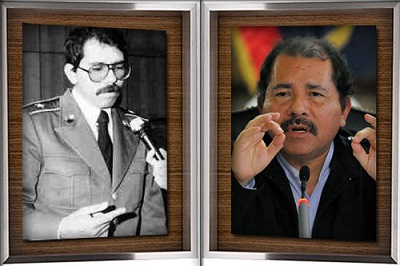
Daniel Ortega’s political rebirth has produced a remarkable partnership with the Nicaraguan business sector.  Thirty-five years ago, when he and the Nicaraguan revolutionaries ousted dictator Anastasio Somoza, a U.S. ally known for corruption and human rights abuses, they clashed with the business sector, the Catholic Church leadership, and a heterogeneous band of counterrevolutionaries armed and financed by the Reagan administration.  Ortega lost elections in 1990 but made a remarkable return to power in 2007, ushering in the “second phase of the Sandinista revolution.”  Unlike during his first term, he undertook to collaborate with COSEP, the Nicaraguan association of business chambers, and gave its members, perhaps more than any other group, regular access to high-level officials and a palpable voice in shaping legislation.  According to José Adán Aguerri, the current president of COSEP, 77 out of 81 of the Ortega government’s economic laws have been produced in dialogue with the business association.  These involve wide-ranging negotiations on minimum wage increases, tax reform, housing development, social security expansion, investment incentives, and other issues.

This partnership has contributed to economic growth and direct foreign investment.  The World Bank reports Nicaragua’s economic growth was 5 percent in 2012 and 4.6 percent in 2013, compared to 2.6 percent and 2.4 percent for the Latin American region as a whole.  According to CEPAL, foreign investment in Nicaragua reached $849 million in 2013, a level that was second only to the $968 million reported for 2011.  Nicaragua’s investment promotion agency, ProNicaragua, documents strong investment in tourism, agribusiness, textiles and outsourcing services.  The extractive sector is also growing rapidly.  Responding to strong commodity prices and a cordial reception in Nicaragua, Canadian gold mining company B2Gold recently announced a planned investment of $289 million to expand its operations in La Libertad.  Nicaraguan investors have developed new initiatives, including a major tourism project orchestrated by Carlos Pellas, the country’s richest man.  The relationship has benefited from the ALBA agreement Ortega signed with Venezuela President Hugo Chávez in 2007.  Venezuela assistance has totaled $3.4 billion in loans, donations and investments in the 2008-2013 period.  These funds regularized Nicaragua’s precarious energy supply and subsidized transportation, housing, microcredit and public sector wages, providing a general economic stimulus from which elites also benefitted.  Announcements of a projected $40 billion investment in an interoceanic canal reinforce the image of a new development era in Nicaragua.

The business-government relationship reflects mutual accommodation by Ortega and business leaders.  Nicaragua lost several decades of economic growth during the 1980s and the “contra” war, so upon his return to power Ortega put a premium on promoting growth, tread lightly on issues of tax reform, and eagerly pursued foreign investment.  He met repeatedly in closed sessions with business leaders and called for a “grand alliance” of government, business and workers to combat poverty, promote investment and create jobs.  A formal consultation mechanism brought together leaders from COSEP and the government, such as Bayardo Arce and Paul Oquist, for regular policy discussions.  Offering a stable economic environment and generous investment incentives, a non-conflictual labor force with the lowest wages in the region, a relatively low crime rate, and receptivity to business initiatives, Ortega won over business allies.  The business interests of current and former Sandinista leaders, some affiliated with COSEP, reinforced the collaboration and helped convince a new generation of business leaders to put aside traditional hostility and preoccupation with injuries of the revolutionary 80s.  They accepted the government’s legitimacy and bolstered its domestic and international credibility.  Enthusiastic about the growth of the Nicaraguan economy, economic elites also downplayed lingering questions about deficits in democratic institutionality and accountability.  But the heightened concentration of political power under Ortega and the weakness of other state institutions mean that economic rules are vulnerable to shifting political winds, and questions remain whether this development approach will resolve the problem of widespread poverty.  Even as the government-business relationship warms and the economy grows, these social and political concerns continue to bedevil the country.   

*Dr. Spalding is a professor of political science at DePaul University.

Nicaragua’s Canal: Great Leap (of Faith) Forward?

By CLALS Staff

Mike and Karen / Flickr / Creative Commons Attribution 2.0 Generic (CC BY 2.0)

Mike and Karen / Flickr / Creative Commons Attribution 2.0 Generic (CC BY 2.0)

The Nicaraguan government and a Chinese telecom tycoon took a big step on Monday toward the country’s long-held dream of having its own canal, but their prediction of supertanker traffic starting as soon as 2020 seems a bit far-fetched.  The project will cost $40 billion and, according to government officials, will create 50,000 jobs immediately, 1 million jobs over the life of the project, and will help lift another 400,000 people out of poverty.  President Daniel Ortega’s supporters claim the economy – currently projected to grow at 4.5 percent a year until 2020 without the project – will grow as much as 15 percent a year with it. The Chinese company, HKND, will enjoy a 100-year lease on the canal, with 1 percent of it reverting back to Nicaragua each year.  The proposed route for the canal is 278 kilometers long – about three times longer than the Panama Canal – and will be deep and wide enough to handle ships much larger than the “New Panamax” vessels.  Officials say the canal would “complement” the Panama waterway, which they say will be overcapacity even after its current expansion, and will save shippers some 800 miles on their way to the U.S. east coast.

Opposition from some politicians and environmentalists has been strong.  According to media reports, Nicaragua’s Supreme Council for Private Enterprise (COSEP) and other business organizations are generally positive but skeptical, with one leader calling Monday’s press conference “just an initial flow of information.”  Congressman Eliseo Núñez of the Independent Liberal Party (PLI), however, has been widely quoted as calling Monday’s announcement a “propaganda game” and blamed the media for generating “false hopes for the Nicaraguan people.”  Former Vice President Sergio Ramírez says that handing over national territory for development is a violation of the country’s sovereignty, and other critics claim the project violates 32 provisions of the Constitution.  Concerns about damage to Lake Nicaragua, an important source of fresh water that is already polluted, remain. Chinese investor Wang Jing told the press that avoiding environmentally sensitive areas was a major factor in determining the route, and he has promised that a full environmental impact study will be conducted before construction starts.  Opponents of the project doubt he will make the report public.

Ortega’s statement last year that a Nicaraguan canal “will bring wellbeing, prosperity, and happiness to the Nicaraguan people” may well be right – if the project gets off the ground and so many jobs are created.  However romantic that vision is, construction is still far from certain to begin this December, as claimed, or even within the next year or so.  Wang says that he has lined up “first-class investors,” but none has been identified yet.  In addition, criticism of his business record – opponents say his telecom company is poorly run – has hurt his credibility. And accusations that he’s a stalking horse for the Chinese government, which he says has had “no involvement,” will be difficult to dispel in view of Beijing’s other interests in the region and in shipping.  Equally troubling, as the ongoing expansion in Panama has shown, the shadow that corruption and inefficiency cast over any major project tempers optimism and argues against premature celebration.

Argentina: Burying the hatchet?

By Arturo C. Porzecanski*

Photo credits: Finizio and Global Panorama / Foter / Creative Commons Attribution-NonCommercial-NoDerivs 2.0 Generic (CC BY-NC-ND 2.0)

Photo credits: Finizio and Global Panorama / Foter / Creative Commons Attribution-NonCommercial-NoDerivs 2.0 Generic (CC BY-NC-ND 2.0)

The administration of Cristina Fernández de Kirchner has shown a willingness to bury the proverbial hatchet and bring to a definitive end what was once the largest sovereign default in recorded history – nearly $100 billion in obligations to domestic and foreign bondholders and official foreign-aid and export-credit agencies, including the United States Export-Import Bank.  In late May, Argentina reached an agreement with its official creditors (gathered as the so-called Paris Club), committing to repay everything that had come due in full and in cash – nearly $10 billion in principal, past-due interest, and interest-on-interest – over the next five years, starting with a down-payment in July.  In recent days, President Kirchner has also signaled that she is ready to negotiate a payment plan with bondholders who are potentially owed even more than the Paris Club creditors.  The trigger for this conciliatory attitude is two U.S. Supreme Court decisions announced on June 16 which granted jilted creditors wide latitude in seeking redress from Argentina.  The first ordered the government in Buenos Aires to stop discriminating among its bondholders by paying most but not all of them; and the second mandated banks operating in the United States to disclose any and all assets owned by Argentina anywhere in the world, facilitating efforts to seize them by unpaid creditors.

Argentine governments since the closing and troubled days of 2001 have taken a notoriously hard line toward creditors ever since Acting President Adolfo Rodríguez Saá announced that he would be suspending payments on the public debt and dedicating all sums budgeted for that purpose to fund an emergency jobs program and increased social spending.  Cristina and her predecessor (and late husband), Néstor Kirchner, embraced a populist-cum-nationalist view of the world according to which the state must favor the interests of the majority of its population, particularly in terms of redistributing income from the “haves” to the “have nots.”  Pervasive state interventionism, confiscatory taxation, disrespect for private property rights, widespread controls (on prices, interest rates, foreign trade, and capital flows), and confrontational attitudes toward investors became the hallmark of economic policy in Argentina.  Despite a vigorous economic recovery starting in mid-2002, creditors never got a single payment from Argentina – and the government made only an arrogant take-it-or-leave-it proposition to private creditors by which they would turn in their bonds and receive new ones worth one third as much.  By late 2010, over 92 percent of the private creditors capitulated and went into the debt exchange.  According to a reputable comparative study of sovereign defaults in the Journal of International Money and Finance published in 2012, Argentina’s behavior towards its creditors displayed an exceptional degree of coerciveness.  While Argentine and European creditors had no luck pursuing their claims in their respective courts, most bondholders who had legal rights under New York State law succeeded in obtaining favorable judgments – and lately, in gaining enforcement rights as well.

Argentina has set such a bad example in terms of how to restructure the public debt that no other nation has dared to follow it since.  Given the recent advance in creditor rights courtesy of the U.S. Supreme Court, chances are that no other government will ever be motivated to copy Argentina’s rogue-debtor behavior – a very good outcome for the world at large.  Concerns that the decade-long judicial fight in the United States will slow down or impede future sovereign debt restructurings are greatly exaggerated.  Before reaching their decisions, the U.S. courts heard from many academic and non-academic experts, and from several governments (Brazil, France, Mexico and the United States), and the New York District Court of Appeals dismissed warnings of impending doom as “speculative, hyperbolic, and almost entirely of [Argentina’s] own making.”  Argentina engaged in uniquely egregious misconduct, violating the well-established norms of sovereign debt restructuring, refusing to negotiate with its creditors, ignoring court orders, and failing to honor its obligations subject to U.S. law despite the country’s unquestioned ability to pay.  The legal rights conferred to minority bondholders in the 1990s, which were actionable in this instance, have been superseded during the 2000s by the widespread inclusion of new “collective action” clauses, inspired by English law, preventing a small minority from blocking a debt restructuring supported by a large majority (at least 75 percent) of creditors.  These clauses have worked very well in recent years, including in the cases of Greece and Belize in 2012 and 2013, respectively.  Therefore, while the advancement of creditor rights brought about by the Argentina litigation will encourage governments to be more conciliatory towards their creditors, the evolution of market practices means that fewer than 8 percent of total creditors will never again be able to demand payment in full the next time that a government obtains the consent of everyone else.

*Dr. Porzecanski is Distinguished Economist in Residence at American University.

The “Informal City” and Latin America’s Urban Future

By Robert Albro

Embed from Getty Images

Latin American cities are powerful engines for growth, but sustaining that progress will require moving workers from the informal into the formal sector.  Latin America is the most urbanized continent in the world, and its cities are now the region’s main economic engine.  Its ten largest cities account for about half of the region’s economic output, and their share of economic activity is projected to increase by 2025.  They are also increasingly aspiring to insertion in the global economy. And mayors often assume a CEO-like autonomy in attracting international capital, business, and talent to their cities, while pursuing policies designed to enhance their municipal standing as critical global nodes, hubs or platforms of innovation, manufacturing and services.  Strategies include international city-to-city cooperation, corporate and multinational partnerships to fund infrastructure, global policy forums for mayors to share best practices regarding sustainability or climate change, and new urban planning intended to increase connectedness to global information flows.  Citi and the Wall Street Journal in 2013 judged Medellín, Colombia, the “most innovative city” in the world.  San José, Costa Rica, has become a telemarketing outsourcing center, in large part because of its well-prepared workforce.  And cities like Monterrey, Mexico, and Curitiba, Brazil, are emerging tech hubs.

Over the last several decades, however, rapid urban growth in Latin America has also greatly expanded the urban informal sector.  With sub-Saharan Africa, Latin America has the largest informal sector in the world.  Of all workers in greater Bogotá, for example, 59 percent operate in the informal economy.  Low levels of technology, finance and job skills conspire to limit productivity and to distance Latin America from the frontiers of the global economy.  Along with low earnings and the lack of social benefits or income security, a large informal labor sector generates inadequate tax revenue for municipalities and chronic underinvestment and neglect of urban infrastructure.  Pervasive informality also contributes to social exclusion.  More than 80 percent of the top 50 most violent cities in the world are in Latin America, and this violence is concentrated along rapidly expanding urban margins.  In the absence of resources from municipal authorities, marginal urban dwellers turn to illicit actors and activities for unregulated or pirated services and protection.  Potentially competitive enterprises are hesitant to establish a presence in cities where property ownership is contested or where government voids leave land, money, governance and other resources, vulnerable to criminal capture.

Latin America’s cities aspire to effective insertion into the global economy while also struggling with very local and hard-to-change challenges of informality and unregulated urban growth.  Labor flexibilization and privatization, hallmarks of 1990s-era neoliberal policies, at once promote the growth of the informal economy and complicate urban planning intended to facilitate the development of assets necessary for global competitiveness.  Urban planners mistakenly continue to treat participants in the informal economy as a transient reserve army of labor composed of rural in-migrants not yet absorbed into the industrial sector.  Yet if cities want to develop their niche in the global economy, policy makers will also have to attend to the connections between urban informality and social exclusion. Large-scale and violent protests, such as last year’s flash mob protests in shopping malls by working-class Brazilian youth, are demanding their “right to the city.” The economic future and competitiveness of Latin America’s cities significantly depends upon their capacity to address the second-class citizenship of their informal workforce. Overcoming social exclusion is a first step to competing effectively in a global economy characterized by increasingly stiff competition among cities.

Mexico: Reform Promises Boost in Energy

By Amy Ruddle

Photo credit: Wonderlane / Foter / CC BY

Photo credit: Wonderlane / Foter / CC BY

Landmark reforms passed by the Mexican Congress last month – amendments to three articles of the Constitution – allow private investment in the country’s energy industry for the first time in 75 years. They open the door for international companies to enter into joint ventures with Petróleos Mexicanos (PEMEX), with the first round of contract bidding slated for 2016 – and increased oil and gas production as soon as 2018. PEMEX will remain state-owned and all hydrocarbons in the ground will continue to belong to Mexico, but private companies will gain rights to oil at the wellhead and be permitted to participate in site exploration, gas and oil production, seismic analyses, and the transportation, marketing and refining of these resources. They will also be allowed to bid for rights to conduct offshore and shale exploration.

Although the oil industry is expected to attract billions of investment dollars – PEMEX signed a cooperation contract with Russia’s Lukoil last week for an undisclosed amount – Mexican officials say they’re not rushing into deals. Undersecretary of Hydrocarbons Enrique Ochoa Reza recently said that the government is proceeding carefully, taking cues from Brazil and Norway as examples of how energy reform can be executed successfully. “In order to do it right – and we are committed to doing this – we need to do it one step at a time,” he said. The Mexican government’s hope is to return oil production (roughly 3 million barrels per day in 2012) to its 2000 levels (3.5 million) by 2025, and possibly 4 million barrels in the distant future.  In addition to creating jobs, the government projects the reforms will increase GDP by 1 percent by 2018, and by 2 percent by 2025. Increased revenues should stabilize budgets, fund a long-term savings mechanism, and eventually support long-term projects including the universal pensions system, scholarships, and science and technology research.

The next hurdle in energy reform will be passage of secondary legislation over the next five months — and faithful implementation. The transparency mechanisms written into the constitutional reforms, including public bidding rounds, transparency clauses in energy contracts, external industry audits, and the full disclosure of all payments related to oil and gas contracts are essential to success, but overcoming the corruption and inefficiency that have plagued PEMEX will require sustained effort. In addition, President Peña Nieto still has to sell these changes to the Mexican people. Tens of thousands of citizens took to the streets to protest the changes in early December, and opinion polls show that many, if not most, Mexicans are not in favor of them. Polls conducted by Vianovo in September (still deemed to be among the most accurate) show that only 33 percent of respondents favor profit-sharing contracts between the government and private companies to explore and produce hydrocarbons, although 53 percent were at least somewhat in favor of the energy reforms overall. Unions are upset too, as the union representing PEMEX’s 140,000 employees has now been eliminated from the company’s board, and private firms benefiting from the reforms may create labor contracts without union involvement.

Guatemalan President’s Mid-term Exam: A Failing Grade?

By Ricardo Barrientos*

Guatemala Otto Pérez Molina President / Photo credit: World Economic Forum / Foter.com / CC BY-NC-SA

Guatemalan President Otto Pérez Molina / Photo credit: World Economic Forum / Foter.com / CC BY-NC-SA

President Pérez Molina’s second annual report to the nation last week at Guatemala’s National Theater featured statistics on the government’s progress, but it may be better remembered for an incident in which a protester threw white powder in the face of Vice President Roxana Baldetti.  A number of opposition deputies boycotted the session, and protestors outside drew headlines.  The President touted specific accomplishments, but his overarching plans –structured in three “pacts” welcomed even by the opposition – have fallen short of expectations.

  • The President in his speech said malnutrition has declined, but critics say that the Zero Hunger Pact is mostly unimplemented and chronic malnutrition persists. National surveys and several studies report that half of all Guatemalan children face a life with deficits in their abilities to learn and be competitive.
  • The Security, Justice and Peace Pact – expected to be a strong point for a former Guatemalan army general with a reputation as an “iron fist guy” – has fallen short.  Pérez Molina said the national homicide rate has dropped from 39 to 34 per hundred thousand inhabitants, but the National Institute of Forensic Sciences has reported a slight increase in murders in the capital and surrounding area.  Crime and insecurity remain a daily reality for Guatemalans, fueling popular frustration that Pérez Molina is not meeting one of his top campaign promises.
  • The Fiscal Pact for Change is also not delivering desired results.  According to Icefi, public finances are in crisis, not because of an external economic shock (2009-2010) or because tax reforms failed to increase revenues (corporate taxes rose 35 percent in 2013).  Rather, corruption is fueling fiscal shortfalls. According to President Pérez Molina and in Vice-President Baldetti’s own words, the influence of organized crime over the Customs System, whose duties and VAT on imports account for one third of Guatemalan tax revenues, is hampering collection.

For a student, a bad grade on a mid-term exam is an alert that things are not going well – but that a serious effort in the second half can save the course and achieve success.  For Pérez Molina, serious effort from now on is going to require more than a speech and applause at the National Theater.  The final exam for him and his government looms large on the horizon: elections will take place in September 2015, and campaigning will be well advanced in 2014. Voters are influenced by their daily reality, not an official report of success and accomplishments more reminiscent of Alice in Wonderland than real life Guatemala.  The President knows the clock is ticking.

Ricardo Barrientos is a senior economist at the Central American Institute for Fiscal Studies (Icefi).

China in Latin America: Is the Dragon Here to Stay?

By Ivanova Reyes & Amy Ruddle

Source: Based on Gallagher et al. (2012).

Source: Based on Gallagher et al. (2012).

As China has become a major importer of Latin American & Caribbean commodities, it has significantly increased its financing and investment in the region.  Data on Chinese investment is not complete, but we estimate that it reached 38 percent of the combined financing from the IDB and World Bank to the region during 2005-11, with Venezuela getting the most.  In 2010 China became the third largest outside investor in the region (behind the United States and the Netherlands), and it provided an estimated $22 billion in 2011 – approximately 13 percent of total investment flows to Latin America and the Caribbean.

This investment is likely to continue to grow.  The Chinese government provides tax breaks, lines of credit and other incentives for companies to invest in key industries overseas, and a great deal of its lending corresponds to “finance for assured supply,” such as a  $10 billion loan from the Chinese Development Bank to Brazil’s Petrobras in 2009 in exchange for 200,000 barrels of oil per day.  Currently, according to Gallagher et al. (2012), 72 percent of the Chinese lending to the region is in the oil and mining industries and in related infrastructure projects.  The remaining funds lent in recent years have gone towards other infrastructural developments (21 percent), and towards trade, finance, and communications (7 percent).  Latin American countries have implemented policies aimed to attract Chinese investment.  They generally impose fewer conditions than those demanded by international financial institutions and require less compliance with environmental standards.

Recent surveys indicate that citizens overall view the growing influence of China in the region as a positive thing.  Indeed, Vanderbilt University’s AmericasBarometer found in 2012 that 20 percent of respondents viewed China as already the most influential country in the region, and an average of 63 percent said it had a positive influence.  However, respondents see China as less trustworthy than the United States.  Across those nations polled, roughly 38 percent viewed China as “very trustworthy” or “somewhat trustworthy,” whereas 45 percent had similarly positive views of the United States.

Although the growing Chinese investment and trade may give Latin America and the Caribbean a great opportunity to generate growth, there are several challenges.  If Chinese participation in the mining and oil industries results in environmental degradation, indigenous rights advocates and community organizations already skeptical of commodity driven growth will increasingly confront Latin American states as well as foreign enterprises. In addition, Chinese concentration in the commodities industries has generated strong structural changes in Latin American economies, further relegating manufacturing to a secondary role and raising the possibility of Dutch disease, in which high commodity prices harm other exports by reducing the country’s competitiveness.  It has become commonplace to observe that South America is building a 21st century economy on a 19th century logic of primary product exports. A third concern is that, since Latin America as a region is the smallest recipient of Chinese investment in the world, China will turn elsewhere if governments start putting conditions on Chinese projects.  Ultimately, these concerns make a strong case for Latin American countries to cultivate stronger ties with the Chinese economy while remembering that China’s strategic interest in extractive industries may collide with each country’s own development strategies.


References

ECLAC. 2010. “Chapter III: Direct investment by China in Latin America and the Caribbean.” In ForeignDirect Investment in Latin America and the Caribbean. Retrieved November 2013, from http://www.eclac.cl/publicaciones/xml/0/43290/Chapter_III._Direct_investment_by_China_in_Latin_America_and_the_Caribbean.pdf.

Faughnan, Brian M. and Elizabeth J. Zechmeister. 2013. “What do Citizens of the Americas Think of China?” AmericasBarometer: Topical Brief, June 13.

Gallagher, Kevin P., Amos Irwin, and Katherine Koleski. 2012. “The New Banks in Town: Chinese Finance in Latin America.” In 30 Years of Inter-American Dialogue Report: Shaping Policy Debate for Action.

Zechmeister, Elizabeth J., Mitchell A. Seligson, Dinorah Azpuru, and Kang Liu. 2013. “China in Latin America: Public Impressions and Policy Implications.” Presentation of the LAPOP.

Argentina’s Mid-term Elections: The Beginning of the End for Cristina?

By Santiago Anria and Federico Fuchs *

Cristina Fernández mural Photo credit: CateIncBA / Foter / CC BY-NC-ND

Cristina Fernández mural Photo credit: CateIncBA / Foter / CC BY-NC-ND

Rising inflation, loss of confidence by the private sector, and lack of access to international credit markets make victory in Argentina’s mid-term elections on October 27 especially important for President Cristina Fernández – or else she will face the prospect of two years as a lame duck.  Her governing Front for Victory (FPV) faction of the Justicialist Party (PJ) seeks to protect its legislative majority.  (Half the seats of the lower chamber and a third of those in the upper chamber are at stake.)  Based on the results of the Open, Simultaneous and Obligatory Primaries (PASO) held on August 11, the FPV appears likely to lose some seats but still maintain a slight majority, considering that a number of the seats in dispute in the lower chamber correspond to districts in which it fared poorly in the 2009 elections.  Before her unexpected surgery last week, Fernández had been central to the electoral campaign, hand-picking and endorsing Lomas de Zamora Mayor Martín Insaurralde as the first deputy on the FPV’s list.  According to some surveys, previous adjustments to her communications strategy increased her approval ratings, and with her recovery from surgery expected to take a month, there is speculation that the FPV may win some additional “sympathy” votes.

The PASO primaries showed that the FPV lost in key electoral districts, including the city of Buenos Aires, and the provinces of Buenos Aires, Córdoba and Mendoza, but that it continues to be the only political force with national reach.  The opposition remains fragmented, but Sergio Massa, a former government ally and current mayor of Tigre (elected on the FPV ticket), has emerged as the key opponent in Buenos Aires province and as a likely presidential candidate for the 2015 elections.  He may challenge Daniel Scioli, who is the current governor of Buenos Aires and is, at least until now, backed by Fernández as her potential successor despite resistance from some factions within the FPV).  Massa’s Frente Renovador still has limited territorial reach, but he enjoys the support of the mainstream media, a branch of the General Confederation of Labor (CGT), the Church and, perhaps most importantly, a prominent group of mayors in Buenos Aires province.  He is trying to capture a more centrist vote, promising the “end of confrontational politics” and focusing on what he claims are the “real issues” affecting Argentines – corruption, citizen security and crime prevention, and inflation.

The results of the upcoming elections will define the options for the Fernández administration.  If the FPV fails to keep a solid majority in Congress, the issue of constitutional reform that would allow for reelection will be off the table, and Fernández will not be able to run for a third term.  In policy terms, negative results will increase pressure for economic adjustment and pro-business policies. Fernández and her predecessor, deceased husband Néstor Kirchner, have both proven their capacity to revamp their administrations after electoral defeat by defying such pressures and raising the stakes. But with defeat in the polls, and with a diminished force in Congress, it will be harder for her to maintain party discipline as the prospects for 2015 grow bleaker.  A lot also depends on how the opposition fares: a clear winner among them (most likely Massa) will become a clear challenger for 2015 and probably put even greater limits on any government strategy, whereas a still atomized opposition may give Fernández more leeway. The task ahead for the FPV will be to define and support a presidential candidate that can continue the Kirchnerista project. Performing well in the congressional elections will give Fernández more room to define this, or to at least block non-desired candidates.  We may be witnessing the beginning of the end for Cristina, but it is not clear whether any of the opposition candidates can force her to steer the Kirchnerista project in a new direction.  Not even the most plausible contender in the opposition (Massa) or the most likely successor in the FPV (Scioli) seems to have any meaningful change to offer. If both of them represent anything, it is Peronism’s ability to adapt in adverse times to stay in power. But that is nothing new in the history of Peronism.

* Santiago Anria and Federico Fuchs are graduate students in the Department of Political Science at the University of North Carolina at Chapel Hill.