Increasing the Benefits of Trade Agreements

By Antoni Estevadeordal and Joaquim Tres*

Trade 1993-2016

Source: IDB (Full-sized images at bottom of page)

Latin American and Caribbean countries were major players in global trade liberalization in the 1990s but have since been held back by complex rules, infrastructural obstacles, and the poor flow of information.  The successful conclusion in 1994 of the Uruguay Round of multilateral trade negotiations and the establishment of the World Trade Organization (WTO) fueled growth and optimism in the region, but the slow progress of the Doha Round drove the region into the silent tide of regional trade agreements (RTAs), which now govern about half of world trade.  Latin American and Caribbean countries have concluded some 70 RTAs – a far cry from the handful of sub-regional customs unions and free trade areas in place in 1994.  As a result, tariffs applied by Latin American countries have dropped from an average of 40 percent to 10 percent during this period.

Despite these policy advances, Latin America and the Caribbean’s participation in international trade is still limited.  Whereas the region and the developing nations of Asia had a similar share of world trade in 1962 (around 6 percent), Latin America’s global trade share has remained relatively unchanged – and that of Developing Asia has grown to nearly three times its previous size.  Latin America registers lower levels of intra-regional trade – 18 percent – compared to 37% in Developing Asia and 61% in the European Union.  Our research indicates that Latin America and the Caribbean could close this gap through a series of measures:

  • Harmonizing the different rules of origin in the RTAs and the wide array of sanitary, phytosanitary, and technical standards that qualify market access.
  • Improving infrastructure and reducing inefficiencies at border crossings to reduce transportation and logistics costs, which amount to three times more than existing tariffs.
  • Harnessing the power of information and communications technology to reduce costs through one-stop shops and process automatization, such as the trade single windows being introduced in several countries in the region. The cost of information about consumer preferences, market demand, and foreign regulations is the first barrier that potential exporters face.
  • Simplifying and reducing administrative burdens through expedited and secure customs and other trade facilitation measures. Some experts estimate that, worldwide, some 75 percent of delays are due to inefficient processes (compared to 25 percent due to inadequate infrastructure).

The main lesson for Latin America and the Caribbean is that trade agreements are a necessary – but not sufficient – condition to achieve economic development potential.  Increasing companies’ participation in international value chains is key to unleashing trade as an engine for economic growth and poverty reduction.  Trade-driven growth in the region, much of it from South American commodities, enabled a reduction of poverty from 22 percent in 2002 to 12 percent by creating new employment opportunities and the fiscal capacity to fund poverty reduction initiatives such as conditional cash transfers (Mexico’s Programa Oportunidades, for example).  By our calculation, trade facilitation measures such as customs and border simplifications can increase Latin American and Caribbean exports by as much as 15 percent, translating into a 5 percent increase in export-supported jobs that pay almost 20 percent more than jobs at non-exporting firms.  It is within policymakers’ grasp to create the enabling environment for firms to export, especially for the small and medium-sized enterprises that may represent the next generation of exporters.

May 9, 2016

*Antoni Estevadeordal and Joaquim Tres are, respectively, the manager and principal specialist of the Integration and Trade Sector of the Inter-American Development Bank.  Click here to access the IDB’s new course on trade agreements, and here and here for related studies.

Trade 1993-2016 v2

Source: IDB

The Critical Role of Universities in Latin America’s Future

By Rodrigo Arocena*

Tec de Monterrey

University students in Monterrey, Mexico. Photo Credit: ·júbilo·haku· / Flickr / Creative Commons

As the latest commodity boom winds down, universities in Latin America can play a leading role in helping the region rebound from the resulting economic slowdown and build itself a more prosperous and equitable future.  The consequences of the boom for economic, political, and social conditions in the region are hotly (and rightly) contested.  But one inescapable conclusion is that inadequate attention was paid to raising societies’ knowledge and qualifications in the production of goods and services.  This matters greatly, because knowledge gaps and skill deficits lie at the heart of what underdevelopment means today.  If the focus in the decades following World War II was on addressing disparities in industrialization, one of the challenges now is over-specialization in productive activities with low added-value of knowledge and qualifications.  When such specialization persists, social and environmental problems are not manageable in the long term.  Differences concerning knowledge and higher education are also one of the main factors behind inequality, in both North and South.  In Latin America, traditionally considered the most unequal region in the world, inequality in recent years has been reduced in a handful of countries and so has poverty in almost all of them.  But such social progress may be jeopardized soon not only because of economic and political changes but also because of quite weak progress made expanding knowledge capabilities and applying them to collective problems.

Universities are at the heart of the solution.  In the knowledge-based and innovation-driven economies that emerged in the North during the last decades of the 20th century, universities obviously made a difference.  They were fundamental actors in the accelerated expansion of advanced education that is closely connected with that type of economy.  They generated new scientific and technological knowledge and often channeled its use into productive activities.  Even then, in the advanced economies of the North private sector firms perform a quite larger proportion of total research and development than universities.  Moreover, Northern universities are mainly oriented by market demand, meaning that actors who are already knowledge-strong obtain most of the benefits of what universities do, fostering what could be called knowledge-based inequality.  This is different from Latin America in several ways:

  • Public universities in Latin America are the main generators of new knowledge, which is why they should get priority when thinking about the future of the region’s development.
  • They are frequently well plugged into National Innovation Systems, the web of actors and institutions responsible for upgrading productivity through the generation and effective use of new knowledge.
  • They represent a continuation, although at a weakened level, of the tradition of the socially committed university forged by the Latin American University Reform Movement.

In any country of the world, knowledge democratization deserves high priority in every progressive agenda – and Latin American universities are, at least potentially, fundamental actors in this task.  Democratizing access and success in higher education, and thus trying to overcome an ancient social divide that stymies development, is key.  The task also means fostering research in all disciplines and applying it to collective problems, as has occurred with research and innovation oriented to social inclusion.  The Latin American ideal highlights merging the modern university’s two long-established missions – teaching and research – with a third one, called “extension,” which entails cooperation with external actors in knowledge generation, cultural creation, and problem-solving, with priority given to the situation of deprived sectors.  As motors for knowledge expansion, and thus for social inclusion, Latin American universities make an invaluable contribution to development and the deepening of democracy.

April 28, 2016

* Rodrigo Arocena served as Rector of the Universidad de la República, Uruguay, from 2006 to 2014.


Latin America (Overall) Embraces Paris Climate Accord

By Fulton Armstrong

cop21 paris accord 2015

Heads of delegations at the 2015 United Nations Climate Change Conference in Paris. Photo Credit: Presidencia de la República Mexicana / Flickr / Creative Commons

Latin American support for the landmark climate agreement signed at the United Nations last week may not have been enthusiastic during the negotiations, but all but Nicaragua seem eager for early ratification and implementation of measures to mitigate the harm of global warming.  A record-breaking 175 countries signed the accord in one day, including a number from Latin America, committing them to take concrete steps to keep the increase in global temperatures from rising 2 degrees Celsius (or, ideally, 1.5 degrees) over preindustrial levels.  To take effect, at least 55 countries producing 55 percent of global emissions must ratify the agreement.  Fifteen small island nations, including several in the Caribbean, already presented their ratification papers last Friday.  China and the United States, the two greatest emitters of greenhouse gasses, have said they’ll ratify this year – as have France and other EU countries.

The region’s leaders have made significant contributions to the accord over the years.  Mexico and Peru, which were hosts of crucial international conclaves leading up to it, have given it a Latin American imprint, and others supported the final round of talks in Paris last December.  Brazilian President Dilma Rousseff’s reference in her speech to her political troubles back home overshadowed Brazil’s leadership, including its commitment to reduce its greenhouse gas emissions by 43 percent of 2005 levels by 2030.  In the past, ALBA countries complained loudly that the wealthy, developed nations, which produce the vast majority of climate-harming gasses, should shoulder the burden of reducing them and should compensate poorer countries for harm that environmental measures cause them.  All but Nicaragua, however, have submitted national plans (called an Intended Nationally Determined Contribution, INDC) required for full participation in international efforts under the Paris Accord.  Nicaraguan Representative Paul Oquist told the media that “voluntary responsibilities is a path to failure” and that wealthy countries should compensate Nicaragua for the $2 billion cost the measures would entail.

Latin America has clear incentives to support the accord.  Various scientific studies underscore the impact of global warming on the region, with potentially dire consequences.  The World Bank and Intergovernmental Panel on Climate Change have reported that failure to act would cause further extreme weather threatening agriculture; rapid melting of Andean glaciers that provide much-needed fresh water; erosion of coastal areas; catastrophic damage to Caribbean coral reefs; and dieback of Amazon forests.  ALBA demands for compensation may be overstated but contain a grain of truth – they aren’t prodigious producers of greenhouse gasses – and skepticism that the big guys will meet their targets isn’t entirely unwarranted.  President Obama has repeatedly demonstrated his personal commitment to addressing the problem, but obstacles posed by the U.S. Senate (which must ratify the agreement), Supreme Court (which in February stalled implementation of his Clean Power Plan), and politicians seeking the Republican Presidential nomination (who have sworn opposition to deals like the Paris Accord) have all but shut down U.S. movement toward ratification.  The ALBA outliers, on the other hand, have made their complaints heard and appear likely to join the rest of Latin America and the Caribbean in pushing for ratification and quick implementation – and probably will soon renew the push for even tougher measures by industrialized nations.

April 25, 2016

The Panama Papers: Damning Evidence Against Latin American Elites?

By Emma Fawcett* and Fulton Armstrong

Panama Papers

Photo Credit: Pixabay / CC0 Public Domain

The “Panama Papers” have revealed the reputed secret accounts and tax-evasion strategies of a number of Latin American leaders, but preexisting widespread perceptions that political and economic elites are corrupt may reduce the immediate shock value of the revelations.  More than 11 million documents leaked from the Panama-based law firm Mossack Fonseca – given an initial review by the Süddeutsche Zeitung and International Consortium of Investigative Journalists (ICIJ) – provide evidence of 215,000 arrangements by which 14,153 powerful and wealthy clients from around the world hid their money from the prying eyes of the media, tax collectors, and public-accountability experts.  Early reports already indicate Latin Americans – small-time players compared to the Russians and some Europeans – are among those mentioned.

  • The Petrobras scandal that has paralyzed Brazil will find further fuel in these files. Investigators in Operation Car Wash apparently had no knowledge of many accounts held by Petrobras officials.  A secret company linked to House Speaker Eduardo Cunha, who’s leading the charge to impeach President Rousseff, reportedly figures prominently.
  • Argentine President Macri, his father, and brother reportedly had an offshore company for 10 years. They closed it in 2009, two years into Macri’s term as Buenos Aires mayor, but he did not report it.  The government says he was only “circumstantially” the CEO.
  • The president of the Chilean branch of Transparency International, Gonzalo Delaveau, resigned because he was linked to at least five offshore companies.
  • Mexican President Peña Nieto’s association with tycoon-contractor Juan Armando Hinojosa, who reportedly had a massive array of shelters worth US$100 million, is once again a liability. The President was dragged through the mud – and eventually exonerated of personal involvement – over a mansion that Hinojosa allegedly gave to his wife.  The Mexican government is investigating several dozen others named in the documents.
  • Many other cases are in the wings. Pedro Delgado (former governor of Ecuadorian Central Bank and cousin of President Correa); financial backers of Peruvian Presidential candidate Keiko Fujimori; and an array of former central bank and intelligence officials – Peruvians, Venezuelans, Panamanians, and others – are all being looked at.  In El Salvador, the Attorney General, already criticized for his investigative zeal, has raided Mossack Fonseca’s offices, suggesting more revelations to come.

Allegations of tax evasion, hidden income, and other forms of corruption are a mainstay of Latin American political lifeand the Panama revelations will only aggravate the oft-held opinion that rich, powerful people play by their own rules to maintain wealth and power.  Ramón Fonseca, one of the founders of the law firm, claims that the publicity is part of “an international campaign against privacy,” which he called “a sacred human right [and] there are people in the world who do not understand that.”  The backlash against someone like Argentine President Macri may not be too great, especially because his family ended the tax haven years ago.  But what makes the allegations potentially disruptive is the number of people implicated – across public and private sectors – in so many countries, in an investigation that has only just begun.  Further revelations are sure to come and, although themselves a sign of transparency, challenge people’s faith that leaders will come clean.  The revelations will fuel popular cynicism and discontent in the short term, but renewed demands for transparency may eventually help rekindle popular confidence in government.

April 11, 2016

*Emma Fawcett is a PhD candidate in International Relations at American University.   Her doctoral thesis focuses on the political economy of tourism and development in four Caribbean case studies: Haiti, Dominican Republic, Cuba, and the Mexican Caribbean.

How are the Americas Faring in an Era of Lower Oil Prices?

By Thomas Andrew O’Keefe*

Gas Station Guatemala

Photo Credit: Josué Goge / Flickr / Creative Commons

The sharp drop in global oil prices – caused by a combination of a slowing Chinese economy hurting commodities sales and efforts by Saudi Arabia to retain market share – has both downsides and advantages for Latin America and the Caribbean.  By keeping production levels steady, despite decreased demand, so that a barrel of crude remains below US$40, the Saudis’ hope is to put U.S. shale oil producers and Canadian tar sands producers out of business.  The drop in oil prices has had a varied impact elsewhere in the Americas:

  • The effect in Venezuela, already reeling from over a decade of economic mismanagement, has been catastrophic. The ripple effect is being felt in those Caribbean and Central American countries that grew to depend on PetroCaribe’s generous repayment terms for oil imports that allowed savings to be used for other needs.  In 2015, for example, this alternative funding mechanism in Belize was slashed in half from the previous year.  The threat of interest rate hikes on money that must eventually be repaid for oil imports also pushed the Dominican Republic and Jamaica to use funds raised on international capital markets to reduce their debt overhang with Venezuela.  (For those weening themselves off PetroCaribe dependency, however, the lower prices are a silver lining.)
  • Low oil prices have also knocked the wind out of Mexico’s heady plans to overhaul its petroleum sector by encouraging more domestic and foreign private-sector investment.
  • In South America, the decline has undermined Rafael Correa’s popularity in Ecuador because the government has been forced to implement austerity measures. The Colombian state petroleum company, Ecopetrol, will likely have to declare a loss for 2015, the first time since the public trading of its shares began nine years ago.  In Brazil, heavily indebted Petrobras has seen share prices plummet 90 percent since 2008, although that is as much the result of the company being at the center of a massive corruption scandal that has discredited the country’s political class.
  • On the other hand, lower petroleum prices have benefitted net energy importers such as Chile, Costa Rica, Paraguay, and Uruguay.

The one major oil producer in the Americas that has not cut back on production and new investment is Argentina – in part because consumers are subsidizing production and investment by the state petroleum firm YPF, which was renationalized in 2012 and now dominates domestic end sales of petroleum products.  Prices at the pump remain well above real market values.  While successive Argentine governments froze energy prices following the 2001-02 implosion of the Argentine economy, this time policy is keeping some energy prices high.  This encourages conservation and efficiency and spurs greater use of renewable alternatives, but it becomes unsustainable during a prolonged dip because it will, among other things, make the country’s manufacturers uncompetitive.  The Argentine example underscores that predictions of a pendulum shift in Latin America in favor of private-sector investment in the hydrocarbons sector over state oil production are still premature.

The lower prices do not appear likely to harm the region’s continuing substitution of natural gas for coal and oil as a transitional fossil fuel to greener sources of energy.  Natural gas prices remain at their lowest levels in over a decade, and the expansion of liquefied natural gas plants allows for easier transport of natural gas to markets around the world.  They are also unlikely to dent the global shift to greater reliance on renewable energy resources driven by the international consensus that climate change can no longer be ignored and something must be done to address it.  At the UN climate change talks in Paris last December, for example, countries agreed to keep temperature increases “well below” 2 degrees centigrade above pre-industrial levels and made a specific commitment “to pursue efforts” to achieve the much more ambitious target of limiting warming to no more than 1.5 degrees centigrade.  The year 2015 was the second consecutive year in which energy-related carbon emissions remained flat in spite of 3 percent economic growth in both years. 

March 24, 2016

*The author is the President of San Francisco-based Mercosur Consulting Group, Ltd.  He chaired the Western Hemisphere Area Studies program at the U.S. State Department’s Foreign Service Institute between July 2011 and November 2015.

The Zika Virus and a New Debate on Reproductive Rights

By Rachel Nadelman*

Zika Women

Photo Credit: Day Donaldson and PresidenciaRD / Flickr / Creative Commons

The call by half a dozen Latin American and Caribbean governments for women to put off pregnancies – as the World Health Organization warns the feared Zika virus is “spreading explosively” – is stimulating a new debate on reproductive rights in the region.  El Salvador’s Health Ministry has urged women to “avoid becoming pregnant this year and next,” and Brazil, Jamaica, Colombia, and others are issuing similar advisories.  A mosquito-borne disease spreading rapidly in the Western Hemisphere for the first time, Zika is blamed for causing devastating neurological birth defects in newborns whose mothers contract the virus during pregnancy.  The U.S. Center on Disease Control has advised pregnant women to avoid travel to the more than 20 Latin American and Caribbean countries now hosting the disease.

Named for the Uganda forest where it was discovered in the late 1940s, Zika is carried and transmitted by the Aedes Aegypti mosquito, best known as the vector for life-threatening viruses like yellow fever and dengue.  Within the Western Hemisphere, the Aedes population has increased drastically in recent years, linked by scientists to changes in climate.  Yet Zika’s arrival in Latin America last year, first documented in Brazil, and subsequent expansion did not attract major attention until the pattern of birth defects emerged.  Zika’s symptoms are sometimes imperceptible or typically mild, including fever, joint aches, and conjunctivitis, so health officials did not consider it a major threat to the general population.  Although definitive clinical proof is still lacking, Zika is now linked to microcephaly, a rare neurological condition that causes children to be born with small heads because of abnormal brain development in the womb or immediately after birth.  The emergence of Zika in Latin America has coincided with a more than 20-fold increase in the incidence of microcephaly.  (Brazil has reported 4,000 cases in the past year, a drastic increase from just 150 in 2014).  The babies suffer from poor brain function and reduced life expectancy.  Doctors are finding traces of the virus in the brains of microcephaly-inflicted babies who were stillborn or died soon after birth.

Warnings and advisories offer no help to the millions of women who live in afflicted countries.  Governments are launching fumigation programs to reduce the Aedes mosquito population and thereby limit disease transmission.  Asking populations to refrain from having children appears a bit facile, if not cynical, in a region with low levels of access to birth control for reasons that range from religious dictates to economic obstacles.  Severely restrictive abortion laws also complicate potential parents’ options.  Five Latin American countries (including Honduras and El Salvador, hard hit by Zika) ban abortion without exception, even to save the mother’s life.  Others criminalize abortion with few allowances.  According to the Guttmacher institute, 95 percent of abortions in Latin America are unsafe, contributing to high maternal mortality rates. It’s not surprising, therefore, that Zika’s link to these devastating birth defects has generated unprecedented public discussion throughout Latin America about women’s and families’ rights and responsibilities for taking control of reproduction.  It is far too early to know if the health advisories will have practical impact on the incidence of microcephaly – or on attitudes toward reproductive rights over the longer term.   

February 1, 2016

* Rachel Nadelman is a PhD candidate in International Relations at the School of International Service.  Her dissertation research focuses on El Salvador’s decision to leave its gold resources unmined.

From Lima to Paris … and Beyond

By Evan Berry*

16451794648_f54e94c55a_b

Photo Credit: Ron Mader / Flickr / Creative Commons

The “COP 21” Climate Conference beginning in Paris this week appears likely to produce meaningful results yet fall short of policymakers and civil society leaders’ high hopes for an international accord.  Strong action on climate change is of particular significance in Latin America – because of its environmental vulnerability and the key role it plays in helping establish a post-carbon global economy.  The coastal communities of the greater Caribbean Basin, the intensely biodiverse forests of the Amazonian region, and the glaciated peaks of the Andes are acutely threatened by climate change.  Concern about climate change is higher in Latin America than in any other region of the world, according to the Pew Research Center.  Several nations from the region have played key roles in putting the international community on a path toward a substantive agreement at COP 21, especially Peru, host of last year’s UN climate talks.

The negotiations in Paris are designed to develop an architecture for international cooperation on carbon mitigation and climate adaption that, while essentially voluntary, will catalyze bolder action in the future.  In anticipation that COP 21 will conclude an agreement signed by all the negotiating parties, the international community finds itself again trying to strike the right balance between critical pressure for stronger action and acceptance of an imperfect, but necessary, policy apparatus.  Although observers expect that more mitigation will be necessary, Paris will provide several powerful tools for states afflicted by climate change.  Most especially, through the vehicle of the Green Climate Fund (GCF), financing for large-scale adaptation projects is now starting to flow.  Because the mandates of the GCF prioritize low-carbon agriculture, climate-compatible cities, resilience in Small Island Developing States (SIDS), and financing for forests, the fund will have a special impact in Latin America, one of the world’s most urbanized and forested regions and home to more than 20 SIDS.  Indeed, the first round of CGF projects, announced this month, includes two in Latin America – an energy efficiency bond in eastern Mexico and an indigenous people’s forest management project in Peru.

While there is room to be optimistic that these talks will make important progress, many probably will be dissatisfied with the outcome.  According to independent evaluations, several Latin American countries have put forward robust plans to limit carbon emissions, including Costa Rica, Mexico, and Brazil.  But many stakeholders, particularly environmental NGOs and leftist governments like Bolivia and Ecuador, are likely to be skeptical about the outcome of the negotiations.  They will be right to point out that the sum total of emissions reductions being discussed at COP 21 is insufficient to keep warming below the consensus 2°C limit, and that the anticipated deal is almost certain not to be legally binding and may also have weak measures for verification.  The “Road to Paris” may not take interested countries as far as they’d like to go, but in Latin America as elsewhere, critics might be well advised temper their skepticism, embrace the incremental progress, and begin preparing for the next round of climate change politics. 

November 30, 2015

* Evan Berry is Associate Professor of Philosophy and Religion and Co-Director of the Ethics, Peace, and Global Affairs master’s program at American University.

Remittances and Sustainable Community Development in Latin America

By Aaron T. Bell and Eric Hershberg

Photo Credit: Futureatlas.com / Flickr / Creative Commons

Photo Credit: Futureatlas.com / Flickr / Creative Commons

Remittances to Latin America hit a record high in 2014 at $65.3 billion, according to the Multilateral Investment Fund of the Inter-American Development Bank, but their impact on development would be much greater with better coordination between sending  and recipient communities.  Mexico receives over one third of those funds, but remittances represent a significant component of GDP for many countries across the region.  The bulk comes from the United States, where 54 million Hispanics include 19 million first-generation immigrants, according to 2013 U.S. census figures.  In several Central American and Caribbean countries, funds sent home by migrants represent the largest single source of foreign exchange.

  • Remittances alleviate poverty by contributing to household income, helping to satisfy basic consumption needs, and sometimes enabling savings and investments in education.
  • Groups of migrants from particular communities sometimes pool resources through hometown associations to support shared objectives back home. A paved road or a new soccer field affects quality of life in tangible ways, and émigré financing of local political campaigns can determine the results of elections for mayors and other officials.
  • But remittances seldom promote local economic development initiatives that will generate sustainable incomes and opportunities for wide segments of the population – missing opportunities to address the causes of migration in the first place.

Some governments, development agencies, and philanthropies look to remittances as a potential mechanism for ensuring that Latin American citizens enjoy living conditions that afford them the “right not to migrate” from home communities.  Last month the Inter-American Foundation (IAF) and the Center for Latin American & Latino Studies (CLALS) convened a workshop to explore the challenges and opportunities for linking diaspora organizations in the United States, their communities of origin in Latin America and the Caribbean, and potential philanthropic partners to advance community development in the region through the effective deployment of remittancesParticipants identified several challenges.

  • Cooperation between immigrant-led diaspora organizations and their sending communities and governments is not a given.
  • Despite some research into hometown associations – created in the United States by migrants to connect with their communities of origin – we have relatively limited knowledge about how they function and the conditions that enable them to support community development.
  • Effective transnational cooperation requires broad multi-sectoral partnerships aligning immigrant-led groups, sending community organizations, and possibly governments and international funding institutions.

Despite information gaps and practical obstacles, there are successes to celebrate, such as the Salvadoran Fundación para la Educación Social, Económico y Cultural, with which the IAF has partnered.  Technical training on how to handle incoming funds and face-to-face meetings between participants and supporters in the United States and El Salvador have promoted transparency and trust.  Participants in the CLALS/IAF workshop offered several potential avenues for community organizations and philanthropic foundations to build enduring institutional connections.  It was agreed that further research should be conducted on hometown associations and other forms of diaspora organization to better understand how they function, how they relate to their affiliated sending communities, and how they can be catalysts to promote local development.  Policy-based research institutions in Latin America should be brought into the conversation, as should mainstream Latino organizations in the United States.  And immigrant associations and their counterparts in Latin America should not have to grapple with complex development challenges alone.  Indeed, U.S.-based community organizations and philanthropies could play a valuable role in catalyzing cooperation aimed at promoting development by making the case for public policies and transnational collaborative efforts that support “the right not to migrate.” Such development-supporting initiatives could, at least in theory, gain resonance across political groupings in the United States, appealing both to those interested in fostering global development and those concerned about immigration.

August 4, 2015

OAS: Almagro’s Challenges

By Fulton Armstrong and Eric Hershberg

Photo Credit: OEA – OAS / Flickr / Creative Commons

Photo Credit: OEA – OAS / Flickr / Creative Commons

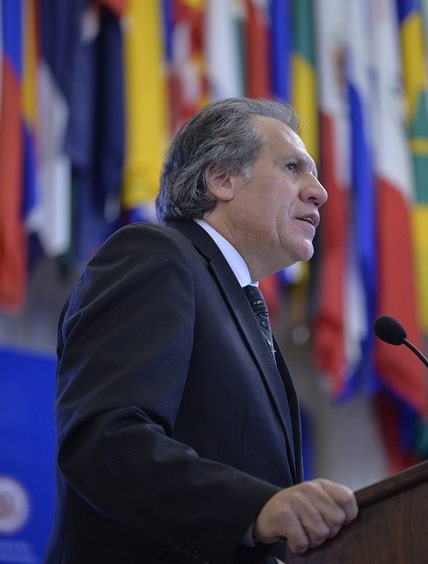
The OAS’s new Secretary General, Luis Almagro Lemes, appears to be steering his organization toward a coordinating role that, he hopes, places it above the fray of hemispheric tensions.  He has not chafed at Washington’s version of democracy promotion, and indeed has embraced elements of it.  He has readily admitted the “inexorable conclusion” that the OAS needs to be “revamped and modernized”; that it needs to “reinforce its legitimacy”; and that its structure and resources need to be better realigned with the four pillars of its mission—democracy, human rights, security, and integral development.  His promises of internal reform so far have not been radically different from those put forth by his beleaguered predecessor, José Miguel Insulza, or even diverged from proposals embodied in U.S. legislation passed in 2013.  They have been articulated, however, in the sort of Washington consultancy language that might help his cause in the U.S. capital, such as references to evolving “from the OAS’s traditional command and control toward an organization that operates like a matrix geared to results in which the hemispheric and national dimensions feed into and enrich each other.”  Elected in March and inaugurated in May, in June Almagro received a mandate from the OAS General Assembly to restructure the General Secretariat, reorganize old offices into new ones, and implement other aspects of his plan.

Regional reactions to Almagro’s election and reform plan have been positive if sometimes not overly enthusiastic.  At the General Assembly meeting, U.S. Deputy Secretary of State Blinken spoke of a “new chapter … in the history of the OAS” and said, “We have a new secretary general, a new strategic vision statement, and renewed attention to genuine reform.”  South America’s preeminent power has been generally aloof toward the OAS, but the Brazilian Senate in mid-July approved a new OAS permanent representative, and last week Brasilia paid $3 million of its $18 million in late dues—modest relief from the slow strangulation caused by dire cash-flow issues because of non-payment by several key countries.  Almagro has also won support in Latin America through his repeated signals of a desire to work more closely with other hemispheric bodies—even CELAC, which was created in 2011 as a direct challenge to the OAS and supposed U.S. influence over it.  He pledged to “seek out areas where we can complement the work of other bodies,” citing by name CELAC, UNASUR, SICA, CARICOM, and MERCOSUR.  According to press reports, his close cooperation with UNASUR as Foreign Minister of Uruguay in 2010‑15 lends credibility to that promise.  Almagro also has won regional praise for pledging to continue efforts for bring Cuba back into the OAS as a full member—building on the success of the Summit of the Americas in April driven by the Washington-Havana rapprochement.

Outgoing Secretary General Insulza was a relatively easy act to follow because, often unfairly, his image was tattered after 10 years in the crossfire between Washington and the countries pushing to undermine U.S. influence in Latin America.  Almagro appears eager to push the re-set button, and the success of the Summit of the Americas and his pledges on democracy, reform, and hemispheric cooperation have given him a good start.  But leading the OAS is going to take more than artful rhetoric, internal restructuring, and a few reforms.  President Obama’s move on Cuba removes one major irritant from hemispheric relations, but an effective Secretary General is going to have to navigate the shoals of longstanding North-South tensions.  The “spirit of genuine and equal partnership” that Deputy Secretary Blinken spoke of wanting with the OAS will be difficult to achieve, and the supporters of CELAC, UNASUR, and other alternatives to the OAS will find it equally tough to accept the OAS as a valid venue for debate and compromise.  Almagro will also have to show that he can run the organization in a professional and modern way to overcome the perception left by his predecessor of weak management of the institution.  He has declared himself a man of practical solutions, not ideology, but pleasing everyone—trying to be a coordinator who threatens no one’s interests—may not be a workable strategy for long.  If the OAS is to fulfill its mission, moreover, the United States and others will have to give Almagro the space to do his job.

July 27, 2015

Pope Francis’s Pastoral Mission

By Alexander Wilde*

Photo Credit: Ministério da Defesa / Flickr / Creative Commons

Photo Credit: Ministério da Defesa / Flickr / Creative Commons

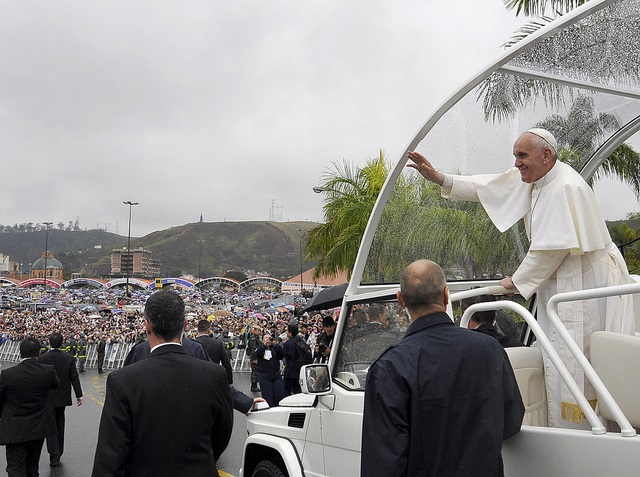
The primary purpose of Pope Francis’s trip to Latin America – like all papal visits since Pope Paul VI made the first in 1968 before the historic meeting of Latin American bishops in Medellín, Colombia – is pastoral.  The media are grasping for the implications of his visiting Ecuador, Bolivia, and Paraguay this week, looking for a theme, for example, in the common factors of their poverty, indigenous populations, and environmental conflicts.  Others wonder if this Argentine pope, well acquainted with Peronism, carries a political message about the dangers of left-wing populism.  Yet others posit this trip in terms of religious “competition” to recapture market share from Evangelicals.

This visit and this extraordinary pope, however, are focused on his broader pastoral message – conveying to the faithful his deepest beliefs about what their faith demands of him and of them.  Francis, in contrast to his immediate predecessors, has given a strongly social orientation to this pastoral ministry, while reinforcing its spiritual foundation in personal faith.  In doing this, he has embraced the renewal wrought by the Second Vatican Council (1962-65) and what he apparently judges the positive insights of liberation theology.  Christians must live their faith in the world and their times, and that includes engaging with other “men and women of good will” to realize God’s purposes for humanity.  Pope Francis repeats that phrase, taken from Pope John XXIII, in his new environmental encyclical Laudato Si’.  Visiting these three countries – in which conflicts over land, oil, forests, and water have mobilized social protests – presents clear opportunities to speak out about how the encyclical’s analysis and moral judgments may apply in concrete settings.

Pope Francis brings to his pastoral visit a belief that he and the Catholic Church should “meet people where they are.”  During 15 years as Archbishop of Buenos Aires, that meant being an active presence among the poor in the villas miserias.  Now he links that pastoral injunction to global issues of poverty, development, and the environment.  He appears to feel a deep responsibility to spur action but at the same time a strong grasp of the intractability of the larger processes, political and natural, involved.  He has said more than once that he expects his papacy to be brief, suggesting that he may view this trip within a God-given responsibility to use his limited time and moral authority to help us confront the most fundamental problems of our future together in this world.  Latin Americans have shown growing awareness of these problems.  Their response to this trip is probably not best judged by Mass attendance but rather by whether they can take concrete steps to link, as Francis does, the “cry of the poor” and the “cry of the earth” in their societies. 

July 7, 2015

* Alexander Wilde is editor of Religious Responses to Violence: Human Rights in Latin America Past and Present (University of Notre Dame Press, forthcoming December 2015).