Nicaragua: A New Family Dynasty Taking Root

By Aaron T. Bell*

nicaragua-0919l

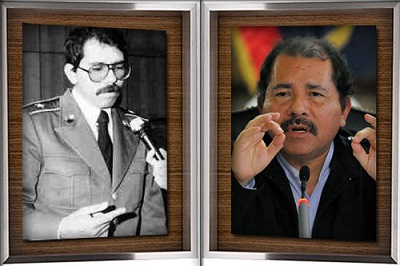
Left: Photo of Daniel Ortega celebrating his latest presidential triumph (July 20, 2012) / Fundación ONG de Nicaragua / Wikimedia / Creative Commons; Right: Anastasio Somoza DeBayle / DemonSabre / Wikimedia / Creative Commons

Events in Nicaragua this summer have demonstrated that President Ortega and his family have a vision for the future that erodes a key element of political democracy – the replacement of the executive through free and fair elections – and risks establishing a dynasty of corruption and authoritarian rule.  In May 2016, President Daniel Ortega of the Frente Sandinista de Liberación Nacional (FSLN) announced his candidacy for a fourth presidential term – his third consecutive.  Since then the government has taken several steps to ensure that Ortega and his family remain in power in November’s elections for President and National Assembly, and beyond:

  • Voting irregularities, a lack of transparency, and accusations of fraud have marred several successive elections since Ortega’s return to power in 2007. In June of this year, Ortega announced that he would not permit international election observers to monitor this fall’s elections.
  • Weeks later, the Supreme Court stripped opposition leader Eduardo Montealgre of his position as head of the Partido Liberal Independiente (PLI) and replaced him with Pedro Reyes, considered by observers to be an Ortega ally. In July, Nicaragua’s electoral council removed 16 sitting members of the National Assembly and 12 alternates after they refused to recognize Reyes.
  • In August, Ortega announced that Rosario Murillo, his long-time partner and wife since 2005, would serve as his vice presidential candidate in the November election. Murillo has been a prominent figure in the Ortega government while serving as both first lady and chief spokeswoman.  Her political ascension is complemented by the rise to prominence in recent years of her and Ortega’s children as operators of business and media interests, including the couple’s eldest son and presidential adviser on investments, Laureano Facundo, who helped sell the stalled interoceanic canal project to Chinese businessman Wang Jing.

Nicaragua’s opposition parties have thus far been unable to mount an effective response and have shown the lack of cohesion and focus that have plagued them for decades. Montealgre announced that the coalition led by the PLI would boycott the election and called on others to do the same.  But rather than present a united front, opposition leaders are fighting amongst themselves to seize the mantle of leadership and challenge Ortega through several competing parties and coalitions.  This will be no easy task: polling conducted by M&R Consultores this summer shows that over 60 percent of voters are likely to vote for Ortega, with the leading opposition parties drawing low single digits.  Over a quarter of potential voters said they were unsure whom they would vote for.  With the opposition beset by division and lacking much legitimacy – tainted as they are by a history of corruption, self-interest, and financial support from the United States – it is unsurprising that protests and civil unrest have been largely absent.  The ouster of the PLI delegates has also stirred the FSLN’s old opponents outside the government, who have been largely quiescent in recent years but condemned the decision: the Bishops of the Episcopal Council, the Nicaraguan-American Chamber of Commerce, and the Consejo Superior de la Empresa Privada (COSEP), the largest business chamber that has enjoyed a working relationship with the Ortega government.

The FSLN’s authoritarian turn, Ortega’s long reign, and the rise to prominence of both Murillo and the couple’s children invite comparisons between Ortega and Somoza family dynasties.  It may be from COSEP and the business sector, rather than among the weak and divided political opposition, that a serious challenge to Ortega could eventually emerge. It was after all the defection of non-Somoza family interests in the private sector, combined with a popular insurrection led by a guerrilla insurgency, that did away with Nicaragua’s previous family dynasty.  But that combination only emerged following the shock of the 1972 earthquake and resulting massive corruption, the assassination of a national figure like Pedro Chamorro in 1978, and the particularly bloodthirsty turn that the Somoza regime had taken. With similarly game-changing circumstances absent at this juncture, the sort of cross-sector revolutionary movement that ultimately toppled the Somozas appears unlikely.  For the moment at least, an Ortega family will be well on its way to firmly preserving its dynastic power come November.

 September 19, 2016

* Aaron Bell is an Adjunct Professorial Lecturer in History and American Studies at American University.
Nicaragua: Where’s the Canal?

By Fulton Armstrong

Canal Nicaragua

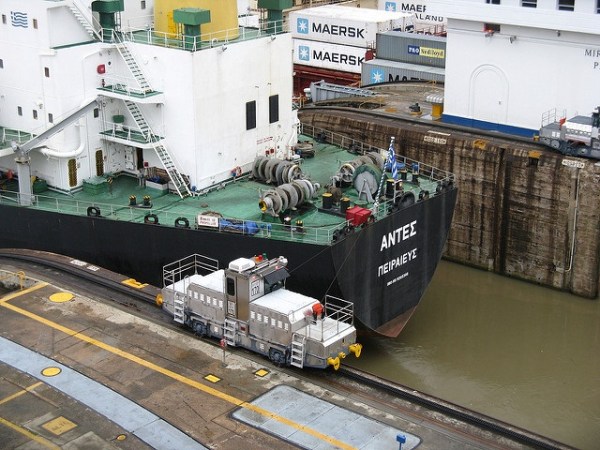
Coming soon to Nicaragua? Photo Credit: tryangulation / Flickr / Creative Commons

The Nicaraguan government and Chinese investment group leading the Nicaragua Grand Canal project continue to claim enthusiasm for their dream, but enough fundamental problems remain unresolved to suggest that prospects for its eventual construction are dimming – and the principals are maneuvering to avoid picking up the tab for the expenditures made so far.  In a year-end statement last December, President Ortega’s office said the canal project would be one of his government’s top 25 priorities this year and emphasized its benefits to the Nicaraguan people.  Hong Kong-based HKND Group had announced in November that it was “fine-tuning” the canal design to address problems raised in an environmental impact study, which would delay the beginning of major excavations and lock-building until the end of 2016.  Company officials have since said, however, that construction of a fuel terminal and wharf on the Pacific coast –necessary to bring in the massive equipment the project requires – could start as early as this August.  The company still claims that it will complete the canal in 2020 – a prediction that few, if any, outside experts see as feasible.

The project faces massive obstacles, with no solutions in sight.

  • The estimated US$50 billion in financing is nowhere to be seen. Chinese investor Wang Jing, who has already spent US$500 million of his own money on the project, lost some 85 percent of his US$10 billion personal fortune in last year’s Chinese stock market correction.  (Bloomberg named him the worst performing billionaire of 2015.)  Observers believe his losses as well as the problematic environmental impact study have cooled his and other private investors’ support.  An initial public offering of shares has been postponed indefinitely.
  • Project managers have yet to demonstrate the need for the canal and propose solutions to significant engineering challenges, such the need for construction able to withstand earthquakes made likely because of seismic faults along the route. HKND says the canal will handle 3,500 cargo ships a year, including ones bigger than those transiting the Panama Canal, but industry experts say there’s no demand for more than will be accommodated by the expansion of the existing canal – and that the United States has no ports capable of receiving the larger vessels.  Global warming, moreover, could soon open a faster and cheaper route north of Canada.
  • Public protests have diminished during the hiatus in canal-related news and activities, but opponents remain strident and are gaining international support. Detractors’ resolve to fight has been strengthened by the environmental report, by a credible UK firm, determining that the project will “have significant environmental and social impacts,” including dislocation of at least 30,000 Nicaraguans.  Indigenous and Afro-Nicaraguan groups on the Atlantic Coast are upset about disruptions to traditional territories, including cemeteries and holy places.  Amnesty International has condemned the treatment of affected persons as “outrageous” and “reckless.”

The “biggest earth-moving project in history” is still looking like one of the biggest boondoggles in history – yet another in a long series of chimera canals in Nicaragua since early last century.  The government says that popular support for the project remains about 81 percent, but a survey by Cid Gallup, published in the Nicaraguan newspaper Confidencial in January, showed that 34 percent of 1,000-plus respondents consider the canal to be “pure propaganda.”  One quarter believe technical studies have been inadequate and that funding will not materialize.  Those sentiments could be reversed somewhat by the appearance of massive excavation equipment and creation of related construction jobs, but support will still be tempered by concerns about persons whose lives are disrupted by the project – and by perennial and profound suspicions that corruption will take the lion’s share of benefits.  Some opposition leaders believe HKND’s big push to appear optimistic is to build a case for collapse of the project to be Nicaragua’s fault, so that the company can demand that Managua repay the $500 million that Wang has reportedly spent.  The lack of transparency surrounding the project only fuels such speculation. 

April 4, 2016

Nicaragua’s “Great Canal” Draws Opposition

By Fulton Armstrong

9036608152_a199acb183_z

Protestors opposing the Chinese-Nicaraguan canal confront police / Jorge Mejía Peralta / Flickr / Creative Commons

Although questions continue to swirl around whether the Chinese-Nicaraguan canal – which its main investor called the “most important [project] in the history of humanity” – will be built or not, its opponents are taking it all very seriously.  A CID-Gallup poll in January showed that 41 percent of Nicaraguans interviewed strongly support the project, while another 21 percent and 17 percent back it somewhat and a little, respectively.  But another poll by the same firm suggested ambivalence:  asked if they supported the National Assembly vote giving the Chinese firm leading the project, HKND, a concession for the 278-km right of way for up to 100 years, some 39 percent of respondents said no.  Some political voices are growing more sharply opposed as well.  The powerful business group COSEP, for example, has gone from agnosticism about the project to a position of open disapproval.

Groups concerned about the project’s impact on the environment and rural residents have already held protests involving up to several thousand participants, and – despite the government’s promise that the canal will bring prosperity throughout the country – organizing efforts appear unlikely to fade.  Skepticism about HKND and the government’s commitment to protecting the environment, fueled by their off-the-cuff dismissal of concerns, is so deep that even a balanced comprehensive impact study by the British Environmental Resources Management, due next month, may fail to calm nerves.  Environmentalists cite studies warning that dredging Lake Nicaragua from its current depth of nine meters to the 27 meters necessary for cargo ships will stir up many layers of toxic materials, with catastrophic consequences for marine life and surrounding agricultural areas.  Other groups are rallying behind the 29,000 residents who are to be evicted from properties along the canal route.  Demonstrations have turned violent, with protestors injured by tear gas and rubber bullets.  Graffiti and banners demanding “fuera chinos” are common.

In the hemisphere’s second poorest country, the promise of growth spurred by the $40-50 billion project is still a powerful card in the government’s hand.  Many skeptics still wonder, however, if the whole scheme is a ruse to fleece the Chinese investors, who’ll bring in a couple billion dollars before realizing that the project will get bogged down in Nicaraguan political quicksand.  But opposition to the canal goes far beyond the usual Managua political game of fighting over corruption dollars and obstructing each other’s priorities.  President Ortega’s endorsement of the canal contradicts his own statements years ago that he wouldn’t compromise the lake’s eco-system “for all the gold in the world.”  According to The Guardian newspaper, the dredging will move enough silt to bury the entire island of Manhattan up to the 21st floor of the Empire State Building – which no one is prepared to deny will have serious environmental implications.  China’s Three Gorges Dam, completed five years ago, displaced 1.2 million inhabitants – proportionally twice as many Nicaraguans displaced by the canal – but Nicaragua’s ability to resettle them, give them jobs, and suppress their dissent is small compared to China’s.  The project may not be the greatest in the history of mankind as HKND claims, but it may provoke a crisis as great as any in Nicaragua.  For starters, if COSEP’s opposition persists, it threatens to unravel the modus vivendi under which Daniel Ortega has stayed in power, and could portend much deeper tensions.

March 5, 2015

Click here to see our previous article about the canal.

July 19th Anniversary and the New Nicaragua

By Rose Spalding*

Photo credit: Globovisión / Foter / Creative Commons Attribution-NonCommercial 2.0 Generic (CC BY-NC 2.0)

Photo credit: Globovisión / Foter / Creative Commons Attribution-NonCommercial 2.0 Generic (CC BY-NC 2.0)

Daniel Ortega’s political rebirth has produced a remarkable partnership with the Nicaraguan business sector.  Thirty-five years ago, when he and the Nicaraguan revolutionaries ousted dictator Anastasio Somoza, a U.S. ally known for corruption and human rights abuses, they clashed with the business sector, the Catholic Church leadership, and a heterogeneous band of counterrevolutionaries armed and financed by the Reagan administration.  Ortega lost elections in 1990 but made a remarkable return to power in 2007, ushering in the “second phase of the Sandinista revolution.”  Unlike during his first term, he undertook to collaborate with COSEP, the Nicaraguan association of business chambers, and gave its members, perhaps more than any other group, regular access to high-level officials and a palpable voice in shaping legislation.  According to José Adán Aguerri, the current president of COSEP, 77 out of 81 of the Ortega government’s economic laws have been produced in dialogue with the business association.  These involve wide-ranging negotiations on minimum wage increases, tax reform, housing development, social security expansion, investment incentives, and other issues.

This partnership has contributed to economic growth and direct foreign investment.  The World Bank reports Nicaragua’s economic growth was 5 percent in 2012 and 4.6 percent in 2013, compared to 2.6 percent and 2.4 percent for the Latin American region as a whole.  According to CEPAL, foreign investment in Nicaragua reached $849 million in 2013, a level that was second only to the $968 million reported for 2011.  Nicaragua’s investment promotion agency, ProNicaragua, documents strong investment in tourism, agribusiness, textiles and outsourcing services.  The extractive sector is also growing rapidly.  Responding to strong commodity prices and a cordial reception in Nicaragua, Canadian gold mining company B2Gold recently announced a planned investment of $289 million to expand its operations in La Libertad.  Nicaraguan investors have developed new initiatives, including a major tourism project orchestrated by Carlos Pellas, the country’s richest man.  The relationship has benefited from the ALBA agreement Ortega signed with Venezuela President Hugo Chávez in 2007.  Venezuela assistance has totaled $3.4 billion in loans, donations and investments in the 2008-2013 period.  These funds regularized Nicaragua’s precarious energy supply and subsidized transportation, housing, microcredit and public sector wages, providing a general economic stimulus from which elites also benefitted.  Announcements of a projected $40 billion investment in an interoceanic canal reinforce the image of a new development era in Nicaragua.

The business-government relationship reflects mutual accommodation by Ortega and business leaders.  Nicaragua lost several decades of economic growth during the 1980s and the “contra” war, so upon his return to power Ortega put a premium on promoting growth, tread lightly on issues of tax reform, and eagerly pursued foreign investment.  He met repeatedly in closed sessions with business leaders and called for a “grand alliance” of government, business and workers to combat poverty, promote investment and create jobs.  A formal consultation mechanism brought together leaders from COSEP and the government, such as Bayardo Arce and Paul Oquist, for regular policy discussions.  Offering a stable economic environment and generous investment incentives, a non-conflictual labor force with the lowest wages in the region, a relatively low crime rate, and receptivity to business initiatives, Ortega won over business allies.  The business interests of current and former Sandinista leaders, some affiliated with COSEP, reinforced the collaboration and helped convince a new generation of business leaders to put aside traditional hostility and preoccupation with injuries of the revolutionary 80s.  They accepted the government’s legitimacy and bolstered its domestic and international credibility.  Enthusiastic about the growth of the Nicaraguan economy, economic elites also downplayed lingering questions about deficits in democratic institutionality and accountability.  But the heightened concentration of political power under Ortega and the weakness of other state institutions mean that economic rules are vulnerable to shifting political winds, and questions remain whether this development approach will resolve the problem of widespread poverty.  Even as the government-business relationship warms and the economy grows, these social and political concerns continue to bedevil the country.   

*Dr. Spalding is a professor of political science at DePaul University.

Nicaragua’s Canal: Great Leap (of Faith) Forward?

By CLALS Staff

Mike and Karen / Flickr / Creative Commons Attribution 2.0 Generic (CC BY 2.0)

Mike and Karen / Flickr / Creative Commons Attribution 2.0 Generic (CC BY 2.0)

The Nicaraguan government and a Chinese telecom tycoon took a big step on Monday toward the country’s long-held dream of having its own canal, but their prediction of supertanker traffic starting as soon as 2020 seems a bit far-fetched.  The project will cost $40 billion and, according to government officials, will create 50,000 jobs immediately, 1 million jobs over the life of the project, and will help lift another 400,000 people out of poverty.  President Daniel Ortega’s supporters claim the economy – currently projected to grow at 4.5 percent a year until 2020 without the project – will grow as much as 15 percent a year with it. The Chinese company, HKND, will enjoy a 100-year lease on the canal, with 1 percent of it reverting back to Nicaragua each year.  The proposed route for the canal is 278 kilometers long – about three times longer than the Panama Canal – and will be deep and wide enough to handle ships much larger than the “New Panamax” vessels.  Officials say the canal would “complement” the Panama waterway, which they say will be overcapacity even after its current expansion, and will save shippers some 800 miles on their way to the U.S. east coast.

Opposition from some politicians and environmentalists has been strong.  According to media reports, Nicaragua’s Supreme Council for Private Enterprise (COSEP) and other business organizations are generally positive but skeptical, with one leader calling Monday’s press conference “just an initial flow of information.”  Congressman Eliseo Núñez of the Independent Liberal Party (PLI), however, has been widely quoted as calling Monday’s announcement a “propaganda game” and blamed the media for generating “false hopes for the Nicaraguan people.”  Former Vice President Sergio Ramírez says that handing over national territory for development is a violation of the country’s sovereignty, and other critics claim the project violates 32 provisions of the Constitution.  Concerns about damage to Lake Nicaragua, an important source of fresh water that is already polluted, remain. Chinese investor Wang Jing told the press that avoiding environmentally sensitive areas was a major factor in determining the route, and he has promised that a full environmental impact study will be conducted before construction starts.  Opponents of the project doubt he will make the report public.

Ortega’s statement last year that a Nicaraguan canal “will bring wellbeing, prosperity, and happiness to the Nicaraguan people” may well be right – if the project gets off the ground and so many jobs are created.  However romantic that vision is, construction is still far from certain to begin this December, as claimed, or even within the next year or so.  Wang says that he has lined up “first-class investors,” but none has been identified yet.  In addition, criticism of his business record – opponents say his telecom company is poorly run – has hurt his credibility. And accusations that he’s a stalking horse for the Chinese government, which he says has had “no involvement,” will be difficult to dispel in view of Beijing’s other interests in the region and in shipping.  Equally troubling, as the ongoing expansion in Panama has shown, the shadow that corruption and inefficiency cast over any major project tempers optimism and argues against premature celebration.

Nicaragua: Model for Citizen Security?

Police in Managua, Nicaragua / Photo credit: jorgemejia / Foter.com / CC BY

Police in Managua, Nicaragua / Photo credit: jorgemejia / Foter.com / CC BY

Nicaragua – often accused of keeping bad company on political and economic matters – finds itself in a special group of countries that are doing quite well combatting crime.  Along with Chile, Costa Rica, and Uruguay, it has one of the lowest crime and violence rates in Latin America.  At a discussion* at the Wilson Center in Washington this week (click here for video), experts identified factors explaining why these countries stand out, including the democratic traditions, relatively strong institutional frameworks, and economic stability in Chile, Costa Rica, and Uruguay.  Nicaragua, on the other hand, has witnessed dictatorships, coups, chronically weak institutions, and the sort of grinding poverty that fuels chronic security challenges.  Gross generalizations are risky, but analysts probed why Nicaraguans generally trust their police force and commit fewer violent crimes.

Among the key factors is that Nicaragua, like the other three top performers, separated the police from the armed forces and increased civilian control over it.  Unlike in the rest of Central America, where revolutionary movements did not triumph, the Sandinistas abolished the hated National Guard in 1979 and created a force under the Interior Ministry.  Over the course of the Esquipulas peace accords, the elections in 1990, and the passage of a Ley Orgánica de la Policía Nacional in 1996, civilian oversight was institutionalized and respect for human rights and judicial process grew.  The Sandinistas’ promotion of mechanisms for community vigilance – a negative when used to root out suspected “counterrevolutionaries” in the 1980s – later helped communities develop cohesive approaches to citizen security and contributed to respect of institutions.  Another factor is that, like the other three countries under discussion, Nicaragua has a relatively low gun ownership rate.

Chile, Uruguay, Costa Rica and Nicaragua have another thing in common:  none has resorted to the sort of militarized strategies toward transnational or homegrown crime that Colombia, Mexico and the United States have espoused.  The Nicaraguan National Police have generally maintained closer ties with their Scandinavian counterparts, who emphasize addressing the root causes of crime and violence – a philosophy that Nicaraguans of most political stripes embrace more readily than the emphasis on military-style operations.  The steadily worsening situation in Honduras, where Washington has pursued collaboration with the military, has convinced many in Central America that the militarized approach doesn’t work.  The mix of limited training and operational cooperation that the United States provides Costa Rica would probably work well in Nicaragua, but Washington – prodded by legislators who still see Nicaragua through a 1980s optic and condition cooperation on electoral performance – appears cool to fashioning a flexible package of joint initiatives.  Rather than applying the Colombian-Mexican security model to Central America, perhaps the successful elements of the Nicaraguan model can be expanded in the troubled region.

*CLALS Research Fellow and InSight Crime Senior Fellow Javier Meléndez delivered the lead presentation on Nicaragua.

ICJ Decision on Colombia-Nicaragua Dispute Settles Little

Photo: Patricia Iriarte Diaz Granados "orianauta" | Flickr | Creative Commons

Photo: Patricia Iriarte Diaz Granados “orianauta” | Flickr | Creative Commons

The decision announced last month by the International Court of Justice on a three-decade maritime dispute between Nicaragua and Colombia has pleased Managua and angered Colombia.  The court confirmed Colombia’s sovereignty over seven islets known as San Andrés and Providencia, but it extended Nicaragua’s sovereignty over 200 nautical miles.  The ruling means that, although Colombian jurisdiction includes a 12-mile radius around the islands, Nicaragua will control a much bigger area of the Caribbean – and greater access to fishing grounds and potential underwater oil deposits.

Colombia has rejected the ICJ verdict; refused to withdraw its navy from the contested waters; and withdrawn from the Pact of Bogotá, which recognizes ICJ jurisdiction.  Foreign Minister Holguín said Colombia wants to protect itself from future challenges to Colombian territory.  This position has implications for its neighbors.  Colombia’s withdrawal leaves a pending case brought against it by Ecuador regarding harm caused by herbicides from aerial fumigation near its border.  It also shifts back into bilateral renegotiations Colombia’s dispute with Venezuela over the Gulf of Venezuela, which Colombia had often proposed taking to the ICJ.  According to press reports, Panama, Costa Rica, and Honduras did not see themselves affected by the ICJ decision.

While ICJ decisions are final and cannot be appealed, the Court lacks the means to enforce them.  Colombia’s rejection of the ruling suggests it will take advantage of that, setting itself and Nicaragua on a collision course that will undoubtedly raise tensions in the region.  (Non-enforcement is an old problem.  The United States got the UN Security Council to support it in rejecting an ICJ decision in the 1980s that Nicaragua was entitled to reparations for U.S. support of the Contras.)  Even if the countries don’t come to blows, the dispute puts regional cooperation in crucial areas, such as counternarcotics, at risk.  It also raises questions about the willingness of countries to work with multilateral institutions.  The ALBA countries support ICJ jurisdiction now, but Colombia’s position probably will embolden them to reject it if inconvenient in the future.  Maritime disputes appear to be increasing worldwide, and Central America promises to be no different.

A Nicaraguan Model for the Drug War?

Daniel Ortega | Photo by: Presidencia de la República del Ecuador | Flickr | Creative Commons

Bilateral tensions going back to the Cold War have obscured the value of counternarcotics cooperation between the United States and one of its least-favorite governments in Latin America – that of former Sandinista guerrilla and three-term Nicaraguan President Daniel Ortega.  The man who battled U.S.-funded proxies, the Contras, in the 1980s is now the most effective soldier against the drug trade in Central America, although Washington appears loathe to admit it and to imbue the cooperation with political good will.  However, while closer U.S. allies such as Honduras and El Salvador have seen levels of violence climb, Nicaragua remains relatively safe.  According to U.S. government estimates, Honduras (with vastly greater assistance) interdicted more cocaine than did Nicaragua in 2011 (22 v. 9 metric tons), seized one-tenth as much heroin (8 v. 86 kilograms) and arrested only half as many drug-related criminals (84 v. 168) – but had a homicide rate six times greater than Nicaragua.

Managua has achieved its relative success with an approach quite different from its neighbors’ –less costly in both dollars and bloodshed.  Compared to the flow of allegations about human rights violations committed by the Mexican security forces, Nicaragua’s record appears clean and citizens feel relatively confident providing information to the police.  Its armed forces have been involved in drug interdiction, focusing on coastal seizures, often in cooperation with the U.S. Navy.  But the backbone of Nicaragua’s strategy has been a series of local initiatives such as community policing.  These programs focus on “juvenile delinquency, education, and reintegration into society by gang members and other young offenders,” scholars noted in a recent special issue of the journal Policing and Society.  Nicaragua’s geography may be a factor as well.  The cartels’ main routes to Mexico are through the northern tier of the isthmus, and Nicaragua does not have the same sort of migration patterns that shaped Salvadoran gangs, as Insight Crime noted last year.

Scaling up Nicaragua’s local solutions to fit Mexico would be an immense challenge because of the disparity between the countries’ size and history.  But elements of Managua’s approach could be tried and adapted in neighboring countries, particularly its emphasis on community policing and anticorruption efforts that help gain citizens’ confidence.  Within Nicaragua itself, some observers argue that the government should do more to integrate its Afro-descendant Creole population into these supportive measures.  Currently, these Creole coastal communities bear much of the effect of military-oriented U.S.-Nicaraguan counternarcotics cooperation, without the social assistance to deal with the underlying problems in the region.  As the costs – and limits on effectiveness – of the full-frontal assault on cartels become ever clearer, Nicaragua’s relative success stands as an important reminder that other paths are possible.

Nicaragua: Government-Private Sector Tactical Cooperation

Leaders of Nicaragua’s private sector and political opposition have teamed up with the government to press Washington not to go overboard with sanctions in response to flawed elections last November.  Their traditional allies in Congress, including the Cuban-Americans who dominate the Obama Administration policy toward Latin America, are pressing for suspension of two waivers to U.S. laws that suspend bilateral and multilateral aid to Nicaragua.  One waiver depends on progress on fiscal “transparency,” and the other on the resolution of property disputes from the 1980s.  The former, which would affect several million US dollars in bilateral aid (apparently for an AIDS program), is doomed, according to insiders.  But a decision on the property waiver – suspension of which would require the United States to oppose Nicaraguan loans from the Inter-American Development Bank, World Bank and IMF worth more than $200 million in 2011 – has not yet been made.

In public and private appearances, leaders of the Nicaraguan business community and political opposition, including Nicaraguan Liberal Alliance standard-bearer and Presidential Candidate Eduardo Montealegre, have forcefully stated their differences with the government of President Daniel Ortega, particularly regarding the conduct of elections and the lack of “institutionality” – i.e., the politicization of government institutions.  But the business community has pleaded for U.S. flexibility.  They estimate that suspension of the property waiver would threaten $1.4 billion in development assistance, deal a serious blow to their own prospects, and thrust Nicaragua into deep crisis.  Montealagre said he would lobby “neither for nor against” the waiver, but his participation in the delegation signaled a clear preference for Washington to be cautious.  Ortega’s personal emissary for foreign investment, Alvaro Baltodano, has emphasized the growing commercial links between the two countries and the benefit it provides directly to the Nicaraguan people.

The private sector and opposition are in the odd position of trying to persuade their own friends in Washington to be practical – not to be more anti-Sandinista than they.  Suspension of the property waiver would not only hurt them in the pocketbook; it would give a propaganda boost to President Daniel Ortega and make the population even more dependent on his social programs, heavily subsidized by Venezuela.  All of the U.S. aid and most of the multilateral aid provides direct benefit to the Nicaraguan people.  Ortega’s opponents do not want U.S. sanctions to close the business and political operating space they have enjoyed in recent years, despite Ortega’s excesses.