
By Peter Redvers-Lee
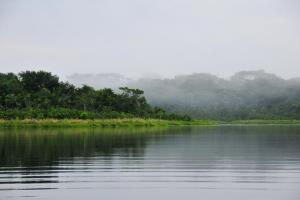
Yasuní National Park /Photo credit: joshbousel / Foter / CC BY-NC-SA
The world has failed Ecuador again. That, at least, is the sentiment of Ecuador’s president, Rafael Correa, explaining his decision to discontinue an innovative environmental plan to save sections of the Yasuní National Park, a UNESCO Biosphere Reserve on the border with Peru. The 2010 plan was for Ecuador to refrain from granting oil concessions in the park if it could raise $3.6 billion from other countries and international organizations. To date, only $13 million has been raised. Correa’s about-face comes a few months after another environmental U-turn. In June, Ecuador’s legislature passed a new mining law that, while not garnering new friends among large mining companies, rolls back taxes and other regulations to favor smaller and medium-size mining ventures.
Both developments heighten the likelihood of further environmental degradation in Ecuador. Increased mining and drilling is likely to have an immediate and negative impact on the sustainability of local ecosystems upon which communities depend. The rivers that make up the Mataje-Cayapas watershed have been an important means of livelihood for the local indigenous and African-descendent communities that dot the river banks from the mangroves on the coast to the foothills of the Andes. Environmental degradation accelerated in the 1990s, when the first major roads reached the area and mining, logging, shrimp farming and other industries moved in. Mercury, used in mining, is already present at unacceptable levels in populations of blue crabs in the lower reaches of the watershed, where the crab forms a staple in local diets. The destruction of the mangrove forests to make way for shrimp ponds has increased. The roads allowed for more efficient logging, and increasing numbers of internal migrants flooded the area. Once the Chocó forest was cleared, palm plantations took root, further displacing African-descendent communities that made up the bulk of the local inhabitants. The African palm, used for biofuels and other purposes, often entails liberal use of toxic chemicals.
The failure of the Yasuní proposal and Ecuador’s new mining laws have ominous implications for Ecuador and, perhaps, beyond. Toxins in the Mataje-Cayapas watershed have contaminated the water supply on which thousands of mainly African-descendent communities rely for their livelihoods. The recent setbacks will also accelerate commercial exploitation of the watershed for gold, exposing it to even more toxic chemicals, and the ever-increasing palm plantations will add to the existing brew of fertilizers, pesticides, and fungicides sprayed liberally on the crop. It’s unclear whether the world “failed” Ecuador or that President Correa’s proposal – protecting preserves in return for cash – is not viable. Skepticism that the $3.6 billion would be put to good use, rather than for politically gratifying short-term programs, is also reasonable. Either way, the country’s long-running pattern of resource extraction and environmental destruction continues in one of the most diverse ecological spots on earth. And now Yasuní faces a similar fate.
Peter Redvers-Lee is CLALS Faculty Affiliate and Professorial Lecturer in American University’s School of International Service. He has worked in the Mataje-Cayapas watershed since 2004.





 AULA Blog