
By Julie Radomski, American University
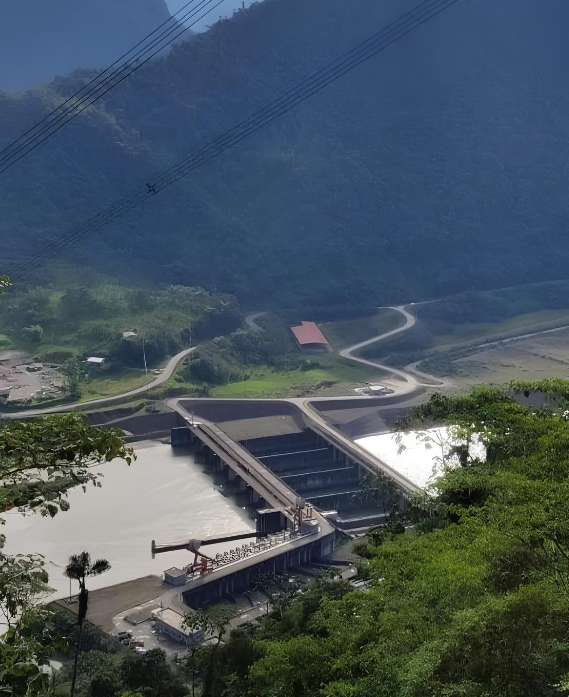
Ecuador’s Coca Codo Sinclair (CCS) hydroelectric plant has become an infamous symbol of the controversies associated with Chinese development finance in Latin America. As such, the project’s performance has outsized implications for China-Latin America relations. At the same time, CCS illustrates the inherent complexities of large infrastructure projects, where political, environmental, and technical issues can blur the lines between success and failure.
When it was inaugurated by Presidents Rafael Correa and Xi Jinping in 2016, CCS was celebrated as a triumph of South-South cooperation between Ecuador and China, and a contribution to sustainable green growth in Ecuador. Yet nearly eight years after this inauguration, the project has yet to be formally “received” by the Ecuadorian government from the contractor, Chinese state-owned enterprise Sinohydro. The reason for this prolonged state of limbo comes down primarily to fissures present in the powerhouse distributor pipes: despite repeated welding, they have yet to be fully repaired, and a durable fix may not be possible. In addition, the project’s sediment removal mechanisms have proven dysfunctional, leading to frequent pauses in the project’s operation over the past year. Separately, severe regressive erosion on the Coca River is advancing towards the dam and may trigger its collapse. The erosion advanced 1.2 kilometers upriver over the course of three days last month, and is currently located 6 kilometers from the dam.
For these reasons CCS is frequently cited by U.S. media and politicians as evidence of the threat posed by Chinese development cooperation, namely that it will saddle countries with debt, corruption, low-quality projects, and environmental damage. Meanwhile, the project’s protagonists point out that CCS produces 20-30% of Ecuador’s energy consumption on a daily basis, rendering it indispensable — hardly a white elephant. But closer examination of the details of this behemoth project makes clear that neither pro- nor anti-Chinese discourses on “China in Latin America” ring perfectly true.
Negotiations are reportedly underway between the Ecuadorian government and Sinohydro to conclude a deal in which Ecuador would sign over operation of CCS to Sinohydro in exchange for “liquidity.” Under such a deal, Sinohydro would be responsible for CCS’s repair, operations, and administration and would sell electricity back to the Ecuadorian grid. The concessioning of CCS to Sinohydro is just one of the many loose ends that could once again rewrite the story of this contentious megaproject. Beyond this hypothetical deal, the international arbitration case between the Ecuadorian state and Sinohydro has yet to reach a conclusion. The regressive erosion of the Coca River is anticipated to progress further upriver towards the diversion dam within the next five years. A corruption case initiated by the Attorney General’s office could result in the conviction of four Sinohydro representatives and a former Chinese Ambassador, as well as former Ecuadorian President Lenin Moreno. Some combination of these various developments will continue to make CCS headline news in Ecuador and abroad — and in so doing, they will rely upon prevailing narratives about China-Latin America relations.
CCS provides a vantage point for considering the longer-term effects of development cooperation between China and the region. Looking forward, while the outcomes of CCS are as of yet indeterminate, the project itself has had important implications both for Ecuadorians and for “China’s rise in Latin America” writ large. Chinese economic relations with Latin America have moved away from large state-to-state loans backed by the policy banks. This is due at least in part to the high reputational costs of scandals associated with projects like CCS. While the influence of Chinese actors on Latin American political economies has by no means waned, it now takes the form of Chinese companies’ direct investments or bidding on project contracts instead of by securing market access through granting large loans.
Nevertheless, even with the China-Latin America development relationship moving on from big infrastructure projects like CCS, the project’s politics still hold considerable weight. CCS demonstrates that infrastructure is enduring even as geopolitics can be fickle; its fate will continue to shape China-Latin America relations as a function of the still-ongoing natural and political processes enumerated above. Reductive pro- and anti-China discourses are only one part of the many factors shaping the outcomes of projects like CCS, including continuously evolving local ecologies and domestic political dynamics. In an age of great power competition and the “infrastructure state,” we must pay attention not only to the politics and capital that bring projects into being but also to how they evolve after they are ostensibly completed.
This piece can be reproduced completely or partially with proper attribution to its author.


 AULA Blog